


Black Cane Dining Chairs
Black cane dining chairs bring together dark finished frames and woven seating across Regency, Victorian, and later periods.
Black Cane Dining Chairs
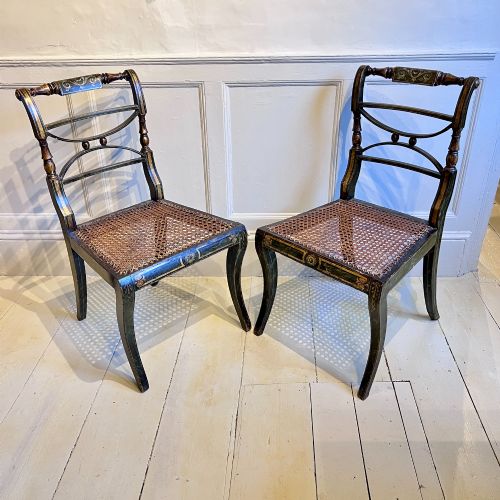
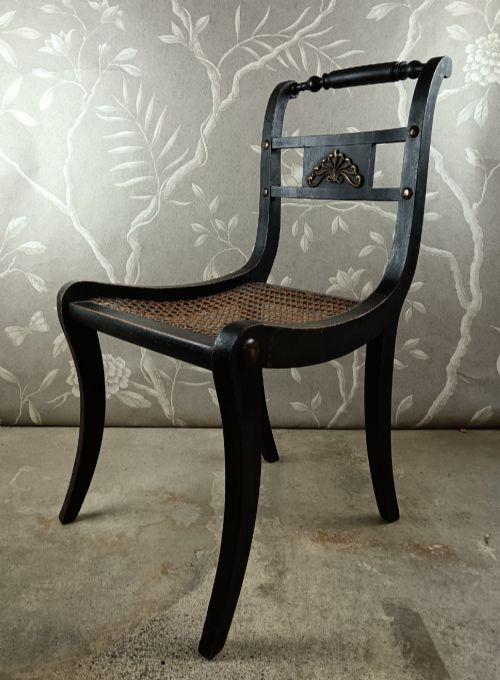
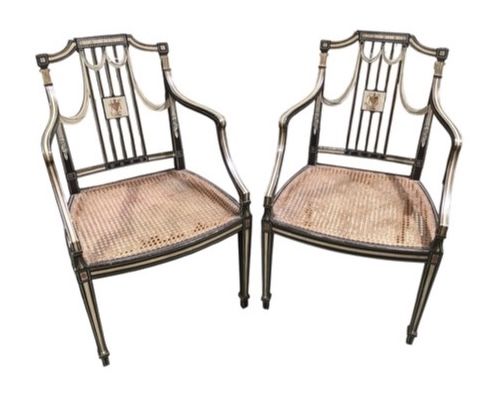
Black cane dining chairs encompass side chairs and armchairs built across multiple periods, most notably the Regency and Victorian eras alongside later revivals. When searching for black cane dining chairs, a buyer encounters forms ranging from precise Trafalgar sabre leg designs to substantial Anglo-Indian ebony armchairs and decorated single bedroom chairs.
The materials recorded in these listings rely heavily on ebonised wood, paint, lacquer, and solid ebony, paired with woven cane seats and occasional fabric or gilt details. Styles vary from classic Regency and Victorian to Louis XV style, Chinoiserie, and Anglo-Indian designs originating from regions such as Ceylon.
Sets vary widely in scale, from intimate pairs to larger matched suites intended for dining rooms and formal spaces. The integration of woven seating within dark painted or polished wooden frames defines the core aesthetic of this group.
Materials and construction
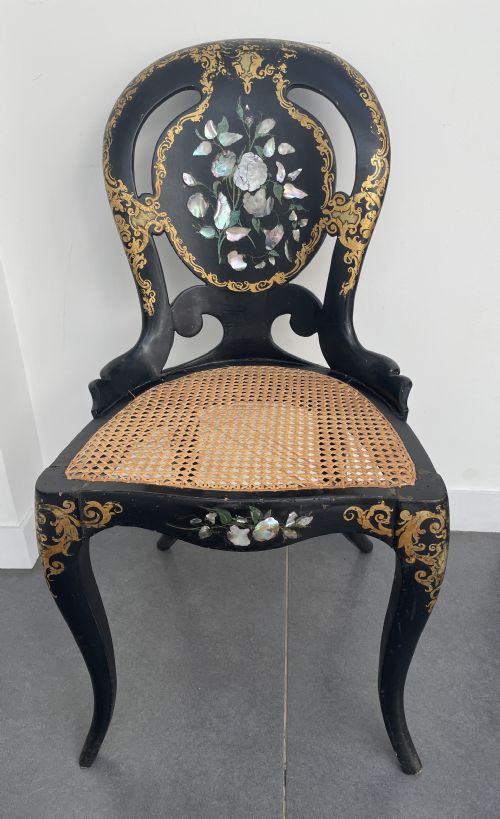
Makers utilised solid timbers such as ebony and walnut, alongside woods finished with paint, ebonising, or lacquer to achieve a dark surface. These frames often incorporate intricate carving, mother-of-pearl inlay, or parcel gilt highlights to break up the deep surfaces.
Seating relies on traditional cane work woven directly into the wooden framework, providing a resilient and flexible surface. Surface treatments range from japanned finishes dating to the early eighteenth century to nineteenth-century ebonised paintwork.
Materials recorded across these pieces include solid ebony, painted and ebonised wood, mother-of-pearl inlay, and woven cane.
Judging quality in black cane dining chairs
Quality rests upon the crispness of the carved detail and the integrity of the ebonised or lacquered finish, where finer examples retain their original painted surfaces and gilding without crude overpainting. The tightness and regularity of the cane weaving also separate standard production from superior craftsmanship.
Proportion and structural harmony distinguish well-balanced frames, such as sabre leg side chairs or solid ebony armchairs, from later revival pieces. The presence of authentic period elements, including original cane seats or integrated inlay work, elevates the standing of an individual piece.
The Black Cane Dining Chairs Glossary
- Ebonised wood
- Timber treated with stain or paint to imitate expensive ebony. This technique was widely utilised in Regency and Victorian furniture to create a sleek black finish.
- Cane
- Woven material made from the peeled bark of rattan palms. It provides a durable, lightweight seating surface favoured for centuries.
- Japanned
- European imitation of Japanese and Chinese lacquerwork. It involves layered varnishes and often incorporates raised metallic decoration.
- Sabre leg
- A concave sweeping leg form resembling a cavalry sabre. This profile is characteristic of Regency seating design.
- Parcel gilt
- The practice of applying gold leaf to specific raised portions of a painted or ebonised surface. It highlights carved details on frames.
Black Cane Dining Chairs: Frequently Asked Questions
Are these chairs suitable for daily dining?
Many examples were constructed as functional seating, yet antique frames require thoughtful use compared to modern equivalents. Consider the structural stability of older joints and the tension of the woven cane before assigning heavy daily use.
Protective pads can be added beneath the legs to prevent scuffing on hard floors. Distribute weight evenly and avoid tilting back on the rear legs to preserve antique joinery.
What is the difference between Regency and Victorian styles here?
Regency pieces often feature clean lines, classical silhouettes such as sabre legs, and restraint in ornament. They frequently utilise ebonised finishes and parcel gilt highlights.
Victorian versions tend to introduce heavier ornamentation, such as mother-of-pearl inlay or more elaborate carving. They span various revivals alongside distinctive painted decoration.
Can I mix different sets around a table?
Combining armchairs and side chairs within similar dark finishes creates a cohesive appearance across a dining space. Matching heights and stylistic cues such as ebonised frames helps tie diverse seating together.
Ensure the seat heights align comfortably with standard dining table clearances. Pairing pieces from related periods maintains visual harmony.