
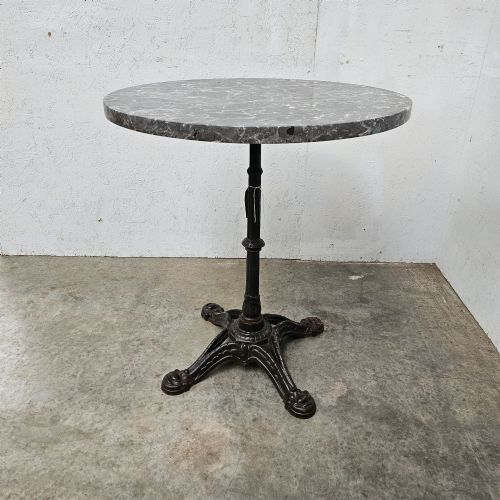


Black Marble Pedestal
A black marble pedestal provides a solid, dark foundation that lifts decorative objects, tazzas, and sculptures into focus.
Black Marble Pedestal
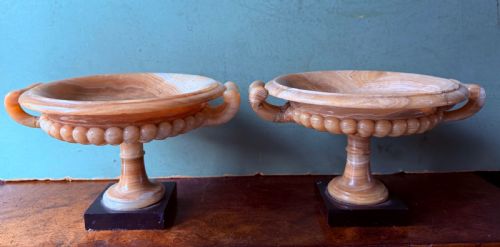
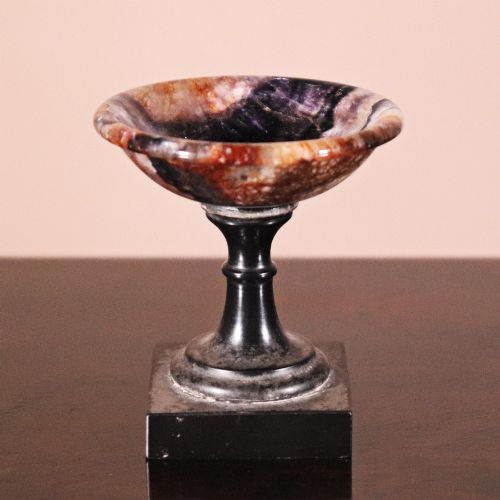
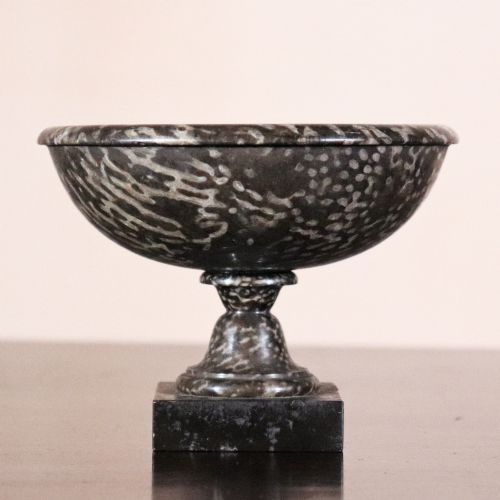
When searching for a black marble pedestal, a buyer encounters a range of supports, blocks, and plinths designed to display sculptural works and decorative vessels. The selections span from nineteenth-century Italian Grand Tour souvenir bases to Victorian and Edwardian stands.
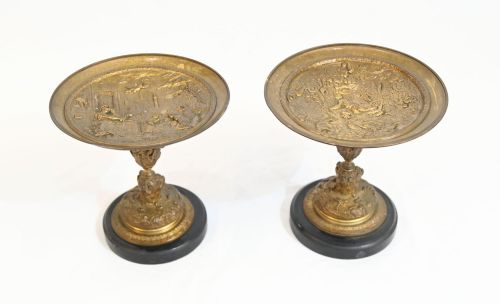
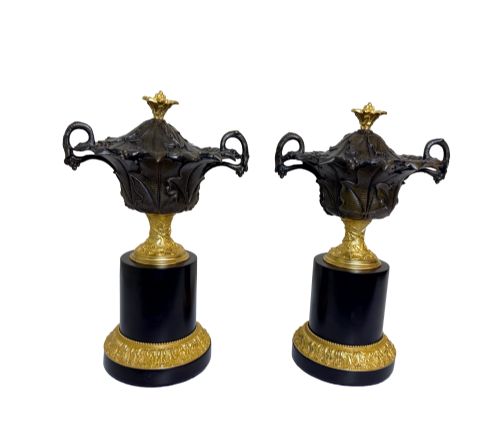
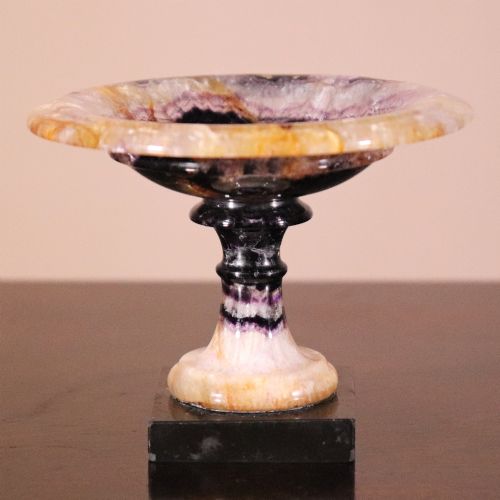
Most examples integrate dark stone with contrasting materials such as gilt bronze, brass, or wood. These items serve a functional role in interior display, elevating smaller items like tazzas, urns, and bronze figures.
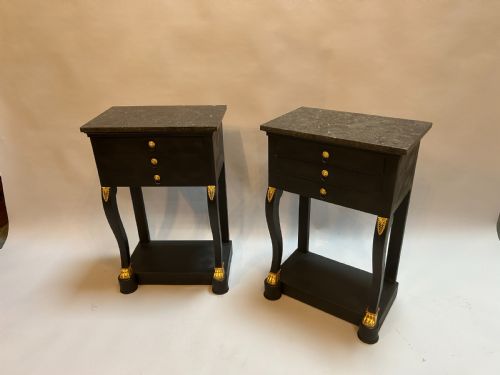
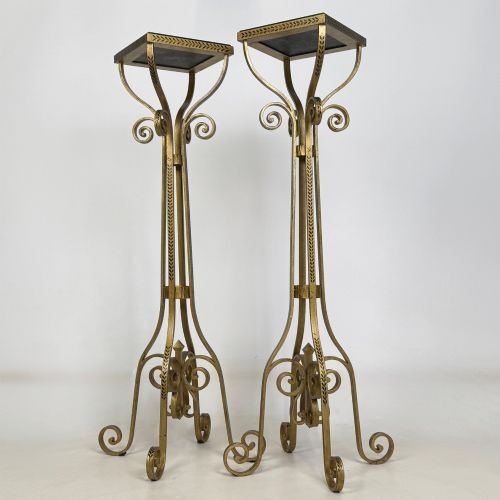
Originating largely from nineteenth-century European workshops, French Empire and Neoclassical styles dominate the available forms. Buyers also find occasional twentieth-century Art Deco interpretations alongside specialised specimen marble tables and plant stands.
How they were made
Makers shaped heavy stone blocks through sawing, turning, and hand-polishing to achieve smooth, reflective dark surfaces. Craftsmen often combined this dense material with structural supports of mahogany, ebonised wood, iron, or cast bronze.
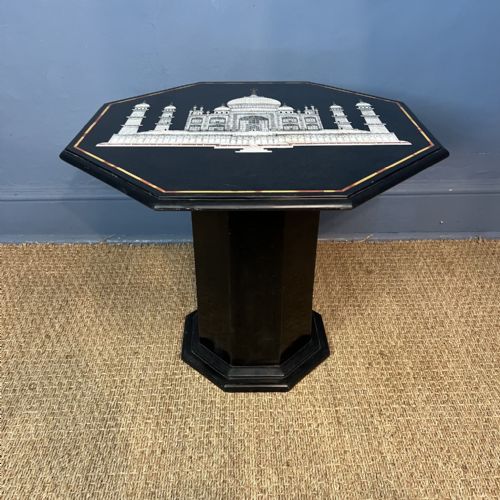
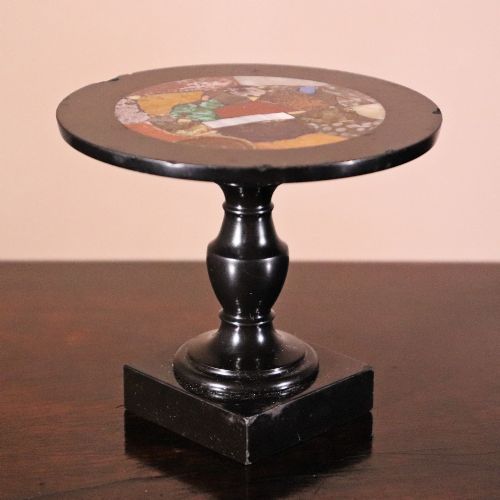
Decorative elements frequently involved applied cast mounts in gilt bronze, brass, or ormolu. Inlaid techniques such as pietra dura or scagliola appear on associated tops and plinths, combining natural minerals into geometric or floral patterns.
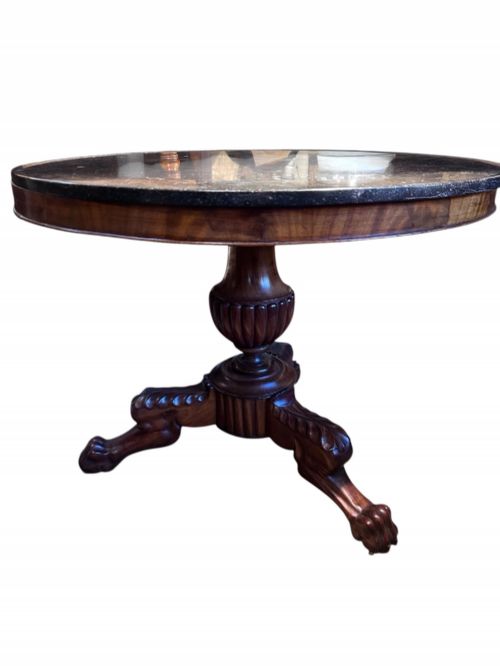
Several items double as carved wooden hounds holding up tabletops, proving that Victorian furniture occasionally possessed a sense of humour.
What varies in quality
The standard of a piece rests on the depth of the stone polishing and the crispness of any metal mounts. Superior examples display seamless joins between the stone plinth and secondary materials like bronze or brass.
Artisans who carved intricate details into the stone or achieved complex figural casting set higher benchmarks for craftsmanship. Simpler turned supports show less elaborate ornamentation, relying instead on the natural grain and uniform dark tone of the marble.
The Black Marble Pedestal Glossary
- Grand Tour
- A nineteenth-century tradition where wealthy travellers collected souvenirs such as small bronzes and marble architectural fragments across Europe. These items were often mounted on stone bases to serve as desk or cabinet ornaments.
- Pietra dura
- An Italian mosaic technique using cut and fitted polished coloured stones to create images or geometric designs. Artisans embedded these mineral panels into tabletops and structural bases.
- Tazza
- A shallow saucer-shaped vessel mounted on a stem and foot, traditionally used for display. Nineteenth-century examples often combined marble bowls with gilt bronze stands.
- Scagliola
- A composite material made from pigmented selenite, glue, and plaster, applied to resemble more expensive inlaid marbles. Craftsmen polished the surface to mimic genuine stone work.
- Gueridon
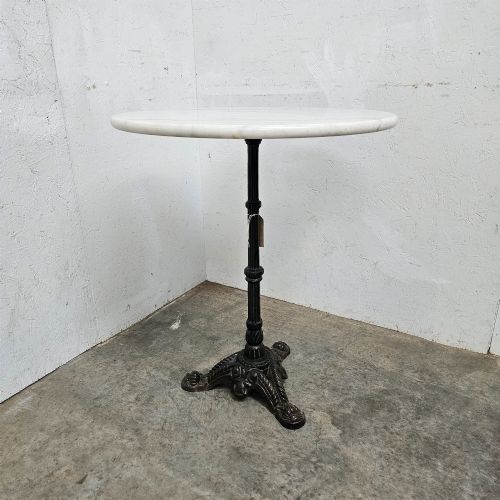
- A small round French table supported by a central column or multiple legs. These forms frequently utilised marble tops paired with mahogany, painted wood, or iron frames.
Black Marble Pedestal: Frequently Asked Questions
What were black marble pedestals used for?
These stone supports were utilised in nineteenth-century interiors to elevate bronze sculptures, decorative clocks, and tazzas above furniture surfaces. Raising the object improved its visibility and protected delicate tabletops from heavy metal or stone bases.
They also functioned as standalone display columns for plants, urns, and portrait busts in grand reception rooms.
How do I style a pedestal in a modern room?
A dark stone plinth creates a strong vertical anchor when placed in an entryway or corner. To balance the weight of the material, position a contrasting bronze sculpture, a ceramic vessel, or a trailing plant on the upper surface.
The neutral dark tones allow these stands to sit comfortably alongside minimalist furniture or traditional interiors.
How can I tell the period of a stone pedestal?
Nineteenth-century pieces often display hand-turned stone work combined with cast bronze mounts or timber columns styled after French Empire and Neoclassical designs. Examining the underside and fixing methods reveals older hand-cut screws or traditional joinery.
Later twentieth-century iterations tend toward simpler geometric lines, reflecting Art Deco preferences for streamlined forms.
Are these pedestals suitable for outdoor use?
Most antique supports use interior cabinet woods, iron frames, or polished decorative marbles that are vulnerable to weathering and moisture. Natural stone can crack in freezing temperatures, while applied finishes and secondary metals deteriorate rapidly outside.
These pieces belong in climate-controlled indoor spaces where their polished surfaces remain protected.