




Black Marble Centre Table
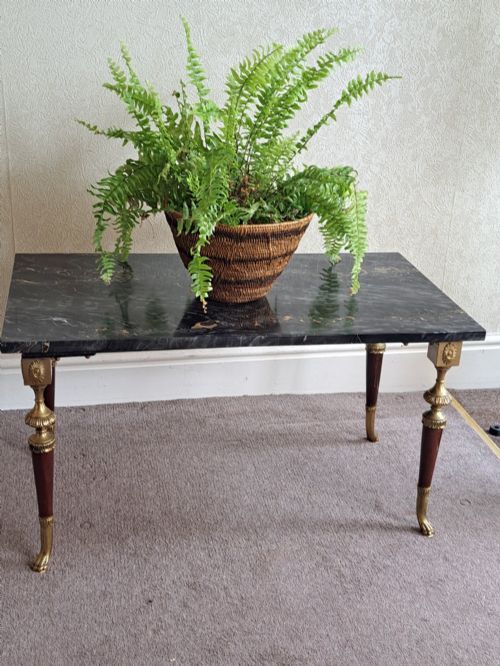
A black marble centre table brings weight and polish to a room, offering a striking surface supported by mahogany, burr elm or ebonised wood.
Black Marble Centre Table
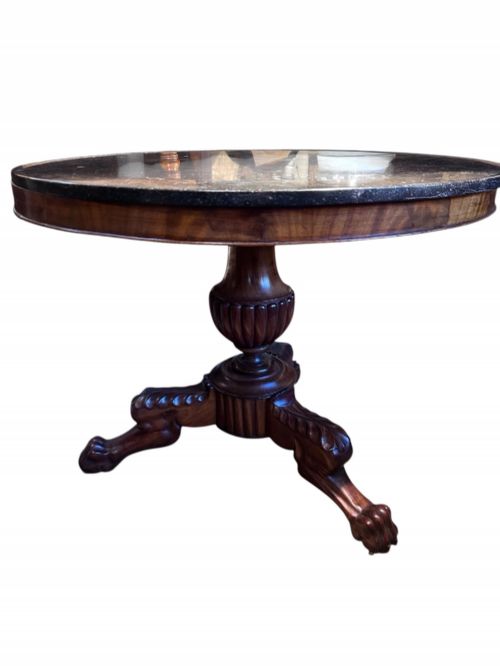
A black marble centre table is a freestanding piece designed to sit in the middle of a room, functioning as a focal point or a surface for display. Buyers searching for a black marble centre table encounter circular guéridons, low coffee tables and occasional tables originating from various periods including the Regency, Georgian and nineteenth century.
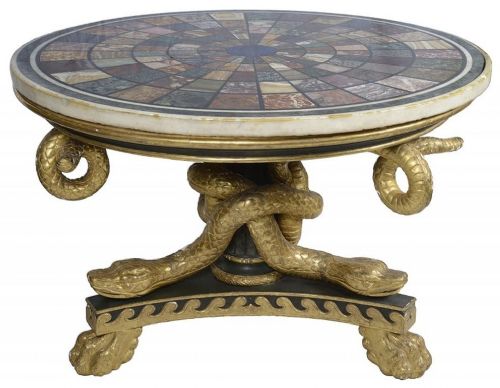
The materials span mahogany, burr elm, ebonised wood and painted frames paired with heavy stone tops. Many examples adhere to French Empire, Neoclassical and Florentine Renaissance Revival styles, showing deep historical influences from European workshops.
Construction and Materials
These tables combine dense stone tops with robust wooden frames constructed from mahogany, burr elm or ebonised wood. Some pieces incorporate brass mounts, ormolu details and copper elements to accent the timber structures.
Surface decoration ranges from pietra dura inlay and painted finishes to parcel silvering. Stonemasons and cabinet makers shaped the heavy marble slabs to fit circular or low table bases.
Black Marble Centre Table Retail Price Guide 2026
Typical asking prices for black marble centre table among the pieces listed under this phrase on Sellingantiques today, from the lower quarter to the upper quarter. They describe what is for sale here now, not the wider market.
The listings show nineteenth century French and Regency pieces alongside twentieth century examples from nineteen thirty, employing mahogany, burr elm, ebonised wood and marble.
Assessing Quality and Execution
Quality reveals itself in the depth of the timber grain, such as figured burr elm or rich mahogany, and the precision of the stone cutting. The integration of bronze or ormolu mounts and the intricacy of pietra dura work distinguish finer examples from simpler production.
Proportion and stylistic consistency dictate the visual strength of the piece, particularly in revival styles where classical balance matters. The stability of the heavy top upon its wooden base relies entirely on expert structural joinery.
Paul Sormani·B Battioli
The Black Marble Centre Table Glossary
- Guéridon
- A small French table, typically circular and supported by a central pillar or tripod base. These pieces frequently feature marble tops.
- Pietra dura
- An artistic technique utilising cut and fitted polished coloured stones to create geometric or pictorial designs. This work often appears on Florentine tabletops.
- Ormolu
- Gilded bronze applied as a decorative mount to furniture frames. It provides a bright metallic contrast against dark timber and black marble.
- Ebonised wood
- Timber treated and stained to resemble genuine ebony. This finish was common in nineteenth century furniture making.
Black Marble Centre Table: Frequently Asked Questions
Where should I place a centre table?
A centre table belongs in the middle of a room where it can be seen from all sides. It works effectively in large hallways or principal reception rooms.
Ensure there is enough walking space around the perimeter so the piece functions properly as a focal point.
How do I care for a marble top?
Marble requires gentle cleaning with a damp cloth and mild soap to protect the polished surface. Avoid acidic liquids that can etch the stone over time.
Using coasters and mats helps preserve the finish against everyday wear.
What is the difference between a guéridon and a coffee table?
A guéridon is traditionally a taller French table with a central pillar, designed for display or as a small stand. Coffee tables are lower to the ground and suited for seating areas.
Many nineteenth century guéridons are adapted to lower heights for modern living.
How do I identify a Regency period table?
Regency tables often draw inspiration from classical antiquity, utilising dark woods, heavy marble and restrained brass detailing. They date from the early nineteenth century.
Proportions tend to be formal and architectural, reflecting the design tastes of the era.