



Louis Philippe Marble Table
A louis philippe marble table brings the understated elegance of nineteenth-century France into a room through clean timber lines and cool stone.
Louis Philippe Marble Table
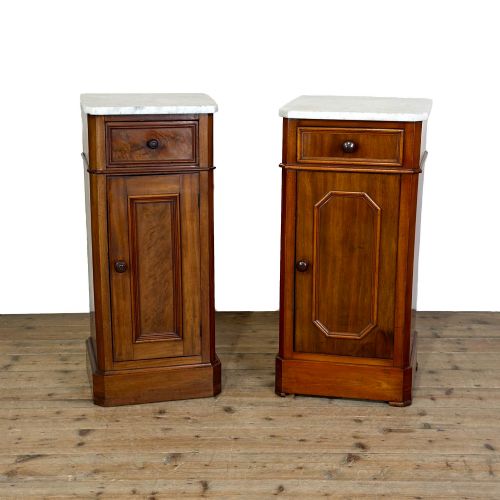
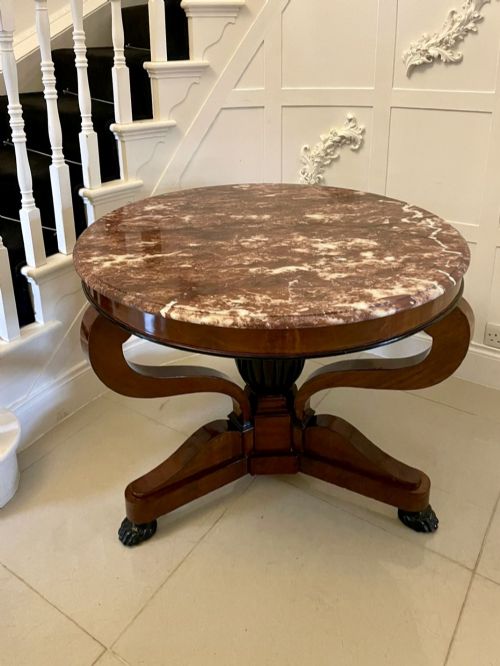
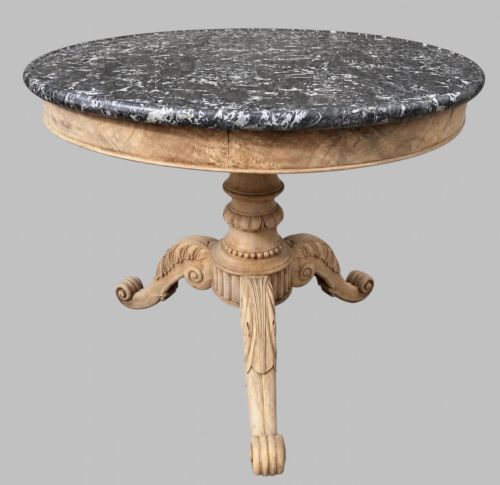
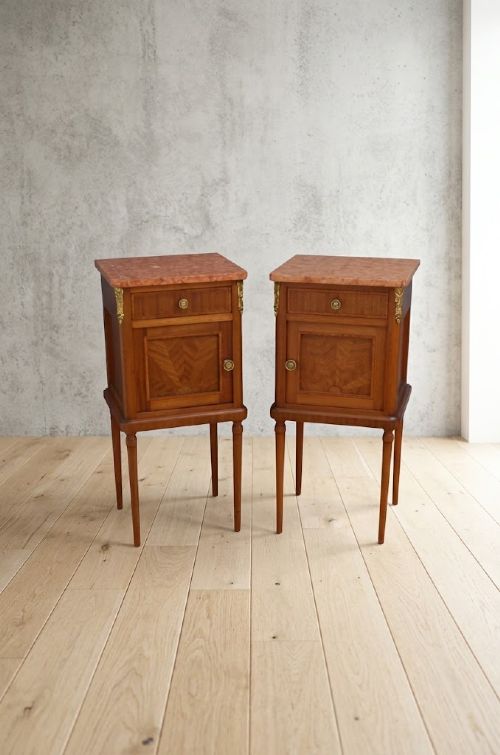
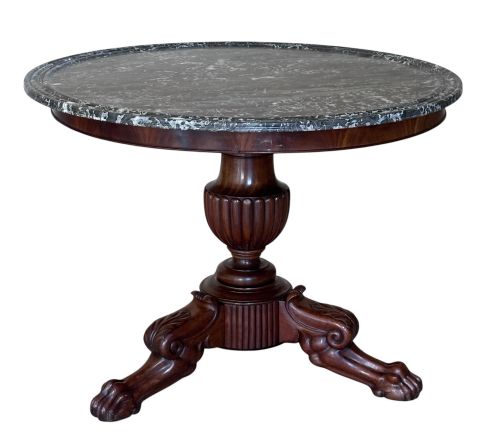
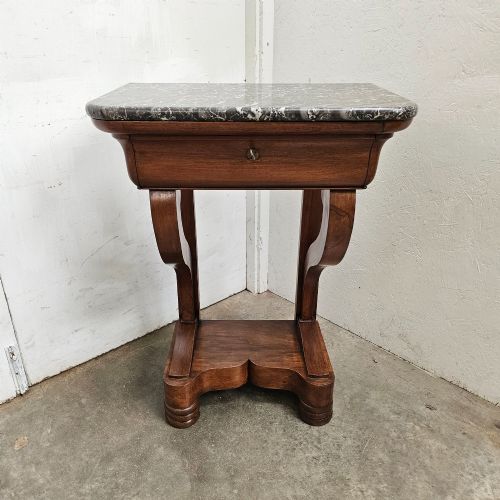
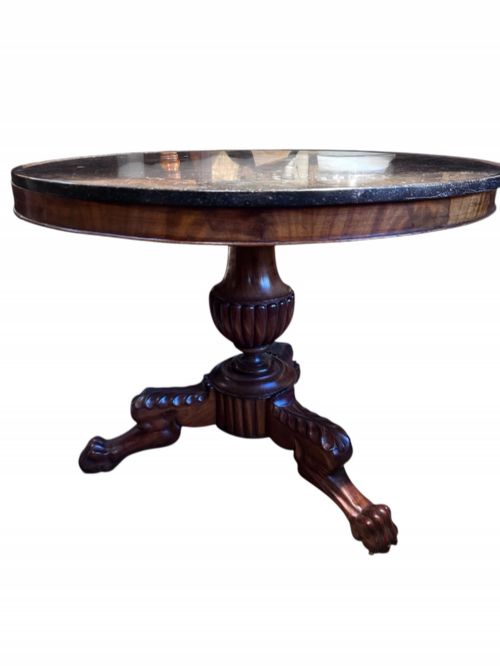
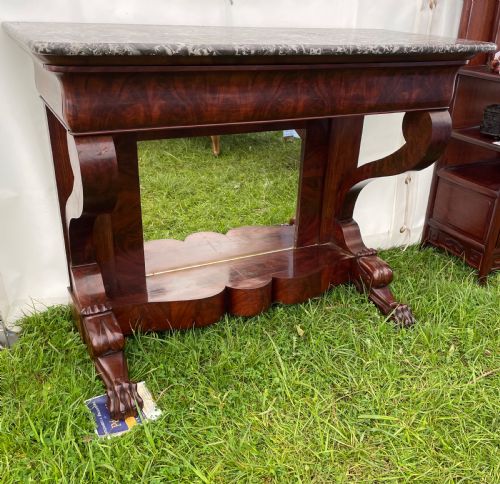
A louis philippe marble table typically takes the form of a round gueridon centre table, a console table, or an occasional piece designed for domestic utility. These pieces originate primarily from the nineteenth century, drawing on French regional cabinet-making traditions that favour restrained curves over heavy ornamentation.
Buyers will most frequently encounter mahogany, walnut, burr walnut, and ebonised wood frames supporting fitted marble tops. The form balances structural simplicity with the natural grain of the timber and the varied patterns of the stone surface.
The style spans several decades around the mid nineteenth century, occasionally appearing alongside French Empire and Restoration influences in nineteenth century French furniture. Each piece serves as a functional surface that anchors a room with period character.
Judging quality in nineteenth century tables
Quality rests in the selection of timber veneers, particularly figured or burr walnut and rich mahogany, which display depth and movement across the surface. The integration of the marble top into the wooden rebate reveals the precision of the joiner.
Proportion and stability separate standard examples from finer pieces, especially in the balance of the central pillar or the joinery of console frames. The crispness of carved details and the finish applied to ebonised or bleached walnut indicate the maker's hand.
Louis Philippe Marble Table Retail Price Guide 2026
Typical asking prices for louis philippe marble table among the pieces listed under this phrase on Sellingantiques today, from the lower quarter to the upper quarter. They describe what is for sale here now, not the wider market.
Some nineteenth-century French tables hide extra drawers just beneath the marble rim, perfect for stashing midnight letters.
The Louis Philippe Marble Table Glossary
- Gueridon
- A small circular table on a central pillar, frequently topped with marble. This form became central to French domestic interiors during the nineteenth century.
- Console table
- A table designed to stand against a wall, sometimes fitted with a mirror back or mounted directly to support a heavy stone slab.
- Burr walnut
- Timber taken from the burl growth of a walnut tree, prized for its swirling, highly figured grain patterns on table tops.
- Ebonised wood
- Timber treated to imitate ebony, providing a deep black finish that contrasts sharply with white or grey marble.
- Breccia marble
- A type of variegated stone composed of angular fragments embedded in a fine-grained matrix, seen on select French tables.
Louis Philippe Marble Table: Frequently Asked Questions
Where should I place a gueridon table?
A round centre table suits the middle of a reception room or an entrance hall where it can be viewed from all sides. It functions well as a surface for a lamp or a floral arrangement.
Ensure there is adequate clearance around the pedestal so the piece remains accessible and acts as a natural focal point within the room.
How do I clean a marble top?
Wipe the stone surface with a soft, damp cloth and dry it immediately to prevent water spots. Avoid acidic cleaning agents that can etch the polish.
Routine dusting keeps the timber frame and the stone in stable condition without risking damage to the antique finish.
What distinguishes this style from Empire furniture?
Louis Philippe furniture drops the heavy gilt bronze mounts and military motifs of the earlier French Empire style. The lines are softer and focus on the natural beauty of wood grain.
This restraint makes the pieces adaptable to contemporary interiors while retaining their nineteenth-century origins.
Are these tables suitable for daily use?
The solid timber frames and heavy stone tops make these tables durable for everyday placement in a home. They were built for practical domestic tasks in nineteenth-century France.
Using coasters and placing them away from direct heat sources will protect the timber and the polished marble over time.