
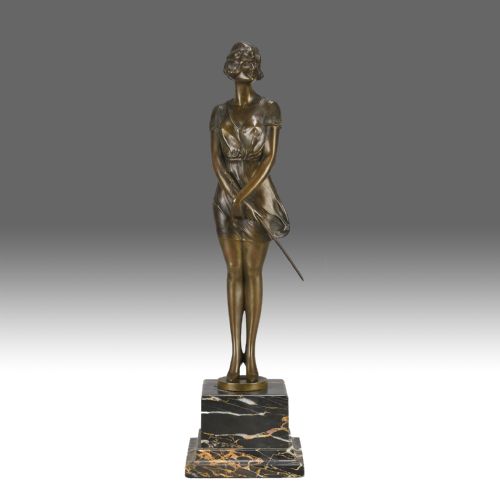
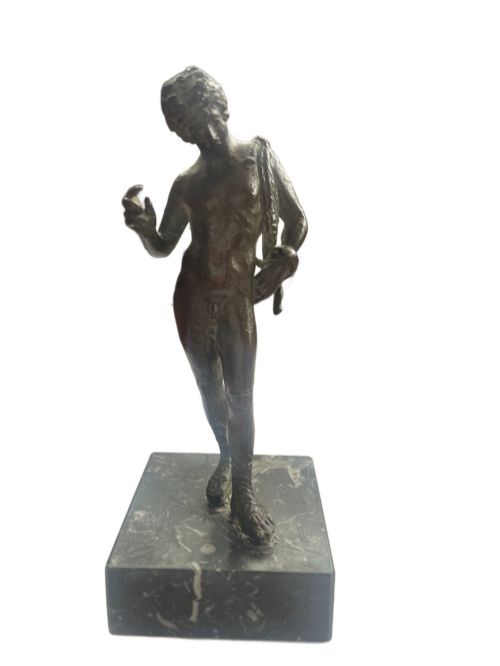


Black Marble Bronze Statuette
A black marble bronze statuette brings together cast metal and dark stone, offering sculptural presence for a desk or mantelpiece.
Black Marble Bronze Statuette
When you search for a black marble bronze statuette, you look at figural sculptures mounted on heavy stone plinths or bases. These pieces combine cast metal figures with contrasting dark mineral supports, ranging from simple blocks to shaped fossil marble pedestals.
The versions most likely to meet you on this page date from the nineteenth century up through the nineteen-twenties and nineteen-thirties. You encounter Grand Tour souvenirs, French Empire models, Egyptian Revival subjects, and striking Art Deco dancers.
Subjects vary widely across these periods, encompassing mythological figures like Narcissus and sphinxes, historical leaders such as Napoleon, exotic dancers, birds, and allegorical studies. The metal component frequently receives cold painted or silvered finishes to enhance the sculptural detail.
Materials and construction
Foundry work relied on traditional bronze casting techniques to produce figures with sharp surface definition. Makers sometimes applied silvered or cold painted treatments directly to the bronze surface to render garments, hair, or feathers with distinct colour and texture.
The bases and plinths utilise solid black marble or fossil marble, cut and polished to provide a stable, weighty foundation for the metal sculpture above. Gilt metal or brass elements occasionally appear in mounts and details to contrast against the dark stone.
Listings feature black marble, fossil marble, bronze, silvered bronze, and gilt metal across nineteenth-century and early twentieth-century works.
Distinctions in quality
Quality rests primarily on the crispness of the bronze cast and the subtlety of the finishing work on the metal. Superior pieces retain fine facial expressions, delicate hand-chased details, and well-executed cold painted or silvered surfaces.
The selection and preparation of the marble base also define the standard of a piece. Finer examples feature well-polished fossil marble or deep black stone accurately fitted to the bronze sculpture without awkward gaps or mismatched proportions.
Bruno Zach·Ferdinand Preiss·Demetre H. Chiparus·Claire Colinet
The Black Marble Bronze Statuette Glossary
- Cold painted bronze
- A technique where paint is applied to a cold bronze casting rather than fired in a kiln. This method allows for delicate polychrome details on garments and skin.
- Grand Tour
- A traditional trip through Europe undertaken by upper-class travellers in the eighteenth and nineteenth centuries. Tourists frequently purchased small bronzes and antiquities as souvenirs.
- Fossil marble
- A limestone matrix containing visible ancient fossils, polished to a smooth finish. It provides patterned, earthy tones beneath mounted bronze sculptures.
- Egyptian Revival
- An artistic style drawing inspiration from ancient Egyptian motifs and deities. It appears frequently in nineteenth-century decorative arts and sculpture.
- Art Deco
- A design style flourishing in the nineteen-twenties and nineteen-thirties characterised by streamlined forms and stylised figures. Sculptures from this period often capture dynamic movement in dancers.
Black Marble Bronze Statuette: Frequently Asked Questions
What periods do these statuettes come from?
The pieces span the nineteenth century, including Grand Tour and Empire periods, alongside early twentieth-century examples from the nineteen-twenties and nineteen-thirties.
Art Deco and Egyptian Revival styles dominate the later twentieth-century items, while nineteenth-century works often reflect classical or historical subjects.
How are the bronze figures attached to the marble?
Makers typically secured the metal sculptures to the stone plinths using threaded rods, nuts, or pins running through the base. This method ensured the heavy bronze remained firmly anchored to the marble support.
Inspecting the underside usually reveals the traditional fastening hardware utilised during the original period of manufacture.
Where should I display a marble and bronze statuette?
These sculptures suit tabletops, mantelpieces, desks, and dedicated display cabinets where their contrasting textures catch the light. The heavy stone base provides stable placement on flat wooden or glass surfaces.
Keeping them away from direct heat sources and damp areas protects both the metal finish and the polished stone polish.
How do I distinguish an Art Deco piece from a nineteenth-century one?
Art Deco statuettes from the nineteen-twenties and nineteen-thirties display stylised geometries, dynamic dancers, and sleek metallic finishes like silvering or cold painting. Subjects often feature modern movement and fashion of the period.
Nineteenth-century examples lean towards classical mythology, historical figures like Napoleon, and archaeological revivals such as sphinxes and shabtis, mounted on simpler black or fossil marble blocks.