









Black Marble Base Figure
A black marble base figure combines a heavy, dark stone plinth with a cast metal or carved subject, bringing grounded weight to domestic spaces.
Black Marble Base Figure
A black marble base figure brings together a sturdy stone plinth and a sculptural subject, uniting mineral weight with figurative metalwork or carving. You will most frequently encounter examples created during the nineteenth century and the Art Deco period of the early twentieth century.
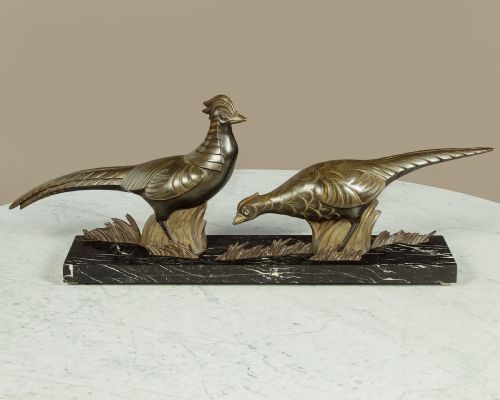
The subjects range from mythological figures and classical antiquities associated with the Grand Tour to dynamic dancers and animals cast in bronze, spelter, or carved from wood. The heavy black stone serves to anchor these diverse forms, providing a neutral and architectural foundation that balances the action of the sculpture above.
These pieces function as tabletop sculptures, night lights, and figural lamps, appearing across Victorian, Neoclassical, and Egyptian Revival styles. The black marble acts as a consistent stage, whether supporting a patinated bronze sphinx, a gilded dancer, or a carved wooden animal.
Materials and construction methods
Foundries and studios paired polished black marble and fossil marble plinths with metal components cast using the lost-wax method or sand casting. Many nineteenth-century and later figures combine patinated or cold-painted bronze with the dense stone base, fixed by internal threaded bolts.
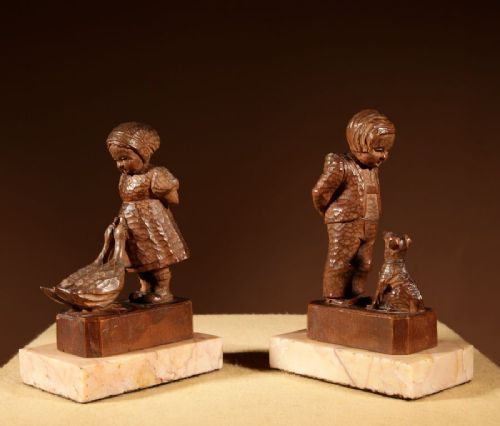
Spelter appears as a frequent alternative to bronze in twentieth-century works, often receiving a metallic finish to simulate more costly materials. Carved wood and terracotta also appear mounted directly onto the stone blocks, expanding the range of tactile surfaces placed against the dark marble.
An accordion-playing Pierrot made of spelter sits cheerfully upon a heavy marble block, bringing musical whimsy to the dark stone.
Distinguishing quality in cast and carved works
Quality rests in the crispness of the chasing on bronze casts and the precision with which the figure fits into its stone plinth. Superior examples display sharply defined facial expressions, intricate cold-painted or gilded surface details, and stable mounting without gaps between metal and marble.
The grade of the stone base contributes significantly to the overall merit of the object. Solid, finely polished black marble or veined fossil marble with clean, bevelled edges elevates the piece far above those mounted on lightweight or hastily cut stone.
Bruno Zach·Pierre le Faguays·Ferdinand Preiss·Demetre Chiparus·Franz Iffland
The Black Marble Base Figure Glossary
- Grand Tour
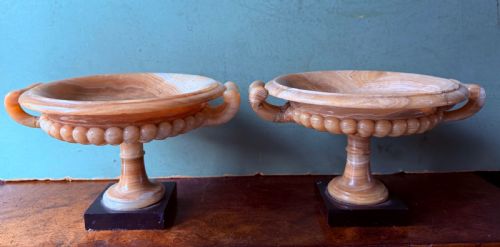
- A cultural journey undertaken by nineteenth-century travellers who collected small-scale bronzes and stone tazze as souvenirs of antiquity. These items were frequently mounted on heavy marble blocks to serve as desk ornaments.
- Cold painted
- A technique where paint is applied to bronze without heat, often resulting in delicate polychrome details on garments and skin. This fragile finish requires careful preservation to maintain its original colour.
- Spelter
- A zinc alloy utilised as a less expensive substitute for bronze in decorative sculptures. It takes patination and metallic paint well, though it is softer and lighter than cast bronze.
- Patinated bronze
- Metal treated with chemical solutions to produce a controlled surface colour ranging from deep brown to green. This treatment protects the bronze while defining the contours of the sculpture.
- Animalier
- A nineteenth-century artistic focus on the realistic depiction of animals in motion or repose. Figures of stags, dogs, and lions from this movement are frequently set upon substantial stone bases.
Black Marble Base Figure: Frequently Asked Questions
How do I clean a black marble base?
Dust the marble regularly with a soft, dry cloth to prevent accumulation in the corners and crevices. Avoid harsh chemical cleaners or acidic solutions that can etch the polished stone surface.
For the metal figure above, use only a dry microfibre cloth, as moisture can damage patinated or cold-painted surfaces.
Are these figures securely attached to the marble?
Most quality pieces utilise a threaded rod or screw running from the underside of the marble up into the base of the sculpture. This ensures the heavy metal or wooden figure remains firmly anchored to the stone plinth.
Over time, handling can cause this connection to loosen, which requires careful tightening from beneath the base.
What is the difference between bronze and spelter?
Bronze is a durable copper alloy that accepts fine chiselling and holds a rich patina for centuries. Spelter is a softer zinc-based metal that was cast in large quantities during the early twentieth century as an economical alternative.
Spelter figures are generally lighter than bronze and may show signs of fatigue or cracking around stress points.
How do I date a black marble base figure?
Dating relies upon the stylistic indicators of the sculpture, such as the distinct geometric drapery of Art Deco dancers or the classical proportions of nineteenth-century Grand Tour bronzes. The cut and polish of the marble plinth also offer clues, as earlier pieces often feature hand-finished edges.
Signatures or foundry marks stamped into the metal provide the most direct evidence of origin and date.