


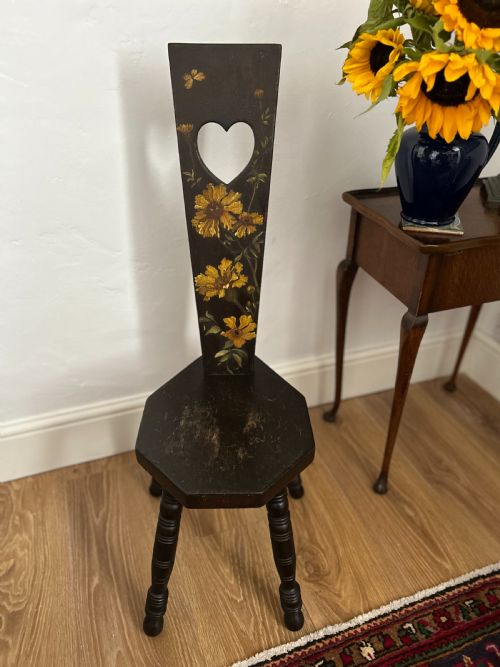


Black Leg Accent Chair
A black leg accent chair brings dark timber supports and varied period forms together to anchor a room.
Black Leg Accent Chair
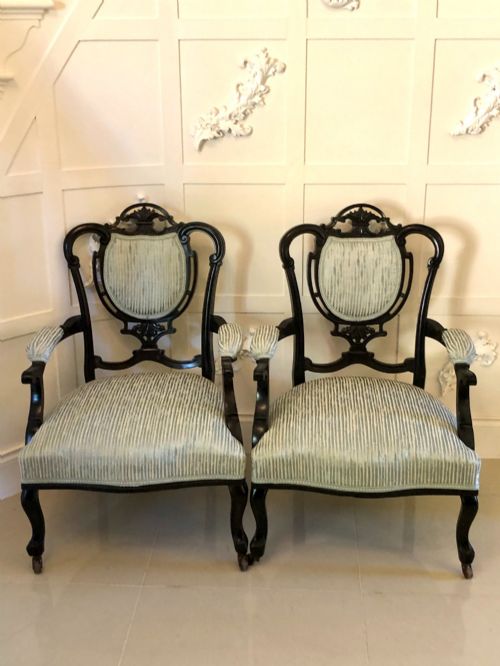
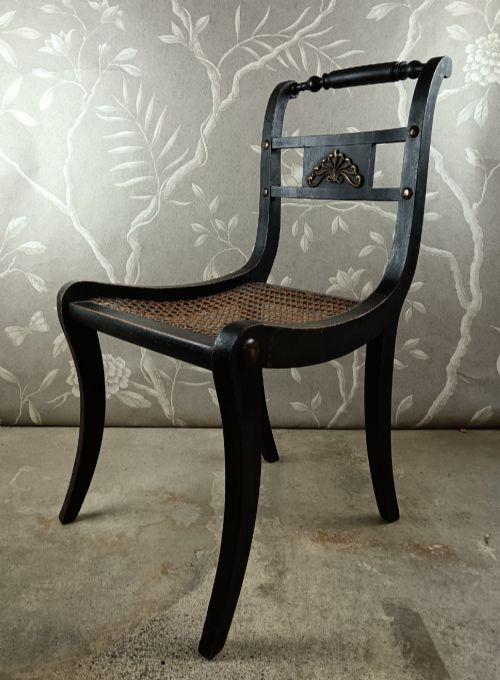
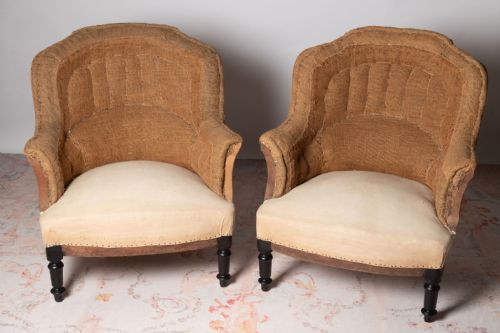
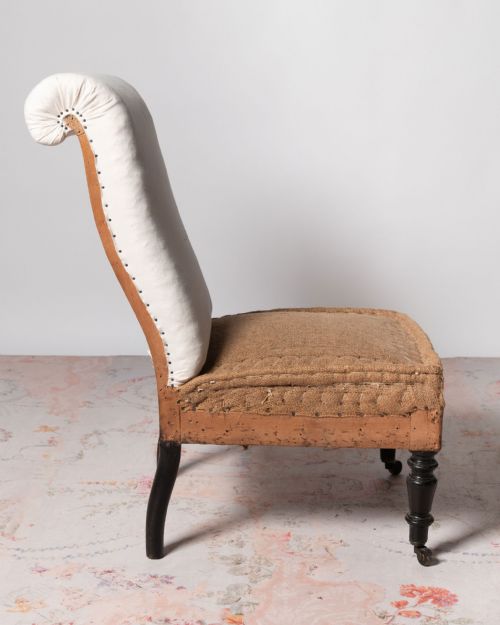
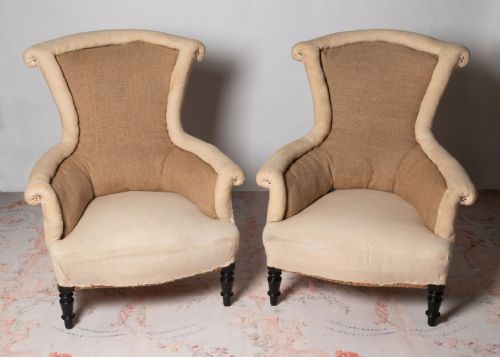
A search for a black leg accent chair directs attention towards seating featuring ebonised, lacquered, or dark wood supports across multiple historical periods. The pieces appearing here span from the eighteenth century through to the early twentieth century, taking forms such as side chairs, armchairs, hall chairs, slipper chairs, and nursing chairs.
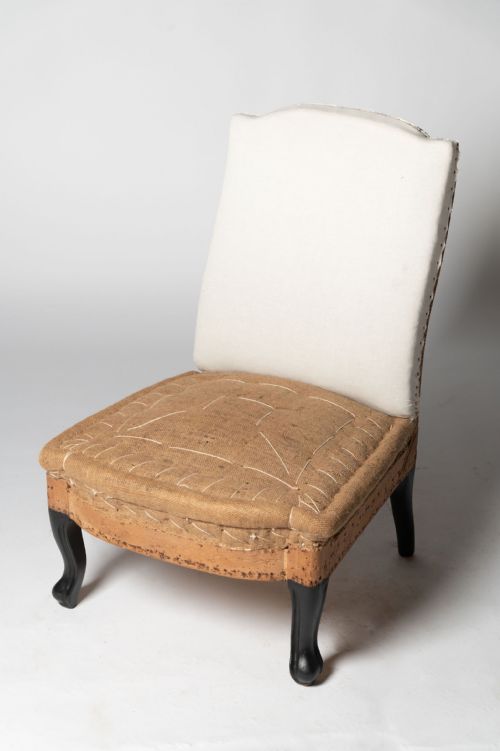
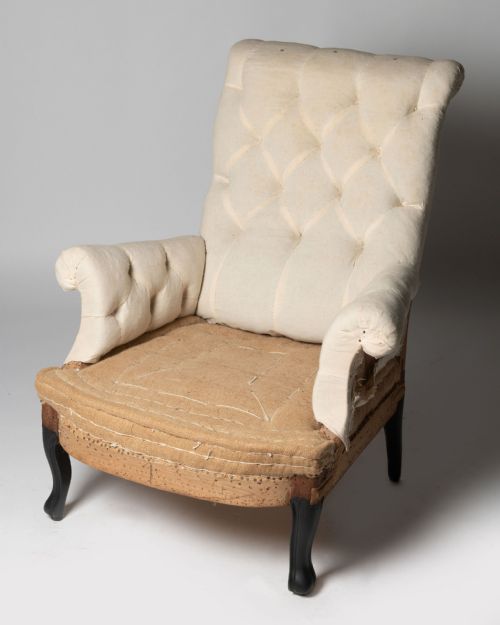
Buyers are most likely to encounter nineteenth-century examples, including Victorian ebonised designs and French styles like the Napoleon III scroll back slipper chair. These items combine dark structural framing with materials such as cane, fabric, hessian, and calico.
The selection ranges from Regency Trafalgar sabre leg models and Anglo Indian carved ebony pieces to country items like a Welsh spinning chair. Such variety means the category encompasses formal parlour seating, boudoir chairs, and folk art objects sharing dark lower supports.
Materials and construction methods
Makers utilised woods such as oak, walnut, and exotic timbers, often finishing supports through ebonising, japanning, or black lacquer to achieve a dark surface. Brass hardware and gilt decoration frequently complement these black frames.
Upholstery methods rely on traditional textiles including calico, hessian, and patterned fabrics, whilst other pieces feature woven cane seats. Carving and hand-painted details appear on frames originating from English, French, Dutch, and Ceylonese workshops.
Black Leg Accent Chair Retail Price Guide 2026
Typical asking prices for black leg accent chair among the pieces listed under this phrase on Sellingantiques today, from the lower quarter to the upper quarter. They describe what is for sale here now, not the wider market.
Listings feature periods spanning from the 18th century to 1920, incorporating ebonised wood, cane, brass, and gilt materials.
Distinctions in quality
The refinement of the carving on the wooden frame separates standard utilitarian seating from pieces displaying intricate detailing, such as the figural work found on carved oak hall chairs or the delicate ornamentation of Regency designs. Original surface treatments, including early gilt decoration and lacquer work, hold greater integrity than later repainting.
Structural execution in the joinery and the retention of original elements, such as cane seats or specific hardware, distinguish finer examples. The origin of the timber, from European walnut to solid Ceylon ebony, further differentiates the pieces.
The Black Leg Accent Chair Glossary
- Ebonised
- Wood treated to resemble ebony by staining or painting the surface black. This finish gained popularity during the Victorian and Regency periods for formal seating.
- Japanning
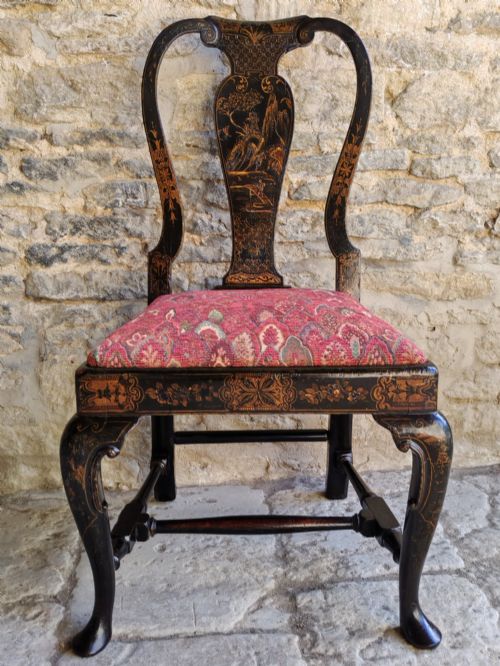
- A European imitation of East Asian lacquerwork involving layered varnishes and resin. It appears on English and Dutch chairs from the eighteenth and early twentieth centuries.
- Slipper chair
- A low-seated upholstered chair originally designed for bedrooms and dressing rooms. Nineteenth-century examples often feature scroll backs and dark wooden legs.
- Tafalgar sabre leg
- A concave-curved rear or front leg sweeping outwards, characteristic of Regency furniture. These supports are frequently seen on ebonised side chairs.
- Caned
- Woven rattan or cane material forming the seat or back panel of a chair. This technique provides a lightweight, resilient surface seen on eighteenth and early twentieth-century pieces.
Black Leg Accent Chair: Frequently Asked Questions
What is the difference between ebonised and lacquered chairs?
Ebonising involves staining or painting timber to imitate solid ebony, creating a matte or polished black wood finish. Lacquering applies resin-based varnishes that can include decorative painting or gilt work.
Lacquered items often reflect Asian influences or European japanning techniques, whilst ebonised pieces focus purely on the dark wooden tone of the frame.
Where should I place a slipper chair?
A slipper chair works well in bedrooms, dressing areas, or reading corners due to its low seat height and compact proportions. Nineteenth-century versions bring decorative presence to small spaces.
They pair effectively with other seating while serving as an individual accent piece against plain walls.
Can I use an antique hall chair daily?
Hall chairs were originally intended for occasional use in entranceways rather than prolonged lounging. Wooden or carved oak models offer sturdy construction suited for contemporary hallways.
Upholstered variants require consideration of the fabric condition and internal padding strength before heavy everyday use.