
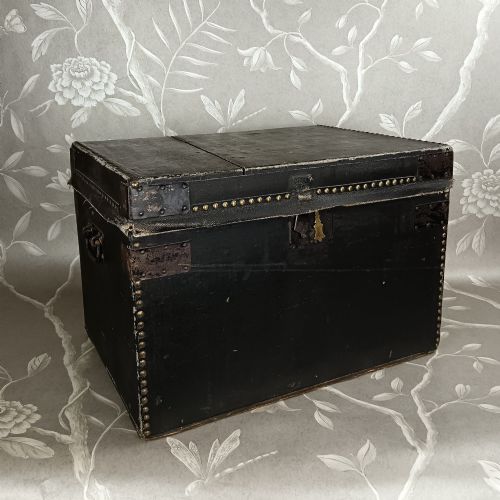
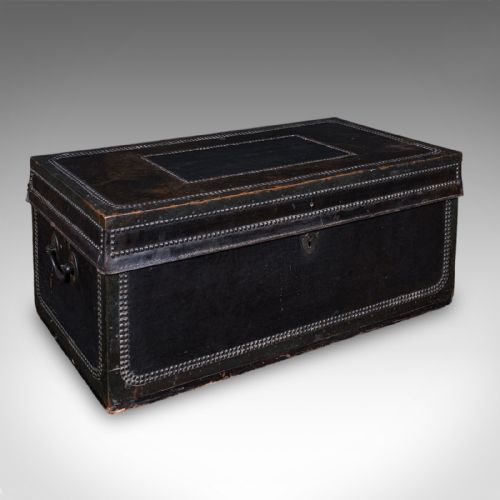


Black Leather Chest
These black leather chest examples span centuries of travel and storage, offering robust utility wrapped in dark hide.
Black Leather Chest
A black leather chest provides substantial storage capacity, appearing across periods from pre 16th century coffer panels up to 1920 trunks. These pieces emerge in various forms including coaching trunks, campaign trunks, jewellery boxes, and shipping chests.
The Victorian era and the 19th century supply the greatest share of these items on this page, alongside specific 1920 examples and earlier works. Buyers encounter forms ranging from large camphorwood chests to compact travelling trunks and lacquer leather pieces.
How they were made
Makers constructed these storage pieces using timber carcasses clad in leather, pig skin, or canvas, reinforced with brass bindings, iron work, and nailhead details. Camphorwood and pine frequently serve as the internal wood substrates.
Workshops applied black lacquer or dark hides over rigid structures, securing the materials with close-set brass tacks and metal hardware suited for coaching and travel.
Some trunks utilise pig skin alongside standard leather, proving that historic packing had a distinct texture of its own.
What varies in quality
The calibre of a piece rests on the integrity of its structural frame and the finishing of its metal mounts, brassbound edges, and leather cladding. Superior examples maintain tight joints and well-preserved surface textures.
Material selection marks the distinction between standard storage trunks and finer creations, particularly where specialised woods like camphorwood or detailed nailhead panel work are present.
Wm. Insall of Bristol·W Insall·Goyard
The Black Leather Chest Glossary
- Coaching trunk
- A sturdy travel chest designed to be strapped to the top or boot of a horse-drawn coach. These containers relied on heavy leather and metal reinforcement to withstand long journeys.
- Campaign trunk
- A portable storage box made for military officers or travellers on the move. They typically feature robust brass corners and handles for frequent transit.
- Coffer
- A heavy wooden box used for safekeeping valuables, often predating standard chest designs. Pre 16th century panels demonstrate this early form of framed construction.
- Camphorwood
- An aromatic timber frequently utilised in trunk interiors to protect stored textiles from insects. Its distinct scent remains a hallmark of antique export chests.
Black Leather Chest: Frequently Asked Questions
What were black leather chests used for?
These chests served primarily for transporting personal belongings, garments, and valuables during travel by coach or ship. Their durable construction protected contents from weather and rough handling on long journeys.
Over time, many transitioned into domestic storage pieces for blankets and seasonal items within the home.
How do I date a black leather chest?
Dating relies on examining the underlying construction materials, hardware styles, and fastening techniques such as nailhead patterns. Victorian and 19th-century examples often feature specific brass binding methods distinct from earlier coffer panels.
Makers' marks or labels applied by firms like those in Bristol also provide direct chronological evidence.
Are these chests suitable for daily living?
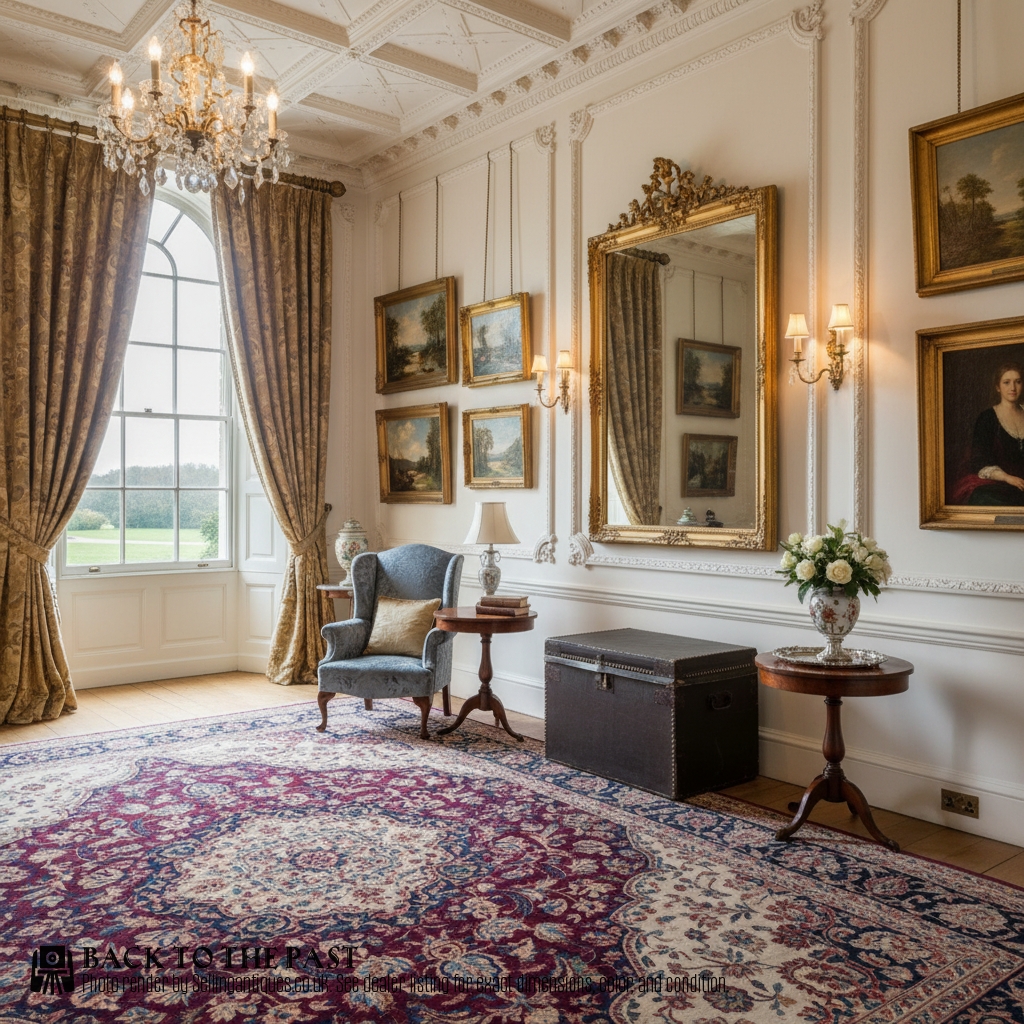
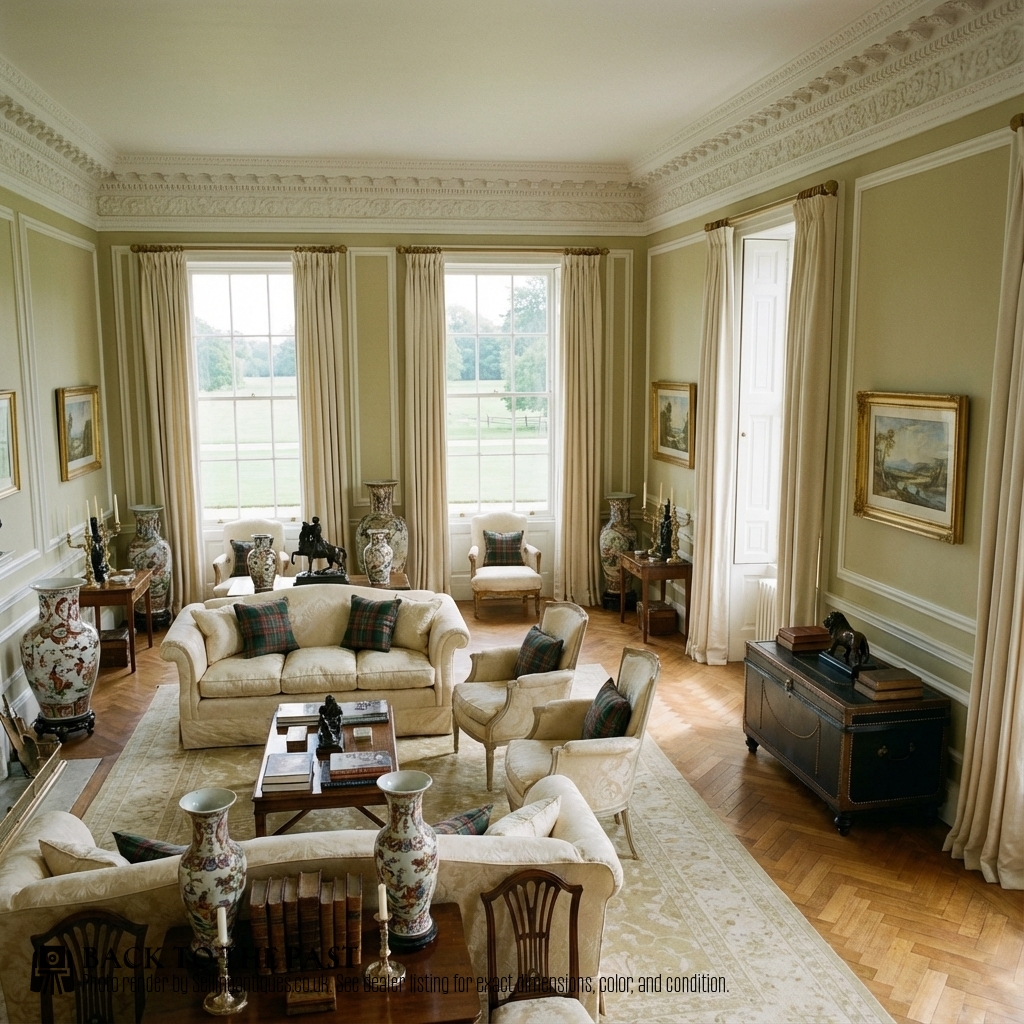
These storage trunks integrate well into modern interiors as coffee tables, end-of-bed storage, or decorative focal points. Their internal space accommodates blankets, books, and household items out of sight.
Placing them in stable indoor environments helps preserve the antique leather and metal hardware.
What is the difference between a trunk and a coffer?
A coffer generally denotes an earlier, heavier box form intended for valuables, often constructed with thick panels and simple framing. Trunks developed later as specialised luggage for travel, incorporating reinforced corners and lifting handles.
Evidence on this page spans from early panel fragments to later Victorian and 1920 travel luggage.