








Black Lacquer Coffee Table
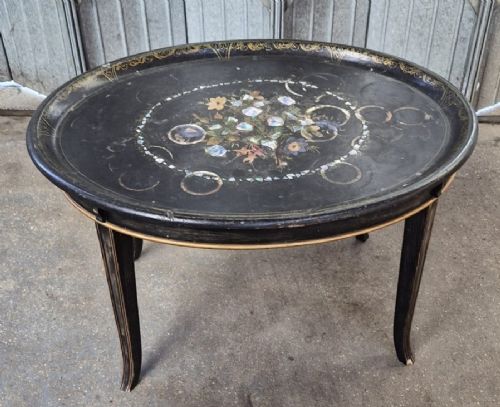
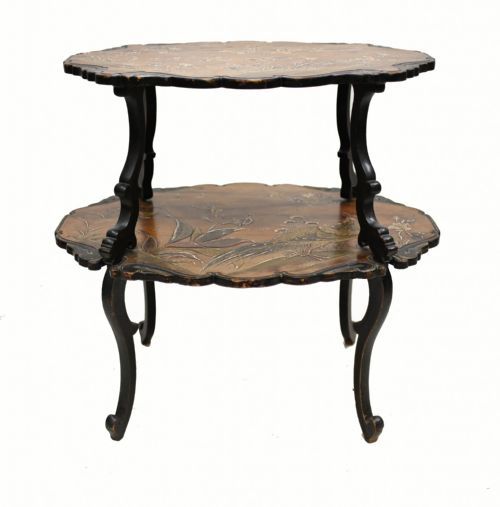
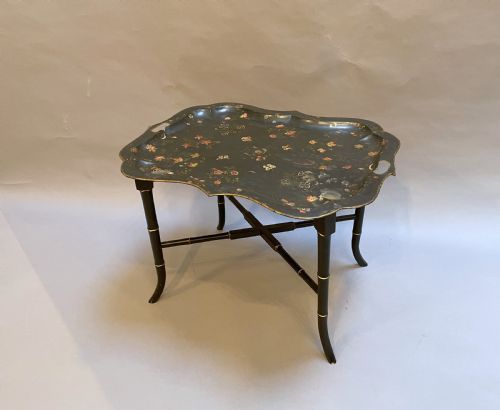
A black lacquer coffee table brings a dark, reflective surface and narrative painted detail into a room, often taking the form of a converted tray on a stand.
Black Lacquer Coffee Table
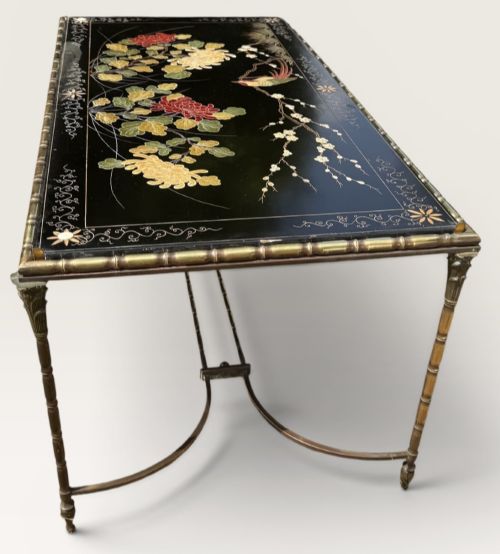
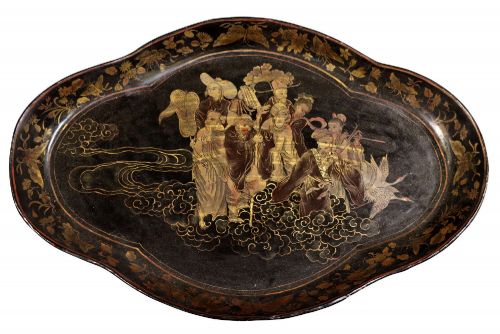
A black lacquer coffee table most frequently appears in the room as an antique serving tray raised upon a low stand, translating past domestic rituals into modern use. These surfaces display varied lineage, ranging from English and French interpretations of Chinoiserie to Chinese export pieces, Victorian papier-mâché, and Burmese craftsmanship.
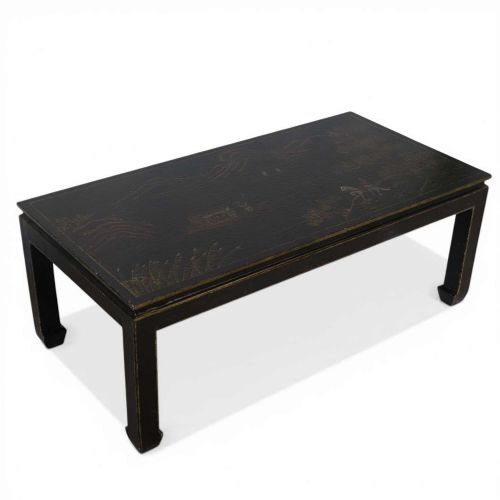
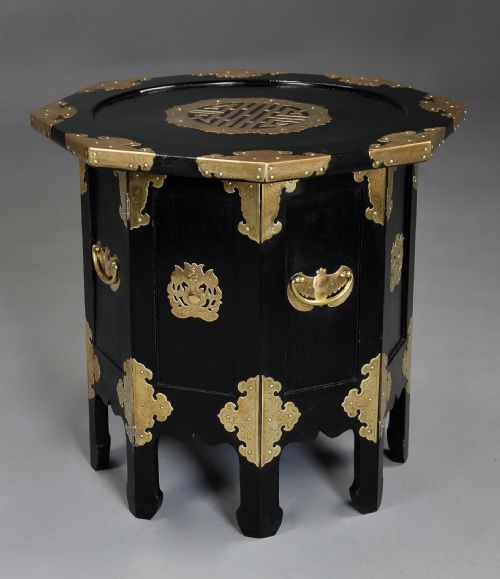
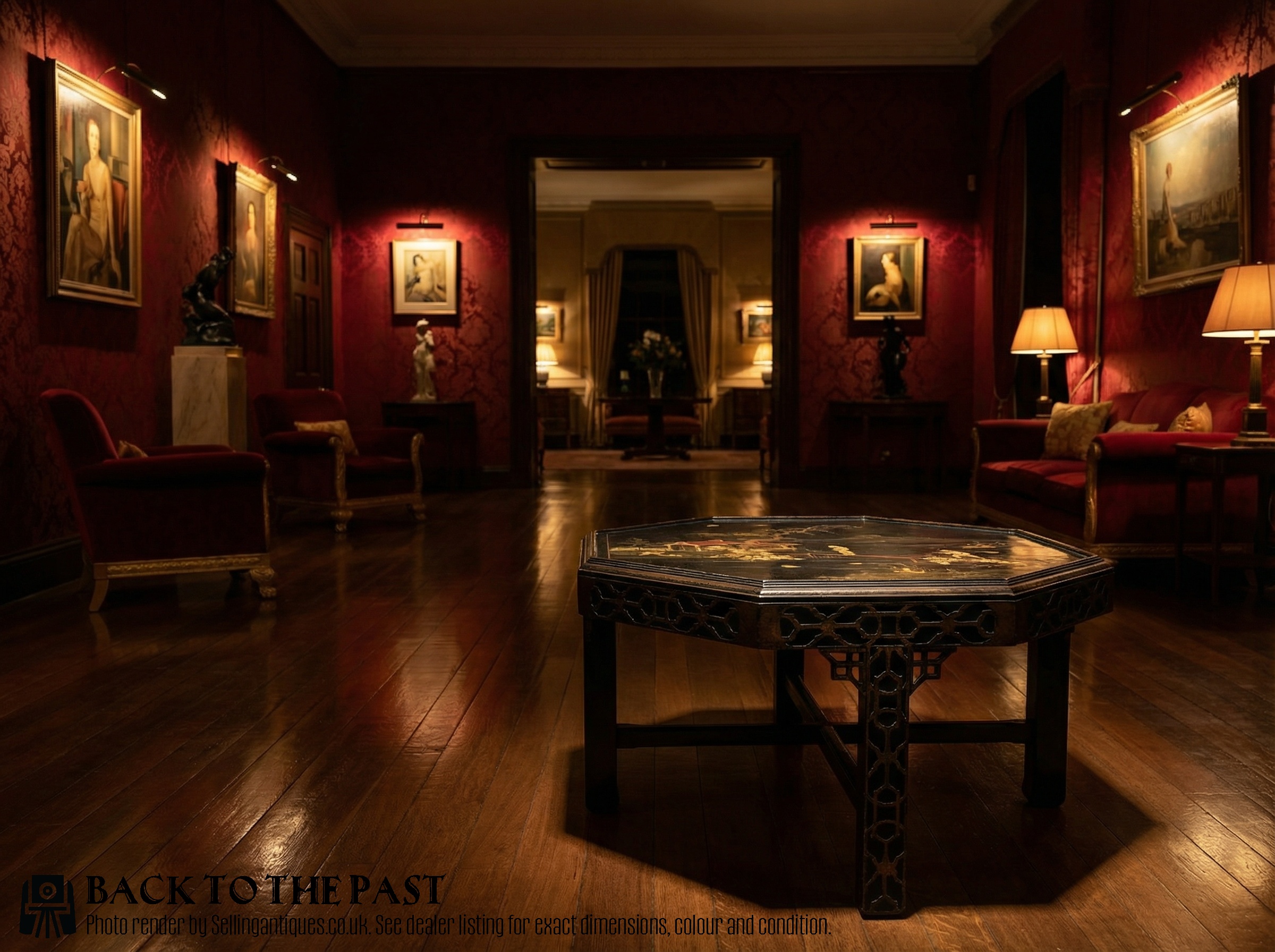
Beyond the tray table on a stand, the selection spans nests of occasional tables, low tables, and occasional tables shaped with octagonal or circular tops. Such pieces draw on periods stretching from the Regency era through the Victorian years and into the Edwardian period and the nineteen-thirties.
Materials and construction
Maker construction relies heavily upon timber, ebonised wood, and papier-mâché as a base for building deep, dark finishes. Artisans applied layers of lacquer to achieve a durable, glossy ground suitable for subsequent decoration.
Decoration often incorporates gold leaf, gilt, and raised relief detail to delineate figures, landscapes, and floral motifs. Brass and iron elements appear in stands, hinges, and occasional fittings, adding structural support to the lighter tray tops.
Black Lacquer Coffee Table Retail Price Guide 2026
Typical asking prices for black lacquer coffee table among the pieces listed under this phrase on Sellingantiques today, from the lower quarter to the upper quarter. They describe what is for sale here now, not the wider market.
Listings feature pieces spanning the eighteenth century through the 1930s, using papier-mâché, lacquer, and ebonised wood.
Distinctions in craftsmanship
Quality rests in the depth of the lacquer surface and the crispness of the painted or gilded scenes, which separate standard production from master workshops. Finer pieces demonstrate precise brushwork and well-integrated relief detail that survive decades of use without losing definition.
The relationship between the top and its support alters the character of the piece, as period stands matched accurately to trays hold greater integrity than later replacements. Structural stability in nests and tables reflects the joining techniques employed by original makers.
Jennens And Bettridge·Henry Clay·Maison Bagues
The Black Lacquer Coffee Table Glossary
- Chinoiserie
- European artistic interpretation of Chinese and East Asian motifs, prominent in decorative painting and lacquerwork. This style defines much of the ornamentation found on tables from the eighteenth to the early twentieth century.
- Papier-mâché
- A composite material made of paper pulp or sheets of paper mixed with glue and pressed into moulds before drying. When finished with black lacquer, it provided a lightweight yet remarkably sturdy surface for trays.
- Japanning
- A European imitation of Asian lacquerwork involving layered varnishes baked and polished to a hard finish. The technique was widely utilised by British and continental cabinet makers.
- Etagere
- A piece of furniture consisting of a set of open shelves for displaying small objects. In table forms, it provides tiered surfaces for decorative placement.
- Toleware
- Painted or enamelled metalware, often iron or tinplate, decorated in dark grounds and gilt. These objects frequently served as functional trays before conversion to table height.
Black Lacquer Coffee Table: Frequently Asked Questions
Are these trays originally coffee tables?
Most antique trays began life as serving vessels or butler's trays used during the nineteenth and early twentieth centuries. They were later mounted onto custom stands to serve as coffee tables.
This conversion practice preserves fragile papier-mâché and wood surfaces by giving them a permanent domestic function at a lower height.
How do I clean a lacquered surface?
Maintenance requires only a soft, dry cloth to remove dust without abrasive polishes or harsh chemical agents. Moisture should be kept away from the finish to protect the underlying lacquer layers.
Wax can occasionally be applied if the maker's finish is stable and sealed, but simple dusting usually suffices for daily care.
How do I distinguish papier-mâché from wood?
Papier-mâché feels surprisingly light yet rigid, with a smooth, dense underside that lacks natural wood grain. Tapping the material gently yields a duller sound compared to solid timber.
Magnification reveals the compressed paper composition around the edges where the original lacquering has worn thin.
Will hot cups damage the lacquer?
Heat and moisture pose risks to historic lacquer finishes, which can craze or cloud when exposed to thermal shock. Using coasters safeguards the delicate gold leaf and painted scenes.
Careful placement ensures the antique surface remains intact for everyday enjoyment in a modern room.