



Black Japanned Furniture
Black japanned furniture brings rich lacquer, gold leaf, and Chinoiserie decoration into a room, offering deep dark surfaces patterned with figures and landscapes.
Black Japanned Furniture
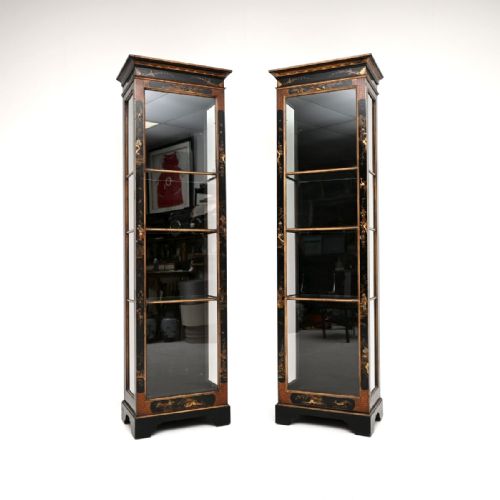
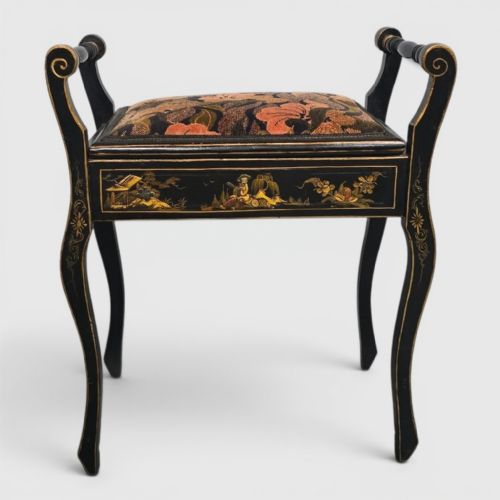
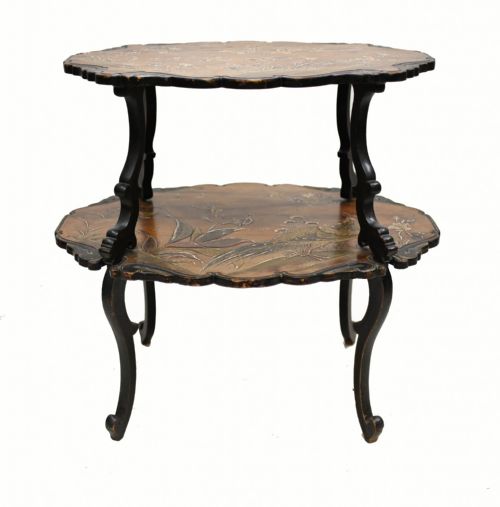
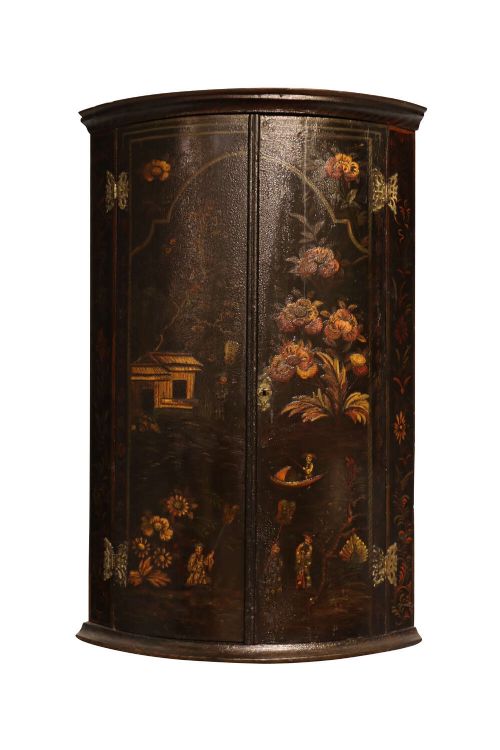
Black japanned furniture encompasses cabinets on stands, side tables, and display cabinets decorated with European interpretations of Asian lacquer work. Buyers searching this phrase look for pieces finished with dark grounds and raised gilt motifs that bring distinct decorative depth to an interior.
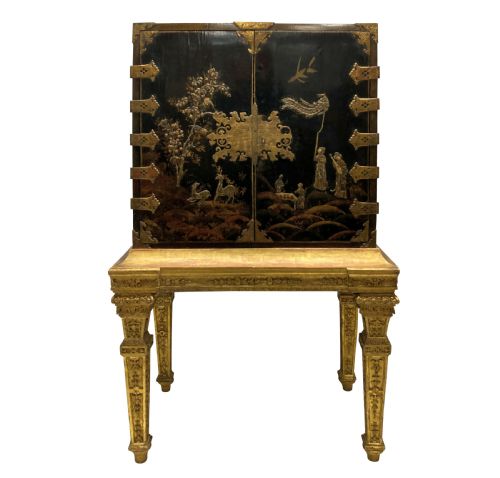
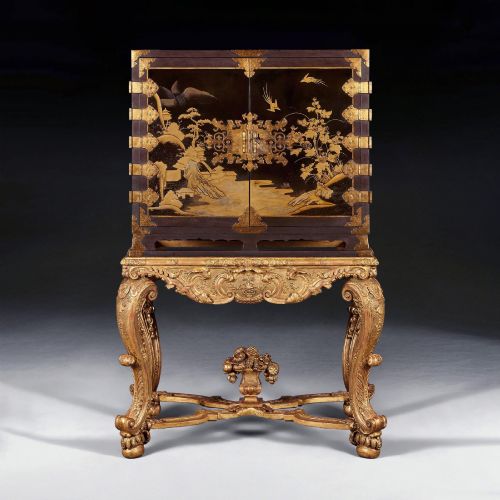
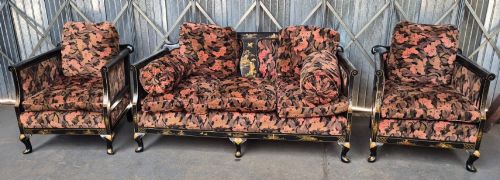
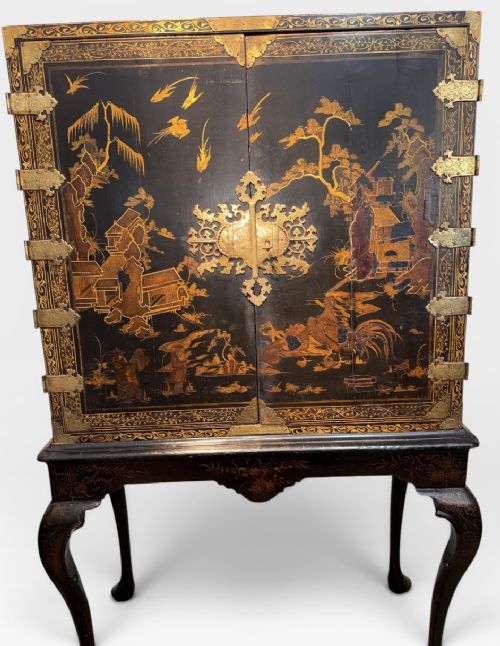
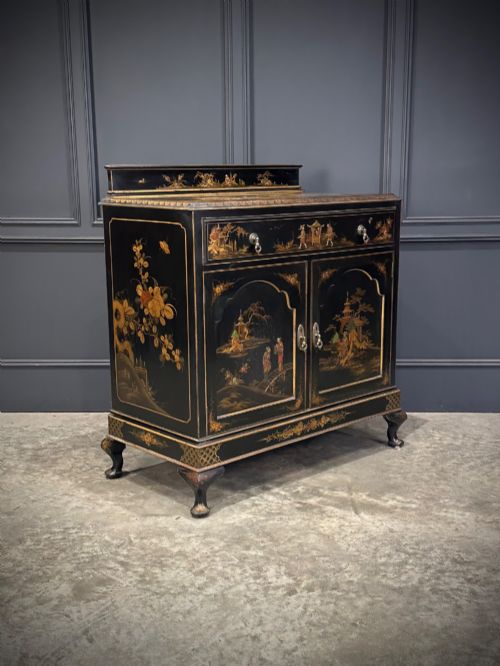
The selection here ranges from seventeenth-century William and Mary cabinets on stands to later Edwardian and 1920s Chinoiserie creations. Cabinets on stands and side cabinets appear frequently alongside occasional tables, writing bureaux, and chairs.
How they were made
These items rely on timber and lacquer, often enhanced with gold leaf and gilt decoration applied to built-up surfaces. Craftsmen built up layers of varnish or resin on wood bases to create dark, reflective grounds before applying raised metallic details depicting figures, birds, and botanical scenes.
Supporting structures utilise solid woods, ebonised elements, or bamboo, paired with brass hardware and glass panels where appropriate. Stands and bases frequently reflect the prevailing taste of their period, from French giltwood regence frameworks to later bamboo and faux bamboo turns.
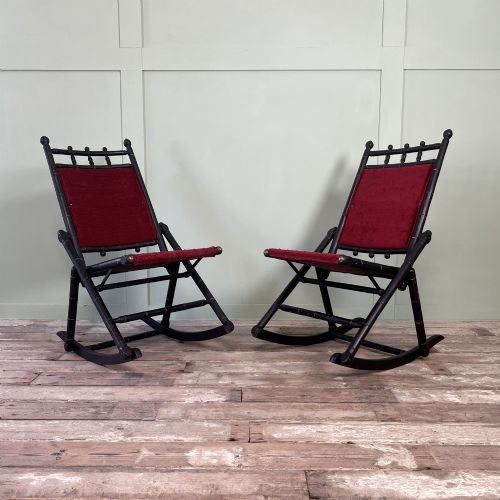
Even pianos and folding rocking chairs received the japanning treatment, proving that Victorians wanted their leisure equipment draped in gilt pagodas.
What varies in quality
Quality rests upon the depth of the lacquer finish and the crispness of the gilt decoration. Superior examples display finely rendered figures and landscapes that retain their relief and metallic brilliance across the wooden ground.
The relationship between the cabinet and its stand dictates overall integrity, particularly on pieces spanning centuries where stands might be later replacements. Retaining original gilt decoration and coherent proportions elevates an item within its period.
The Black Japanned Furniture Glossary
- Japanning
- European imitation of East Asian lacquer work created using layers of varnish and heat drying. The technique produced hard, dark surfaces decorated with raised metallic scenes.
- Chinoiserie
- European artistic style reflecting Chinese and East Asian motifs. Artisans applied whimsical depictions of temples, figures, and foliage to furniture and decorative objects.
- Cabinet on Stand
- A case piece raised on a separate supporting frame or table base. This form elevated important storage furniture to display status in grand rooms.
- Ebonised Wood
- Timber treated to imitate ebony through staining or painting. This dark finish provided a contrasting structural framework for decorative lacquer panels.
- Papier-Mache
- Composite material made from paper pulp or layers of paper bound with glue. Pressed and dried surfaces accepted lacquer and paint finishes effectively for trays and small tables.
Black Japanned Furniture: Frequently Asked Questions
What is black japanned furniture?
Black japanned furniture consists of wooden items finished with European lacquer techniques designed to imitate Asian lacquer ware. These pieces feature dark, glossy surfaces adorned with gilt and raised motifs.
Craftsmen built up multiple layers of varnish on bases of wood or papier-mache before applying intricate Chinoiserie designs depicting figures, pagodas, and natural scenes.
How do I date japanned furniture?
Dating relies on examining the structural timber, the style of the supporting stand, and the specific characteristics of the lacquer work. Construction methods and hardware provide clear indicators of whether a piece originates from the seventeenth century or the early twentieth century.
Styles shifted over time, transitioning from grand William and Mary cabinets on stands to Regency console tables and later Edwardian or 1920s cocktail cabinets.
Where should I place these pieces?
These items function effectively as focal points in reception rooms, hallways, or studies where their dark reflective surfaces can catch the light. Side cabinets, corner cabinets, and cabinets on stands offer practical storage while introducing rich decorative pattern.
Pairing a lacquered tray table or occasional table with neutral surroundings allows the intricate gold leaf and Chinoiserie details to stand out clearly.
Are stands always original to the cabinets?
Stands on older cabinet pieces sometimes date from a different period than the upper section due to historic alterations or damage. Examining the mounting points, timber types, and decorative continuity helps determine if the base and cabinet belong together.
Even when stands are later replacements, such as an eighteenth-century cabinet on a Regency stand, the combined piece often holds significant historical interest.