


Antique Chinoiserie Credenza
These antique chinoiserie credenza pieces bring hand-painted lacquer and striking Orientalist motifs straight into a formal interior.
Antique Chinoiserie Credenza
An antique chinoiserie credenza encompasses low sideboards, side cabinets, and cabinets on stands decorated with European interpretations of East Asian motifs. The examples seen here range across the Regency period, the nineteenth century, nineteen hundred, and nineteen-twenty, alongside specific French Louis XV and Victorian interpretations.
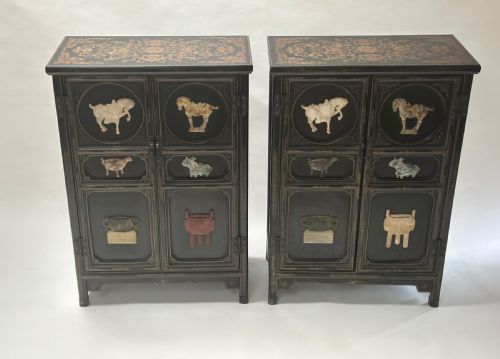
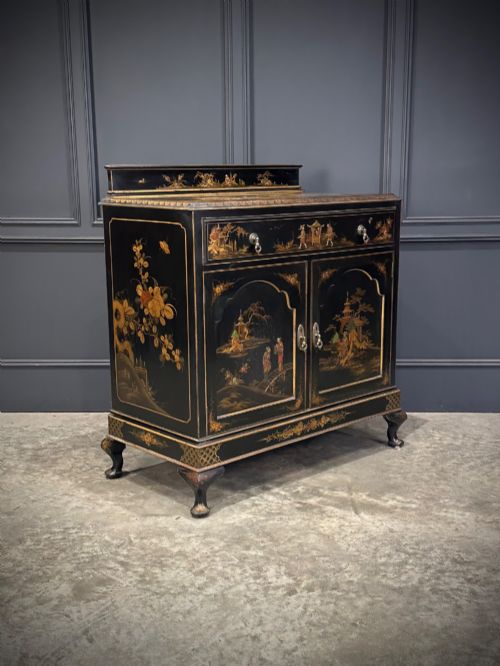
Buyers meet forms such as pairs of side cabinets, chiffoniers, and japanned side cabinets resting on carved stands. The overarching style draws heavily on Chinoiserie and Chinese Chippendale influences, combining utilitarian storage with elaborate decorative surfaces.
How they were made
Workshops built these cabinets using wood as the primary substrate, applying layers of black or red lacquer to create deep, reflective surfaces. Artisans incorporated giltwork and pen-work to delineate figures, landscapes, and floral patterns across the panels.
Hardware and mounts typically utilise brass, while certain decorative flourishes incorporate hardstone or silk elements. Stands and frames often feature carved wood or giltwood detailing to support the weight of the main cabinet body.
A pen-work cabinet offers miniature worlds drawn in ink for anyone willing to lean in close.
What varies in quality
The sophistication of the lacquer work and the depth of the japanning dictate the visual success of each piece. Finer examples display meticulous brushwork and intricate pen-work details that retain their clarity across the panels.
The integration of the cabinet with its stand, whether carved or giltwood, reveals the ambition of the maker. Attributions to known houses, such as Mercier Frères, elevate the standing of a piece within the Regency or early twentieth-century tradition.
Mercier Frères
The Antique Chinoiserie Credenza Glossary
- Chinoiserie
- European decorative style inspired by Chinese art and design, prevalent in furniture from the eighteenth to the early twentieth century. It relies on whimsical scenes of figures, pagodas, and natural motifs.
- Japanning
- European imitation of East Asian lacquer work involving layered varnishes and heat curing. It produces a hard, glossy black or red finish often adorned with gilt decoration.
- Credenza
- A low cabinet or sideboard used for storage and display, appearing in various stylistic interpretations across the nineteenth and twentieth centuries.
- Pen-work
- A decorative technique using fine ink lines on a prepared ground to create intricate imagery. This method allows for exceptional detail on cabinet doors and surfaces.
- Chiffonier
- A small sideboard or tall narrow chest of drawers equipped with shelves or doors. Regency examples often combine this form with elaborate lacquer decoration.
Antique Chinoiserie Credenza: Frequently Asked Questions
What is a chinoiserie side cabinet?
A chinoiserie side cabinet is a storage piece adorned with European-made orientalist lacquer designs. These cabinets function as decorative focal points while offering enclosed shelving.
They appear in forms ranging from low sideboards to cabinets mounted on carved wooden stands.
How do I date a japanned cabinet?
Dating relies on examining the construction methods of the wood carcass and the composition of the lacquer. Pieces span from the Regency era through the nineteenth century and up to nineteen-twenty.
Stylistic cues such as Chinese Chippendale influence or specific French cabinet-making signatures also clarify the period.
Where should I place a side cabinet?
These cabinets suit dining rooms, living spaces, or hallways where their painted and lacquered surfaces can be appreciated. Their low profile makes them ideal for positioning beneath large mirrors or artwork.
Ensure they sit away from direct heat sources to protect the delicate lacquer and gilt finishes.
What materials make up these pieces?
The primary structure consists of wood finished with black or red lacquer. Giltwood, brass hardware, and occasional hardstone or silk additions complete the decoration.
Each material contributes to the contrasting textures characteristic of nineteenth and early twentieth-century craftsmanship.