
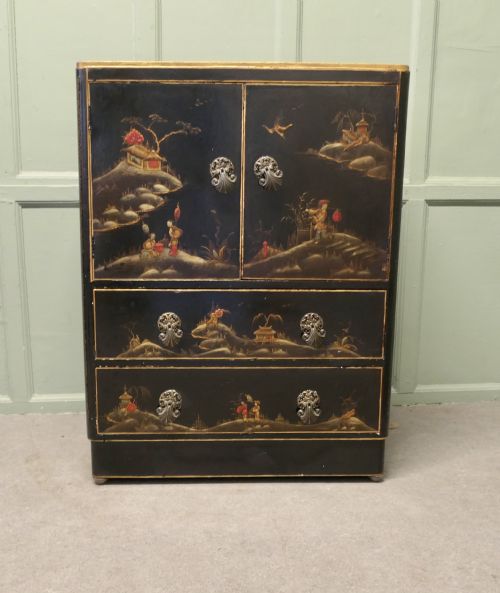
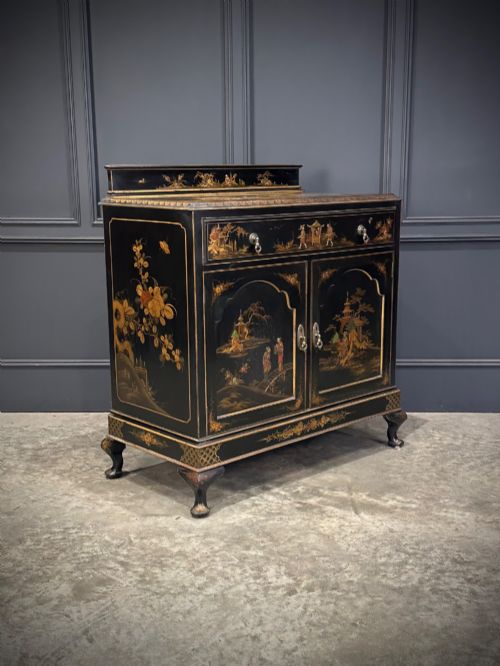
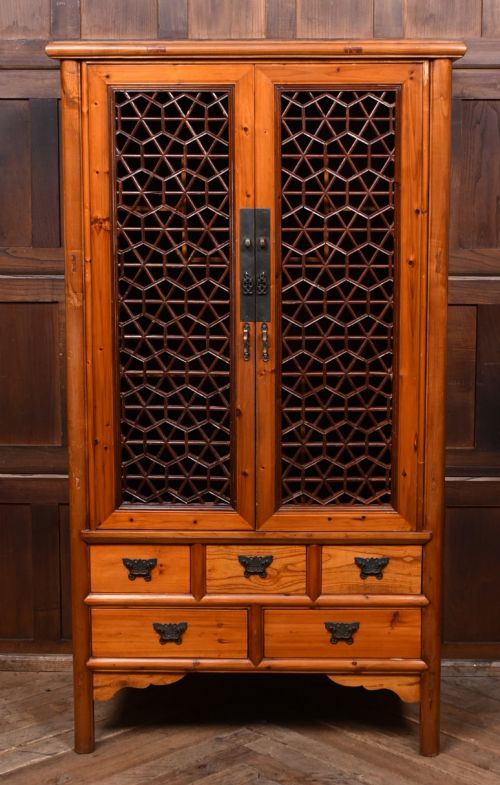


Oriental Style Sideboard
These oriental style sideboard selections bring together lacquered finishes, painted Chinoiserie scenes and carved timber forms for storage and display.
Oriental Style Sideboard
An oriental style sideboard encompasses low cabinets, side cupboards, consoles and chiffoniers drawing on Asian and Chinoiserie design traditions. You will frequently encounter black or red lacquered pieces alongside natural timber furniture from the nineteenth and early twentieth centuries.
The selection ranges from Regency and Victorian interpretations of Eastern motifs to authentic Chinese export pieces and Japanese larder cupboards. Cabinets on stands and storage commodes dominate the forms available on this page.
Buyers choose these items to introduce bold colour, intricate surface decoration and substantial storage into a room. Each piece reflects either European fascination with Eastern aesthetics or traditional craftsmanship from Qing dynasty and Meiji periods.
How they were made
Makers utilised woods such as pine, elm, teak and walnut as foundations for elaborate surface decoration. Carved timber elements often receive layers of lacquer or gilt to build up depth and texture.
Metals including brass, iron and other alloys appear as decorative mounts, hinges and drawer pulls. Japanned finishes involve multiple coats of varnish applied and polished to achieve a durable, glossy surface.
Some nineteenth-century makers hid ten drawers inside a single unassuming teak cupboard.
What varies in quality
The sophistication of the painted or carved decoration dictates the standing of an individual piece. Finer examples display meticulous hand-painted Chinoiserie detail and crisp relief carving on stands and panels.
The integrity of the timber and the stability of the lacquer layers separate standard utilitarian storage from exceptional cabinet work. Superior items retain their original brass hardware and show harmonious proportions between the cabinet and its stand.
Gabriel Viardot·Mercier Frères
The Oriental Style Sideboard Glossary
- Chinoiserie
- European decorative style reflecting Chinese artistic influences through painted scenes, lacquer and motifs. This aesthetic reached peaks of popularity during the Regency and early twentieth periods.
- Lacquer
- A durable resin finish applied in multiple layers to wood surfaces and often polished to a high gloss. Historic pieces frequently utilise black or red lacquer formations.
- Japanned
- European imitation of East Asian lacquerwork involving layered varnishes and decorative painting. The technique was widely applied to cabinets and sideboards during the Georgian and later eras.
- Chiffonier
- A small sideboard or low cupboard featuring shelves or drawers, popular during the Regency period. These pieces combine compact proportions with enclosed storage.
- Altar table
- A traditional Chinese form characterised by slender proportions and upturned ends, often adapted for domestic display. Nineteenth-century export examples frequently incorporate red lacquer.
Oriental Style Sideboard: Frequently Asked Questions
How do I clean a lacquered sideboard?
Dust surfaces gently with a soft, dry microfibre cloth to prevent scratching the delicate finish. Avoid using chemical sprays, abrasive cleaners or excessive water, which can damage historic lacquer.
Keep the cabinet away from direct sunlight and heat sources to prevent the wood from warping and the lacquer from cracking over time.
What is the difference between Chinoiserie and Japanese Meiji styles?
Chinoiserie is a European interpretation of Chinese artistic traditions, typically featuring fantastical landscapes, figures and pavilions rendered in lacquer or paint. It reflects Western imagination applied to Eastern motifs.
Japanese Meiji style originates from the Meiji period in Japan and often showcases naturalistic flora, fauna and precise metalwork or woodwork rooted in authentic Japanese craftsmanship.
Can I use an antique Chinese console table in a dining room?
These console tables provide a striking surface for serving food or displaying decorative objects during gatherings. Their narrow profiles make them particularly suitable for smaller dining spaces.
Ensure hot dishes use protective mats to shield the antique timber or lacquered surface from heat marks and moisture.
How do I identify a nineteenth-century lacquer cabinet?
Examine the interior woodwork, drawer construction and the ageing of the lacquer surface for signs of handcrafting. Nineteenth-century pieces often display hand-cut dovetails and natural crazing in the varnish.
Look beneath the piece and inside the cabinetry for traditional joinery methods that predate modern manufacturing techniques.