


Black Iron Double Bed
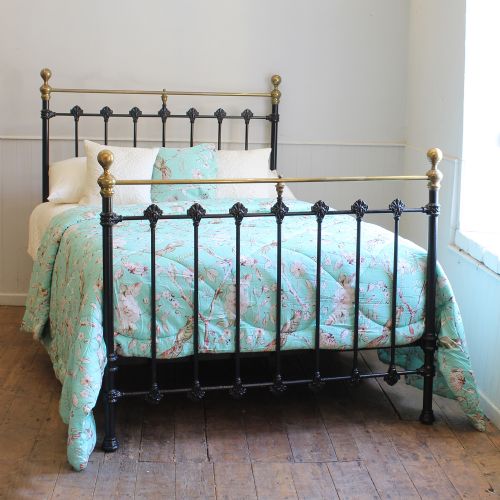
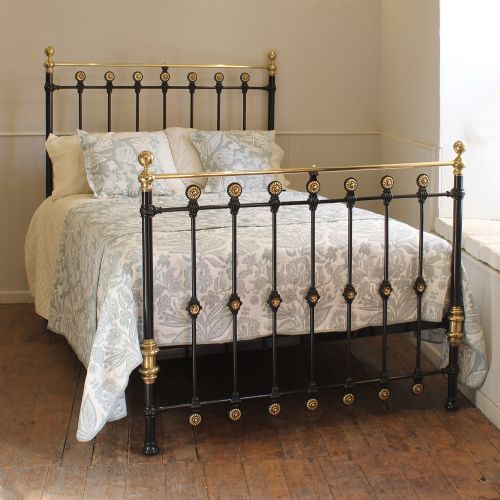
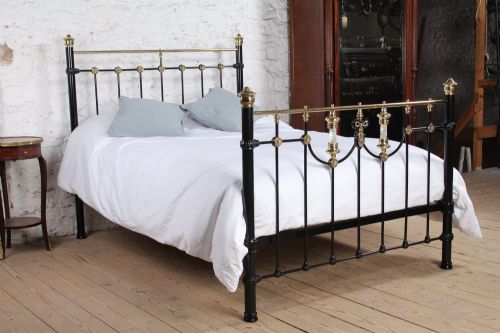
A black iron double bed brings enduring structural strength and simple character to a bedroom.
Black Iron Double Bed
A black iron double bed combines the utilitarian strength of nineteenth-century metalworking with domestic comfort. Buyers seeking this phrase encounter sturdy frames originating across the Victorian, Edwardian, and late nineteenth-century periods.
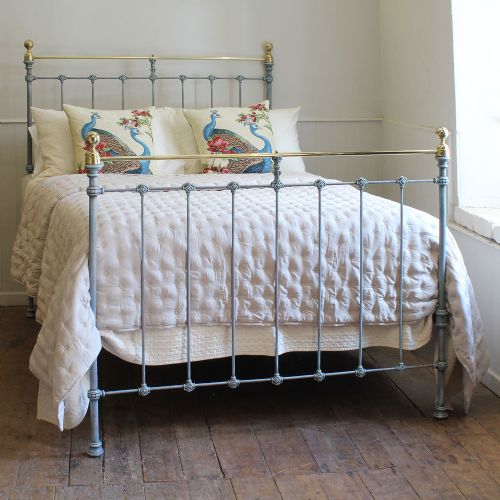
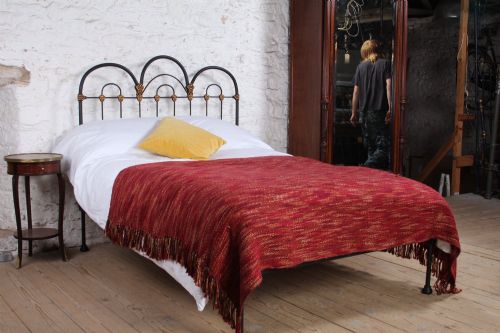
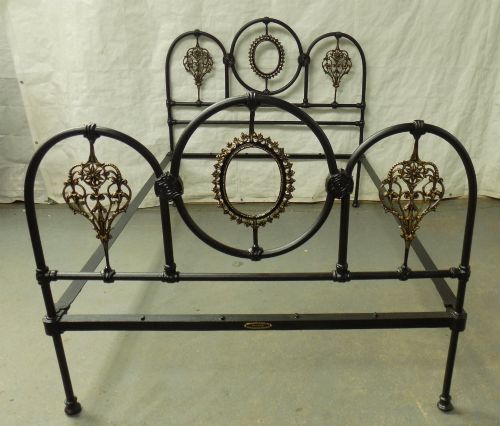
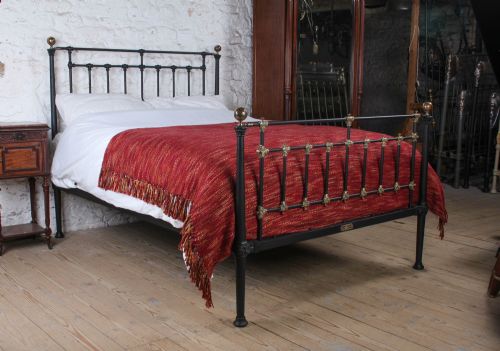
The most common versions on this page are double-sized frames finished in black enamel, frequently embellished with brass rails, finials, or decorative ironwork. These pieces range from plain, functional cottage styles to ornate, curly Victorian designs.
Originating from British and Irish workshops as well as French makers, these bed frames reflect diverse regional tastes of the past. Some examples integrate contrasting materials such as mother of pearl alongside traditional iron and brass.
Materials and construction
Makers utilised cast iron for structural stability and decorative components, pairing it with wrought iron and polished brass for contrasting visual effect. These metals were combined to form durable bed frames capable of withstanding decades of daily domestic use.
Surface finishes relied on protective black coatings applied to iron frameworks, often complemented by gleaming brass fittings and occasional mother of pearl details. Joinery typically involved robust metal joints and threaded fixings designed for straightforward assembly.
Listings incorporate items from the Victorian, Edwardian, and late nineteenth-century periods, utilising cast iron, wrought iron, brass, and mother of pearl.
Distinctions in quality
Quality in these beds rests upon the crispness of the casting and the delicacy of the decorative detailing. Plain utility frames differ substantially from ornate, curly Victorian examples that demand greater skill from the ironfounder.
The integration of secondary materials such as brass rails and mother of pearl inlay dictates the tier of the piece. Superior examples exhibit balanced proportions, original surface finishes, and substantial structural integrity without heavy restoration.
Maple & Co.
The Black Iron Double Bed Glossary
- Cast iron
- Iron poured into a mould to create solid structural and decorative shapes. It provides the rigid framework for the majority of these beds.
- Wrought iron
- Iron beaten and worked by hand into shapes. It offers distinct fibrous textures compared to moulded metal.
- Brass
- An alloy of copper and zinc used for decorative rails, knobs, and finials on metal beds. It contrasts sharply with the dark iron body.
- Bedstead
- A framework of a bed upon which the mattress is supported. This term frequently appears in period descriptions of metal furniture.
- Victorian
- Pertaining to the reign of Queen Victoria, spanning the nineteenth century. Pieces from this era often feature ornate ironwork and substantial proportions.
Black Iron Double Bed: Frequently Asked Questions
Will a standard double mattress fit an antique iron bed?
Most antique double frames accommodate standard modern double mattresses, though older dimensions can occasionally vary slightly. It is sensible to verify internal rail measurements prior to purchasing modern bedding.
Supporting slats or modern base systems can be adjusted to fit securely within the original iron side rails without altering the historic structure.
How do I care for a black iron and brass bed?
Regular dusting with a dry microfibre cloth keeps the black iron finish clean and prevents dust accumulation in decorative crevices. Avoid harsh chemical cleaners that might degrade the original painted or enamelled surface.
Brass components can be polished gently with a suitable metal cleaner if desired, though many collectors prefer to leave a natural aged patina intact.
How do I distinguish a Victorian iron bed from an Edwardian one?
Victorian iron beds generally display heavier casting, ornate curly motifs, and robust proportions reflecting nineteenth-century industrial confidence. They frequently incorporate polished brass rails alongside the dark iron structure.
Edwardian examples tend towards slightly lighter framing and simpler decorative geometry, aligning with changing domestic tastes at the turn of the twentieth century.
Are these beds easy to dismantle and move?
Period metal beds were designed with knock-down joints specifically to facilitate transport between rooms and houses. The headboard, footboard, and two side rails separate entirely by lifting out of their tapered socket slots.
Assembling the frame requires no complex tools, though having two people makes positioning the heavy iron components much safer and easier.