
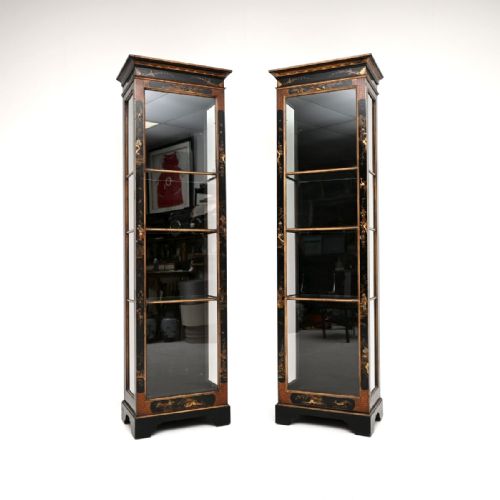
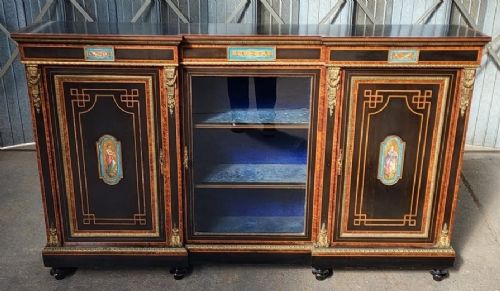
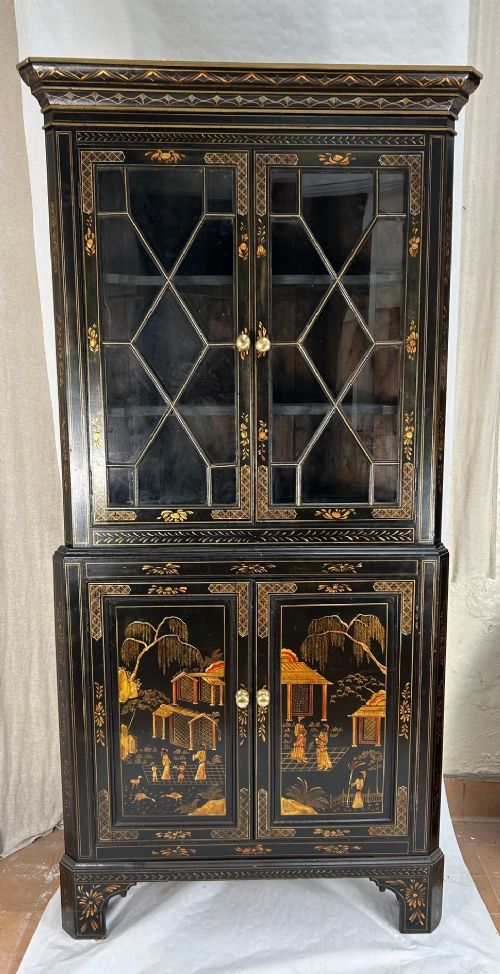
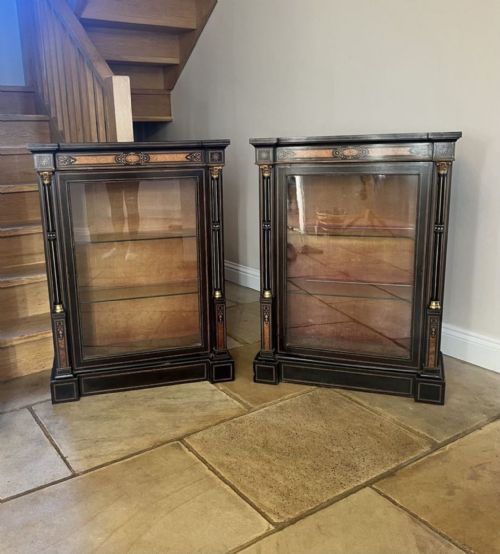


Black Glazed Cabinet
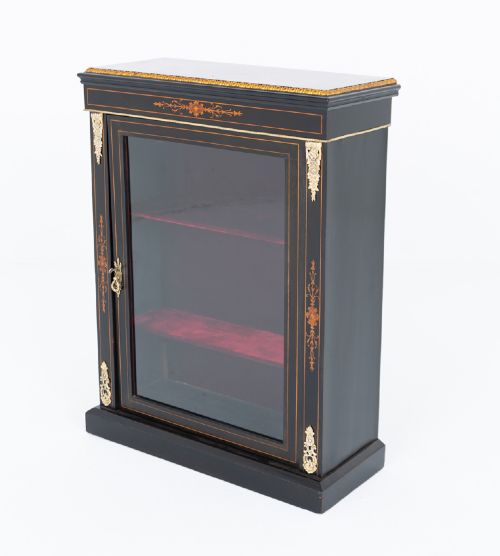
A black glazed cabinet brings striking contrast to a room, offering glazed display space bound in dark timber.
What a black glazed cabinet is
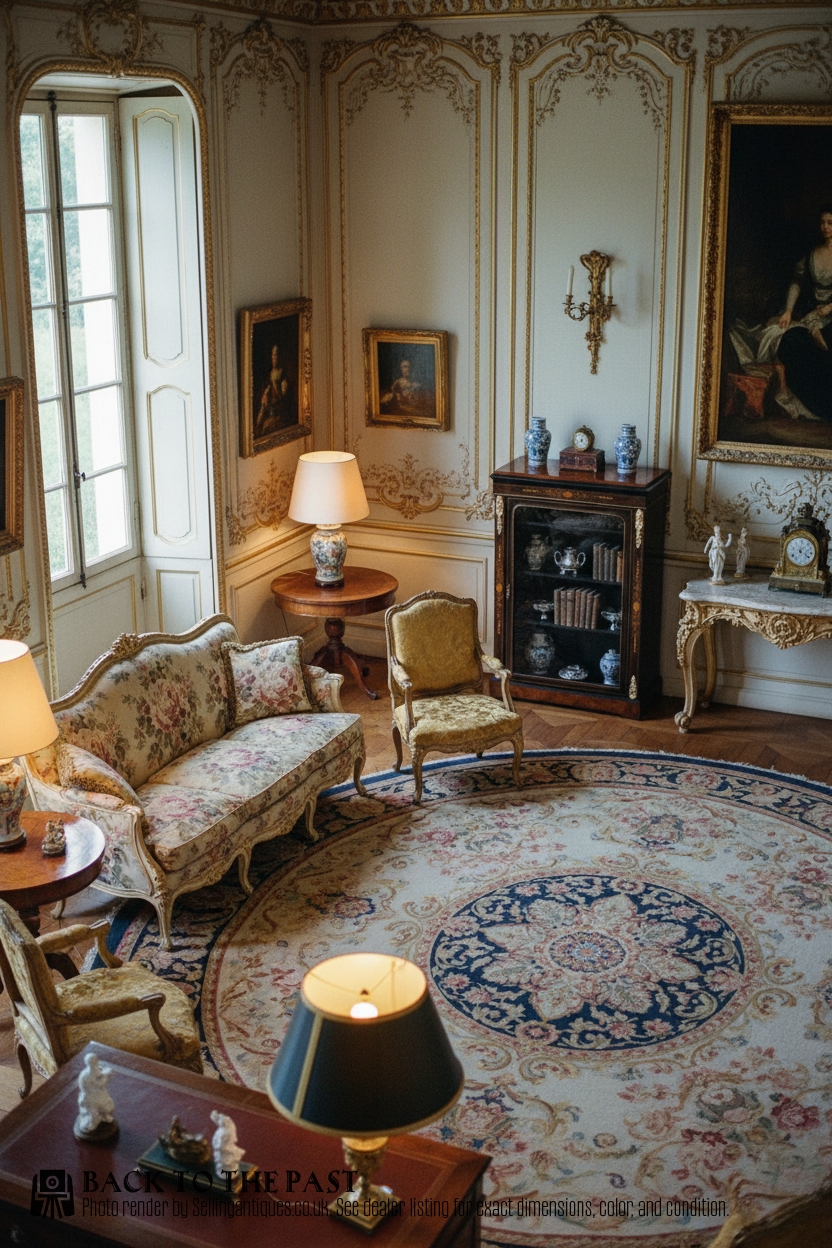
A black glazed cabinet unites display utility with dark finishes, appearing across Victorian and Edwardian periods in forms such as pier cabinets, music cabinets, bookcases and vitrines.
Most examples encountered on this page date from the Victorian era around 1870 to 1880, alongside a later Edwardian piece from approximately 1900.
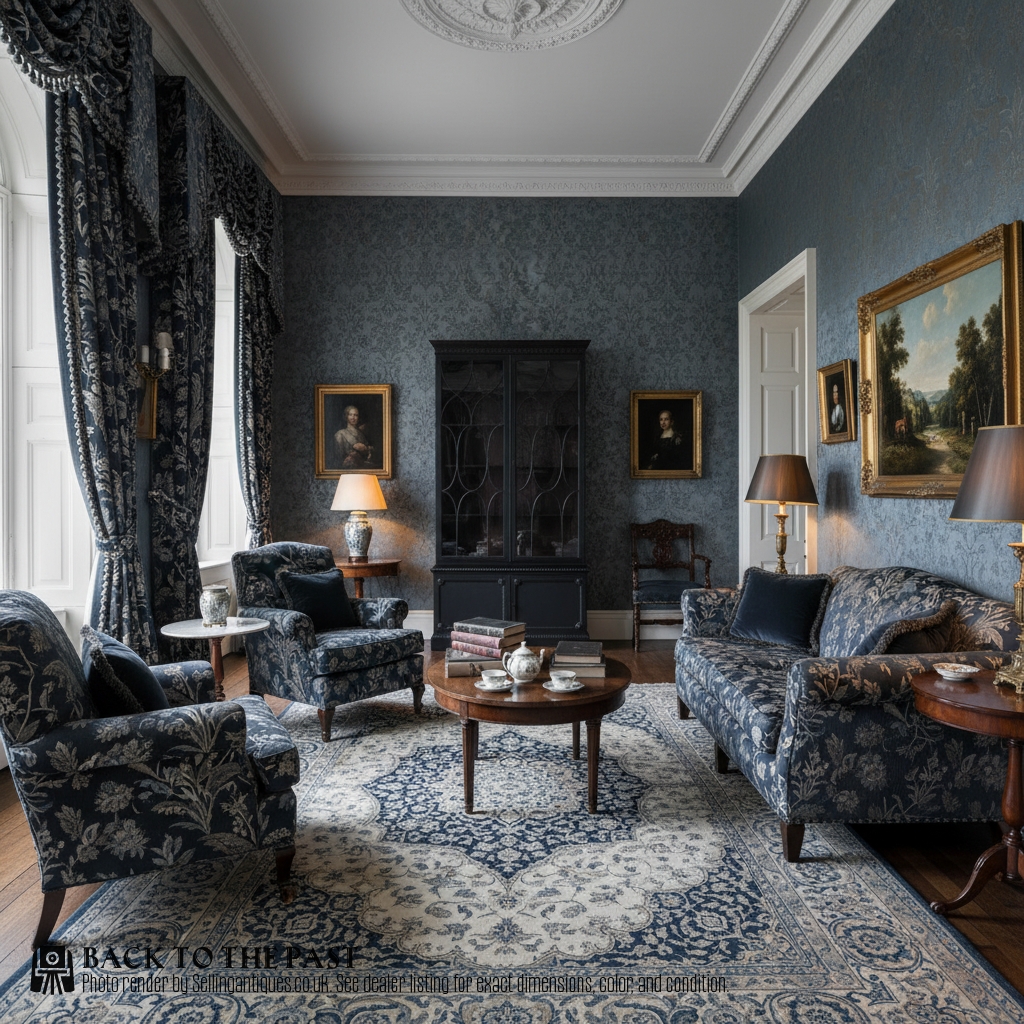
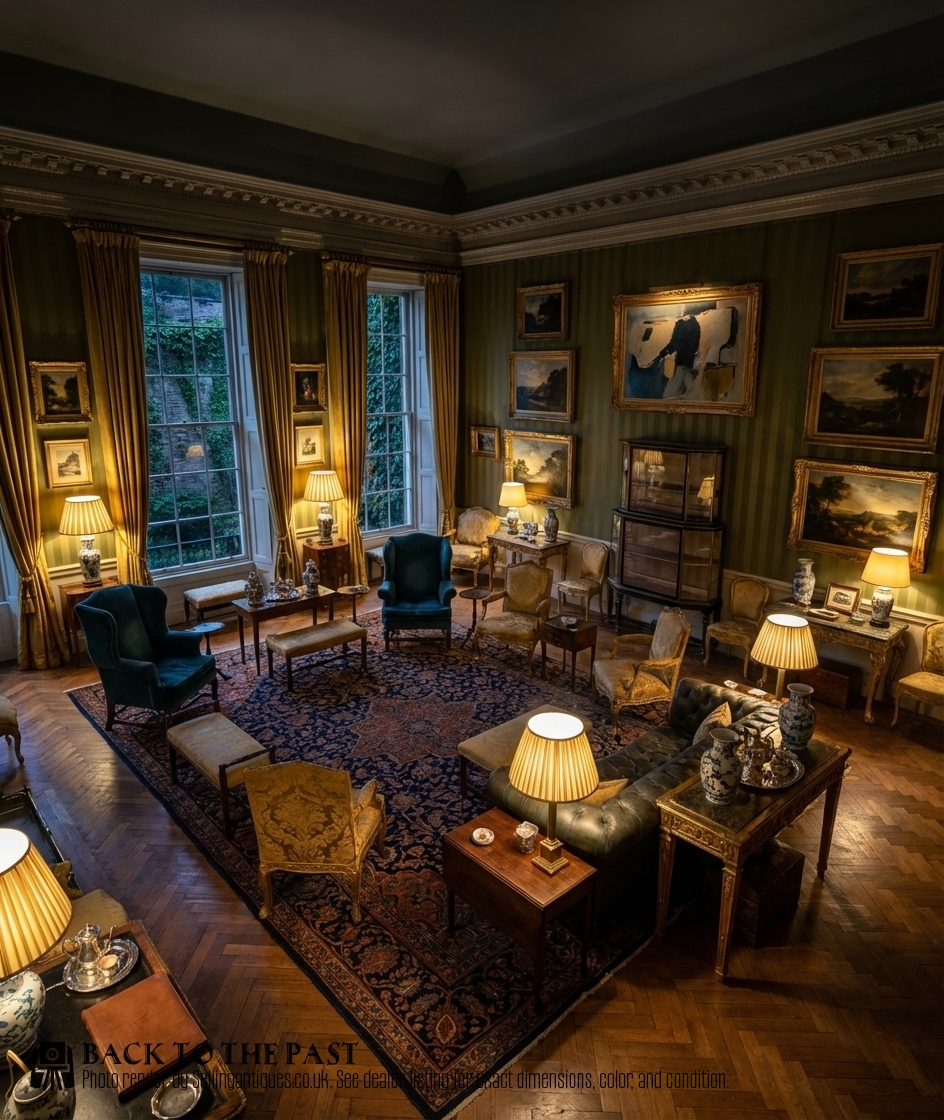
These pieces serve as focal points for housing collections behind glass doors while grounding the interior palette with ebonised wood or black paint.
How they were made
Construction relies primarily on ebonised wood or timber finished in black paint, often paired with walnut carcasses.
Maker ornamentation incorporates glass, brass, ormolu, parcel-gilt details, fabric linings and delicate stringing to accent the dark surfaces.
Retail Price Guide 2026
Typical UK retail prices for black glazed cabinet, calculated from the Sellingantiques database of over a million retail prices indexed since 2003. This retail price guide relies exclusively on Sellingantiques data; no external sources or auction records are used, so the figures do not describe the wider market.
Current listings span the Victorian and Edwardian eras, utilising ebonised wood, glass, brass, ormolu, and walnut.
What varies in quality
Distinction across the range lies in the fineness of decorative additions, such as whether a piece incorporates parcel-gilt work, intricate stringing or cast ormolu mounts rather than plain timber surfaces.
The refinement of the structural form, from simple country house bookcases to French-influenced vitrines and matched pairs of pier cabinets, determines the character of the piece.
The Black Glazed Cabinet Glossary
- Ebonised wood
- Timber treated to resemble ebony through staining or painting. This dark finish provides the primary aesthetic for these cabinets.
- Vitrine
- A glass-fronted cabinet designed for displaying fine objects. These pieces often feature prominent glazing on the front and sides.
- Pier cabinet
- A low cabinet built to fit the wall space between windows. Victorian examples frequently utilise ebonised timber.
- Parcel-gilt
- Partially gilded woodwork where gold leaf highlights specific carved or moulded details against a dark background.
- Stringing
- Inlaid lines of contrasting veneer used to outline panels and doors. This technique adds subtle linear definition to the cabinet frame.
Frequently Asked Questions
What periods do these cabinets come from?
The available selection spans the late nineteenth and early twentieth centuries, predominantly featuring Victorian designs alongside Edwardian examples.
Dates generally range from 1870 through to 1900, capturing the popular dark wood aesthetics of those decades.
How are the glass doors supported?
Glazing is set within wooden frames, often accompanied by ebonised structures and decorative stringing.
These doors protect the interior contents while maintaining clear visibility for display items.
What materials make up the dark finish?
Cabinets are constructed from timber finished with ebonisation or black paint, frequently utilising walnut beneath.
Additional highlights include parcel-gilt, brass, and ormolu mounts that contrast with the dark exterior.
Are pairs available?
Matching true pairs occasionally appear, offering identical ebonised construction and proportions.
Such matching sets provide balanced display options for larger interior spaces.