


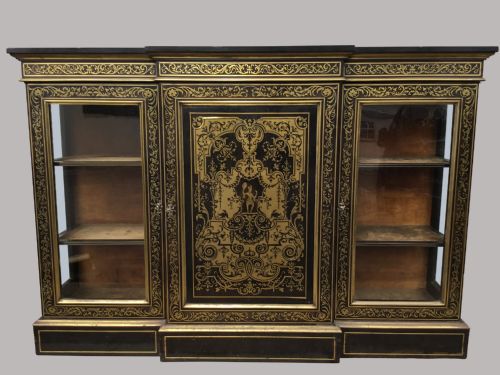


Black Glass Cabinet
A black glass cabinet brings dark, reflective depth to a room while securely framing precious objects behind glazed panels.
Black Glass Cabinet
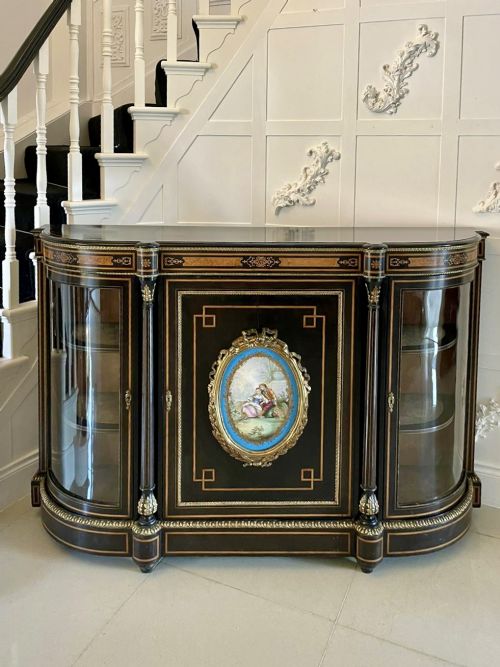
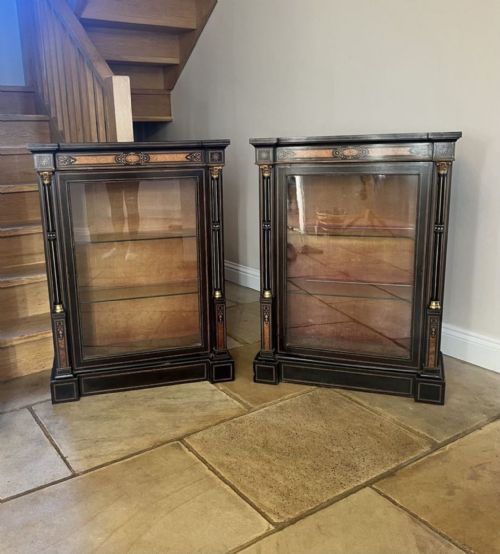
A black glass cabinet is fundamentally a display piece designed to hold porcelain, books, clocks, or natural history specimens within a glazed enclosure. When searching this phrase, buyers encounter varied forms ranging from compact pier cabinets and shop counters to expansive breakfront credenzas.
The materials and dark finishes span multiple periods, most notably the Victorian era and the 1920s, utilising ebonised wood alongside polished glass panels. These items function equally as architectural storage and as focal points for curated collections.
Examples frequently integrate brass mounts, marquetry inlay, or painted details into the dark framework, reflecting French, Dutch, and English cabinet-making traditions. Each variation provides a distinct silhouette suited to formal drawing rooms or commercial shop interiors.
Materials and construction methods
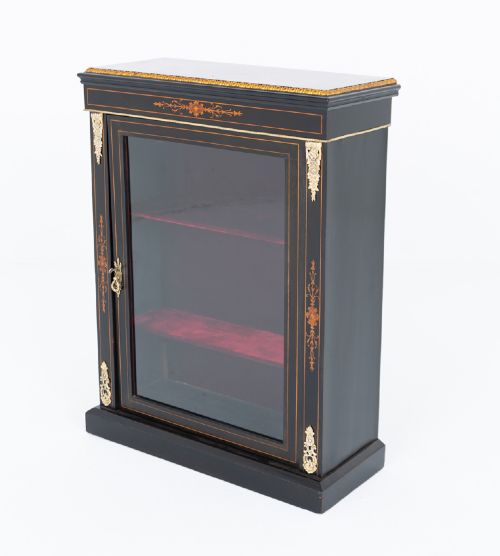
Construction relies heavily on ebonised wood or black paint applied to timber carcasses, designed to imitate costly ebony and create a dramatic dark ground. Cabinet makers combined this dense dark surface with transparent glass doors and windows to maximise internal visibility.
Metal ornamentation played a structural and decorative role, with brass, ormolu, and gilt bronze mounts securing corners and outlining panels. Interior surfaces often incorporated velvet or fabric linings, while specialised pieces utilised marble, pietra dura, or ceramic plaques.
Inlaid marquetry, particularly amboyna, burr walnut, and floral motifs, added contrasting texture and tone against the dark exterior wood. Glazing techniques ranged from simple single-pane doors to curved bow ends and multi-panel brass frames.
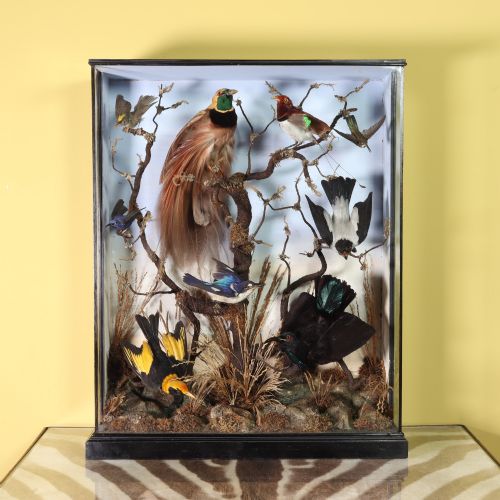
An African Grey parrot occupies a late Victorian glass dome, supervising the room with permanent feathered dignity.
Determinants of distinction
Quality separates pieces through the precision of the cabinet work, particularly in the crispness of the marquetry inlay and the stability of the ebonised finish. Superior examples display seamless joinery in complex silhouettes such as breakfronts and bow ends.
The selection of secondary decorative elements dictates the upper tier of craftsmanship, where cast ormolu mounts, pietra dura panels, or hand-painted porcelain plaques are integrated harmoniously. Inferior pieces rely on simpler timber frames with minimal hardware.
The clarity and original state of the glass panels and internal fabric linings preserve the integrity of the piece. Cabinets retaining original glass tops, brass mounts, and intact decorative marquetry command greater appreciation among collectors.
H and L Epstein·Quincy Showcase Works Illinois·Sage and Co
The Black Glass Cabinet Glossary
- Ebonised
- Wood treated with stain, dye, or paint to simulate the appearance of dense, dark ebony. This technique was widely utilised in Victorian and later furniture production to achieve a formal black surface.
- Credenza
- A low cabinet or sideboard designed for display and storage, often featuring glass-fronted side cupboards and central shelving. Victorian iterations frequently incorporate marquetry and brass mounts.
- Pier Cabinet
- A narrow display cabinet built specifically to fit the wall space between windows, known as the pier. These upright pieces typically feature a single glazed door protecting delicate porcelain or books.
- Ormolu
- Gilded bronze ornamentation applied to furniture and clocks, adding metallic contrast and decorative relief. It was frequently cast and chased by hand before being fixed to the cabinet frame.
- Marquetry
- Decorative veneer applied to furniture in intricate patterns using various woods, metals, or shell. Floral and geometric designs created striking visual contrast against ebonised surfaces.
- Vitrine
- A glass-sided display cabinet intended specifically for the exhibition of small valuable objects or curiosities. The term derives from the French word for glass.
Black Glass Cabinet: Frequently Asked Questions
What fits inside a black glass cabinet?
These cabinets suit the display of ceramics, glassware, books, and small decorative objects behind their protective glazed doors.
Larger credenzas and bookcases accommodate broader collections, while smaller pier cabinets and shop counters suit compact curiosities.
How do I date a black glass cabinet?
Dating relies on observing structural characteristics, timber types, and decorative styles associated with specific nineteenth and twentieth-century periods.
Victorian pieces often feature ebonised wood with marquetry inlay and ormolu mounts, whereas 1920s examples lean towards cleaner architectural lines and shop display formats.
Where should I place a black glass cabinet?
Position these cabinets against solid walls where the dark ebonised finish contrasts effectively with lighter background tones.
Placing them near natural light sources helps illuminate the interior glass shelves and enhances the visibility of displayed items.
How are taxidermy displays housed?
Taxidermy specimens were frequently preserved within dedicated glass domes and specialised wooden or ebonised display cases during the nineteenth century.
These enclosures protected delicate bird and animal specimens from dust while permitting all-around viewing.