



Antique Black Display Case
When you search for an antique black display case, you encounter dark wood furniture and glazed taxidermy enclosures designed to protect delicate objects.
Antique Black Display Case
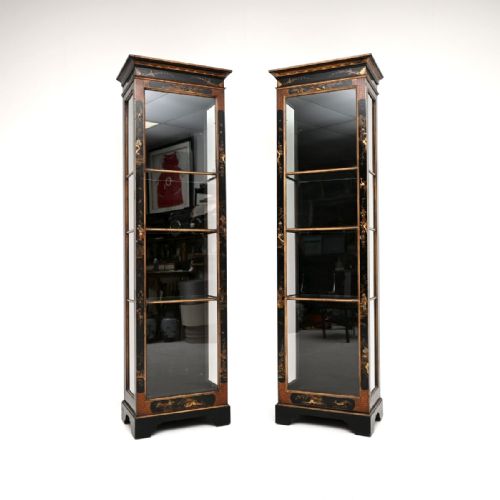
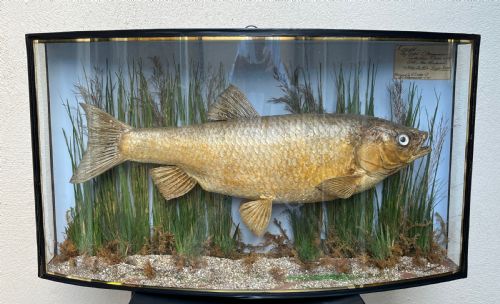
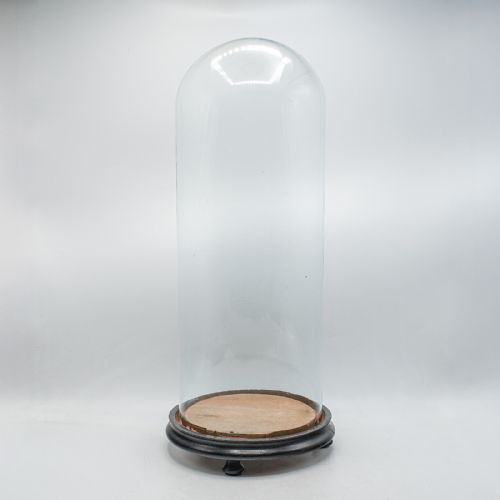
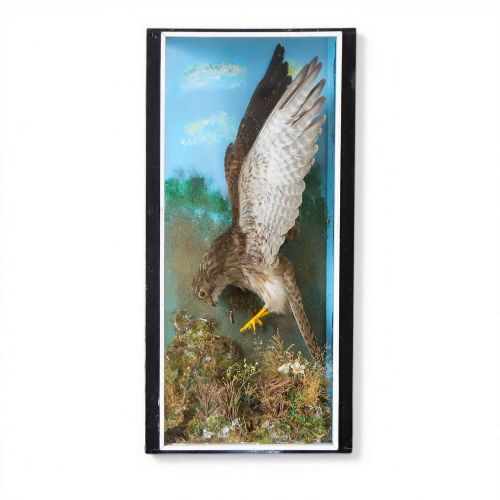
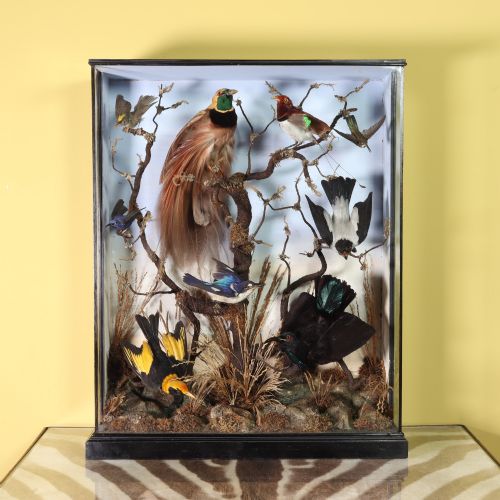
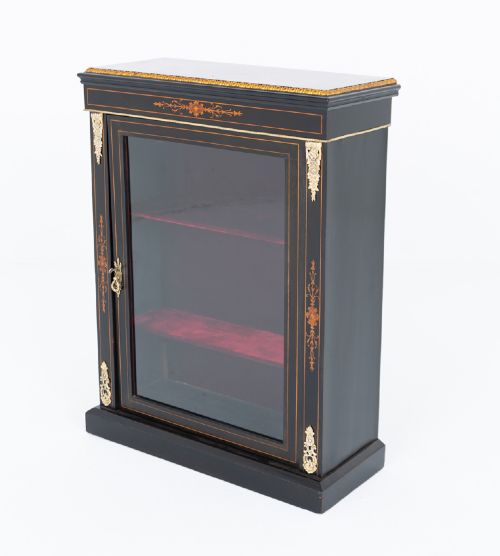
An antique black display case typically manifests as an ebonised wood cabinet, pier vitrine, or glass taxidermy dome used for housing specimens and precious objects. The examples on this page span the Victorian, Edwardian, and Art Deco periods, encompassing both domestic furniture and specialist shop counters.
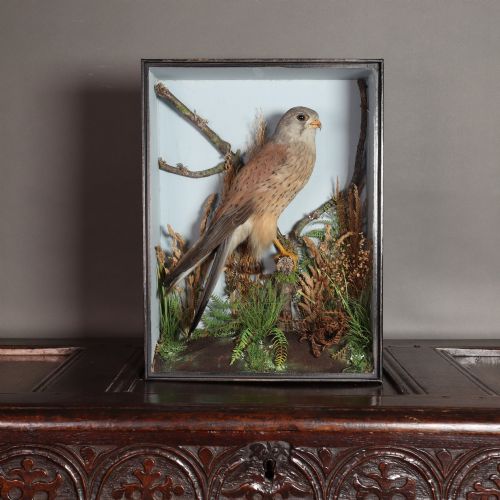
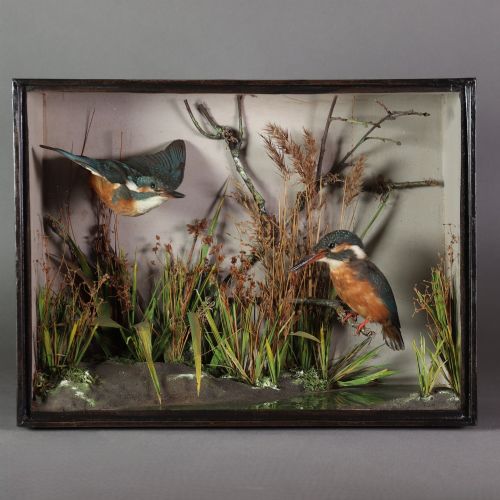
The most common formats include upright wall cabinets with glass doors, countertop vitrines, and enclosed wooden dioramas built to preserve natural history specimens or maritime models. These dark enclosures were constructed to provide a high-contrast background that draws the eye toward the items held inside.
Materials and construction
Cabinet makers utilised dense woods treated with ebonising stains or painted finishes to imitate ebony, frequently combining these dark surfaces with brass mounts, gold leaf, or ormolu accents. Glass panels were integrated into timber frames or formed into blown domes resting upon wooden or fabric-lined bases.
Interior settings often incorporated painted paper backdrops, naturalistic foliage, and structural supports tailored to hold birds, fish, or models securely within the sealed environment.
Listings feature ebonised wood, brass, ormolu, and glass spanning the Victorian era through the 1930s.
What determines quality
Quality rests upon the crispness of the ebonising, the clarity of the original glass panes, and the integration of decorative details such as marquetry inlay, porcelain plaques, or parcel-gilt highlights. Superior pieces display tight joinery, balanced proportions, and undisturbed interior arrangements that preserve their original contents.
The distinction between standard utility cabinetry and high-end salon pieces lies in the refinement of the timber preparation and the inclusion of specialist hardware, such as fine brass hinges and secure locks.
Little & Co·J Griffiths of Burford·T E Gunn·Hutchings of Aberystwyth·W F Homer London·J Cooper & Sons
The Antique Black Display Case Glossary
- Ebonised
- Wood treated with a dark finish to resemble genuine ebony. This technique was widely applied during the Victorian and Aesthetic periods.
- Vitrine
- A glass-fronted cabinet designed for displaying fine objects or porcelain. These pieces typically feature mirrored or fabric-lined interiors.
- Pier Cabinet
- A narrow display cabinet built to stand against the wall space between windows. They often incorporate glass doors and ebonised frames.
- Cloche
- A bell-shaped glass cover used to protect delicate specimens or clocks. These sit directly upon a wooden or fabric-covered base.
- Diorama
- A three-dimensional scene enclosed within a glass-fronted case. Natural history examples use painted backgrounds to create depth.
Antique Black Display Case: Frequently Asked Questions
What fits inside an ebonised display cabinet?
These dark cabinets suit porcelain, small silver items, natural history specimens, and fragile models. The neutral dark background highlights lighter ceramics and coloured objects effectively.
Interior depths and shelf configurations vary by period, so check the internal dimensions before placing larger items inside.
How do I clean an antique glass dome?
Use a soft, dry microfibre cloth to remove dust from the exterior glass surface. Avoid harsh chemical cleaners that might damage aged wooden bases or old paper labels.
Lift glass domes only with both hands and remove them entirely if you need to clean the interior base or the specimen resting inside.
Are these cases suitable for modern rooms?
The clean lines of ebonised wood and minimalist black framing blend easily into contemporary interiors. Their dark tones offer a strong visual anchor against lighter walls.
These pieces provide secure, dust-free storage while displaying collections in a structured, gallery-like arrangement.
How do I tell Victorian cases from Edwardian ones?
Victorian examples frequently feature heavier ebonisation, ornate brass mounts, and rich interior fabrics. Edwardian versions tend to display lighter framing and simpler geometric lines.
Construction methods and hardware styles also shift across these decades, with later pieces showing simpler joinery and more restrained ornamentation.