
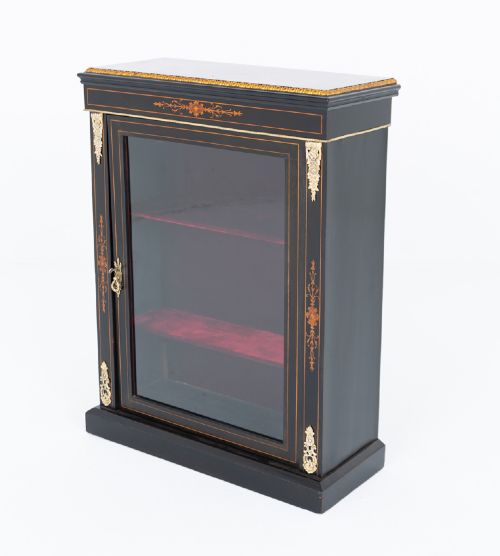
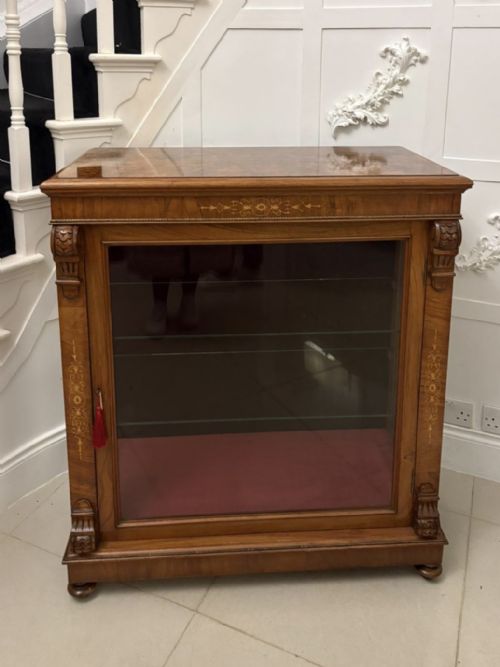
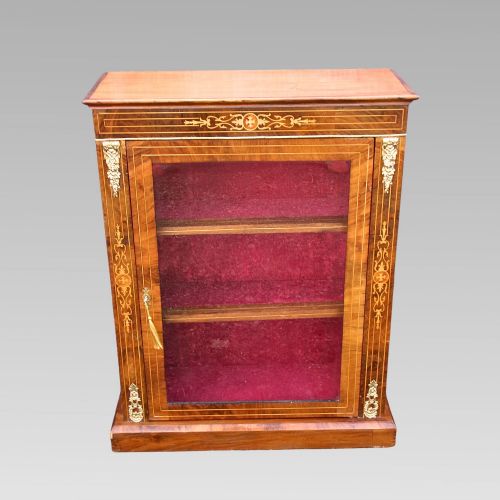


Inlay Wood Pier Cabinet
These inlay wood pier cabinet examples bring narrow nineteenth-century elegance and glass-fronted display space to domestic interiors.
Inlay Wood Pier Cabinet
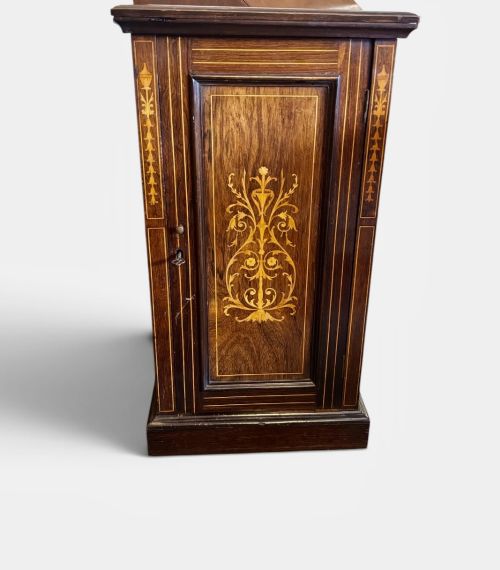
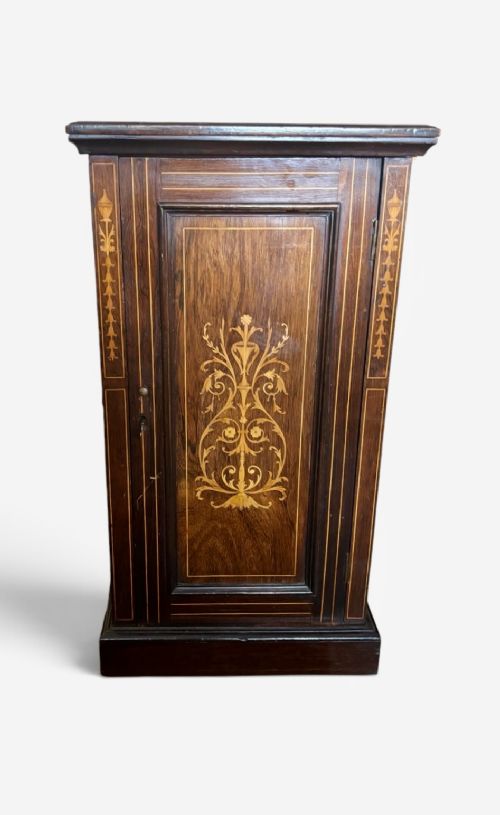
An inlay wood pier cabinet serves as a narrow display or storage piece designed specifically to fit the wall space between windows, known as the pier. The selection here leans heavily towards Victorian examples, alongside related side cabinets and credenzas from the nineteenth century.
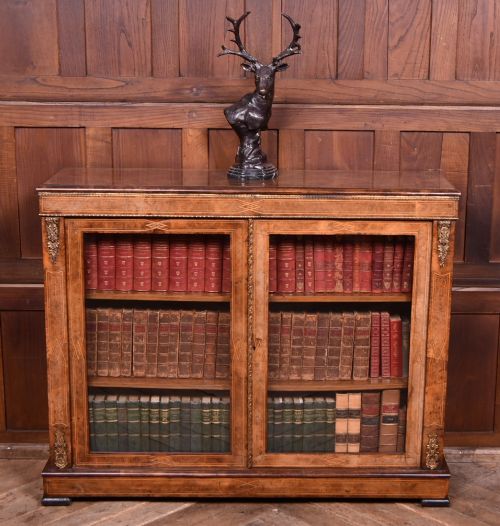
Most pieces combine timber carcasses with glazed doors, creating compact display cabinets suited for smaller rooms or hallways. Formats range from straight-sided walnut and rosewood versions to serpentine shapes and music cabinets fitted with interior shelving.
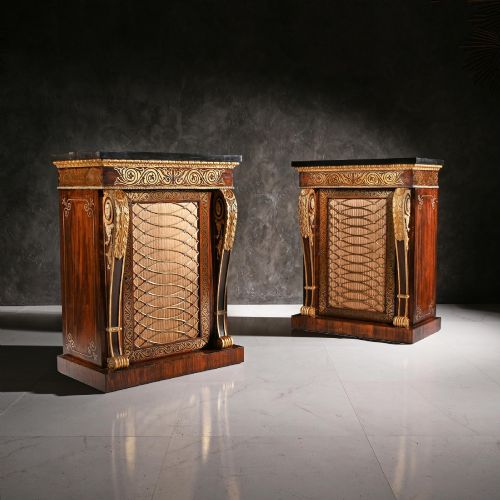
Origins span English Victorian workshops and French influence, often encompassing styles such as Grand Regency, Napoleon III, and Georgian Revival. Buyers encounter tall narrow configurations, demi-lune crystal cabinets, and paired side pieces designed to balance a room.
How they were made
Cabinet makers utilised dense hardwood timbers including burr walnut, rosewood, mahogany, satinwood, and ebonised woods to build the primary carcass structures. Veneers of figured walnut and exotic woods provide the patterned surfaces characteristic of the period.
Marquetry and satinwood inlay create intricate floral or geometric motifs set into the darker primary timbers. Ormolu mounts, brass stringing, and glazed glass panels complete the construction of these refined display pieces.
Some music cabinets share the exact proportions of a pier cabinet, proving that nineteenth-century sheet music also needed a narrow home.
What varies in quality
The precision and complexity of the marquetry inlay separate standard production from superior examples, with multi-wood floral motifs showing greater hand skill. Figured timbers such as burr walnut display richer natural grain patterns on better pieces.
The integration of cast ormolu mounts and brass stringing indicates the original tier of manufacture. Heavier carcass construction using dense rosewood, satinwood, or goncalo alves denotes higher workshop standards.
Louis Constantin Le Gaigneur
The Inlay Wood Pier Cabinet Glossary
- Pier cabinet
- A narrow cabinet specifically built to stand against the wall space between two windows. These pieces often feature glass doors for displaying porcelain and small objects.
- Marquetry
- Decorative patterns formed by fitting together thin slices of wood veneer and other materials onto a structural carcass. It creates pictorial or geometric designs across the surface.
- Ormolu
- Gilded bronze mounts applied to furniture for decorative accent during the nineteenth century. These metal details frame doors and corners.
- Burr walnut
- Timber taken from the wart-like growths on walnut trees, yielding highly figured grain patterns. Cabinet makers prized it for decorative veneering.
- Ebonised
- Wood finished with a dark stain or polish to imitate the appearance of ebony. This treatment appears frequently on nineteenth-century display furniture.
Inlay Wood Pier Cabinet: Frequently Asked Questions
Where did pier cabinets stand?
These cabinets stood in the narrow stretch of wall between two tall nineteenth-century windows, making efficient use of limited floor space.
Their shallow depth prevented them from obstructing natural light while providing a prominent surface for ornaments.
What is burr walnut?
Burr walnut comes from a tree growth that produces highly swirled, knotted wood grain patterns.
Cabinet makers cut this wood into thin veneers to cover larger flat surfaces on display furniture.
How do I style a pier cabinet?
A pier cabinet works well in a hallway, drawing room, or dining space where wall space is constrained.
Inside the glass door, small collections of ceramics or glass catch the light effectively.
Are these pieces French or English?
The selection includes both English Victorian examples and French pieces influenced by Napoleon III styles.
French pieces frequently feature more extensive marquetry, while English versions often rely on figured walnut or rosewood.