



Black Framed Religious Art
Black framed religious art brings together centuries of devotion and craftsmanship, offering devotional imagery set within dark timber.
Black Framed Religious Art
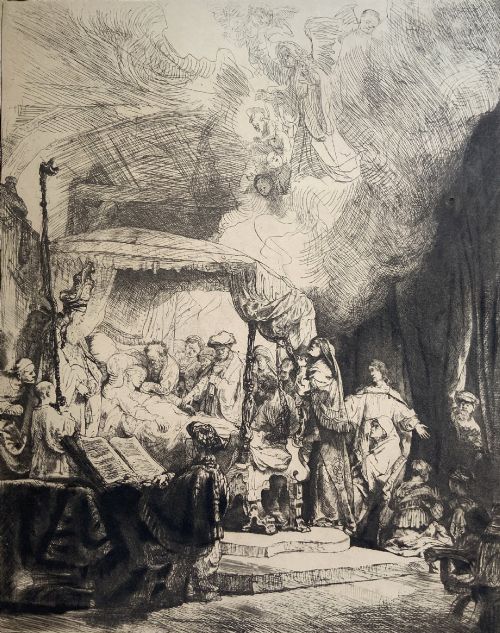
Buyers exploring black framed religious art encounter works spanning the sixteenth, seventeenth, eighteenth, and nineteenth centuries, alongside pieces from around nineteen hundred. These objects take the form of oil paintings, engravings, etchings, reverse glass mezzotints, wall plaques, and shadowboxes.
The assortment includes European and colonial works, ranging from Dutch Golden Age prints and Hessian School oils to Spanish Colonial Baroque depictions and Himalayan thangkas. Pieces such as portraits of clergymen, depictions of the Madonna and child, and scenes like the Crucifixion or the Veil of Veronica appear frequently.
Framed artwork and prints dominate the selection, often housed in dark wooden surrounds that anchor the devotional imagery visually. These items function as wall art, bringing historical sacred iconography into domestic or institutional settings.
Materials and methods
Makers utilised wood to construct the dark surrounds, sometimes incorporating glass to protect delicate paper prints and reverse glass mezzotints. Canvases and wooden panels served as the foundation for oil paintings executed with oil paint and pigment.
Graphic works rely on paper, ink, and gold leaf, employing techniques such as engraving, etching, and coloured mezzotint printing. Pigments and gold leaf enhance the visual depth of both printed sheets and painted surfaces.
Listings feature works from the sixteenth century through to nineteen hundred, utilising wood, glass, paper, gold leaf, canvas, oil paint, pigment, and ink.
Distinctions in quality
Quality rests upon the execution of the primary medium, whether the precision of an etching line or the brushwork within an oil painting. Finer works display accomplished draughtsmanship and mastery of proportion, particularly evident in historical prints after known masters and original devotional paintings.
The integrity of the framing and the preservation of the surface materials also differentiate examples, with superior items retaining their original glass, gold leaf, and structural stability. The involvement of recognised artists, workshops, or printmakers elevates the significance of a piece.
Sebastiaan Vrancx·Amand-Durand·Gaspar de Figueroa·F R Roffe·Antonio Capellan·Michelangelo
The Black Framed Religious Art Glossary
- Mezzotint
- A printmaking process where the copper plate is roughened to produce tones of grey and black. This technique allows for subtle gradations of light and shadow.
- Engraving
- A method of cutting design into a metal plate using a sharp tool to hold ink. The resulting impressions show crisp, defined lines.
- Etching
- A process where acid bites lines into a metal plate prepared with a ground. Artists utilise this to achieve fluid, expressive marks.
- Thangka
- A Tibetan Buddhist painting on cotton or silk appliqué depicting a deity or scene. These works are traditionally framed with textiles and mounted for meditation.
- Reverse glass painting
- An art form where the image is painted on the back of a piece of glass and viewed from the front. This produces a glossy, luminous surface.
Black Framed Religious Art: Frequently Asked Questions
How do I identify sixteenth-century art?
Sixteenth-century pieces typically display the distinct painting techniques and pigment combinations characteristic of early European workshops, often focusing on foundational religious subjects.
Examining the support material, such as panel or early canvas, alongside the style of the iconography helps place a work within this period.
What is a reverse glass mezzotint?
A reverse glass coloured mezzotint involves applying ink or pigment to the underside of a glass plate, which reverses the image when viewed from the front.
This technique protects the delicate print surface from atmospheric damage while imparting a glossy sheen to the composition.
How should I hang these artworks?
Display these works on sturdy walls away from direct sunlight and excessive moisture to protect paper, wood, and oil paint.
Ensure proper picture hooks support the weight of the dark wooden frames and any protective glass components.
What distinguishes colonial religious art?
Colonial religious art, such as seventeenth-century pieces from the Hessian School or Spanish Colonial traditions, blends European iconography with local materials and regional artistic interpretations.
These works reflect the transmission of Catholic and Protestant imagery through missionary and trade routes.