
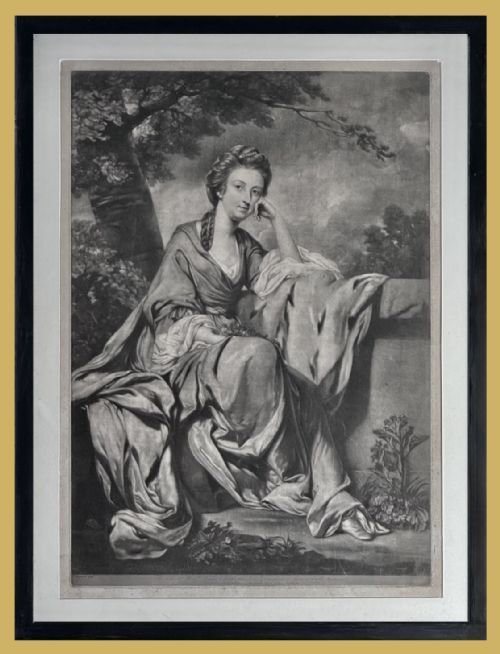


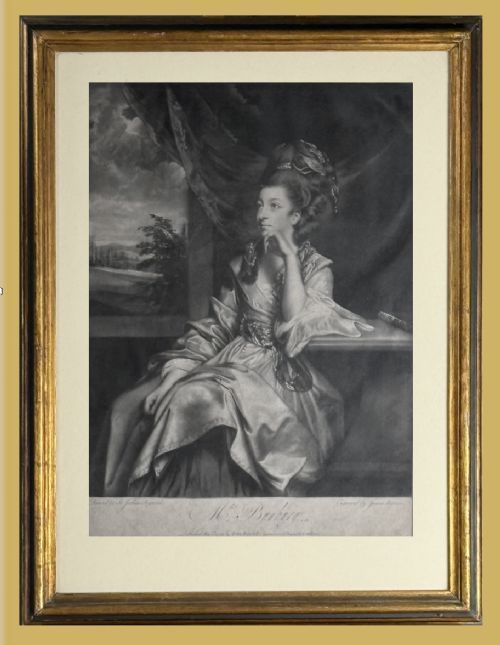
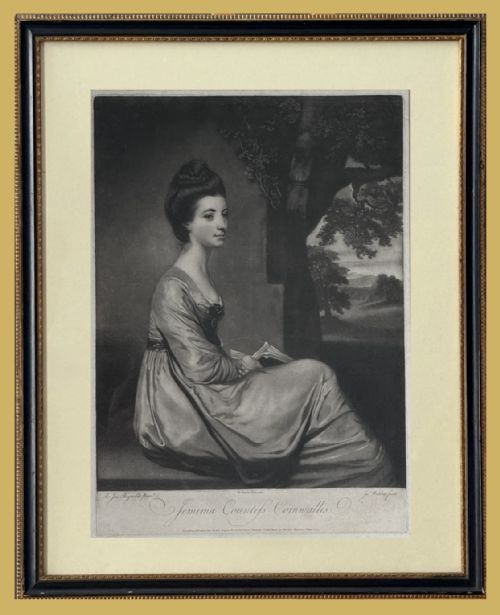
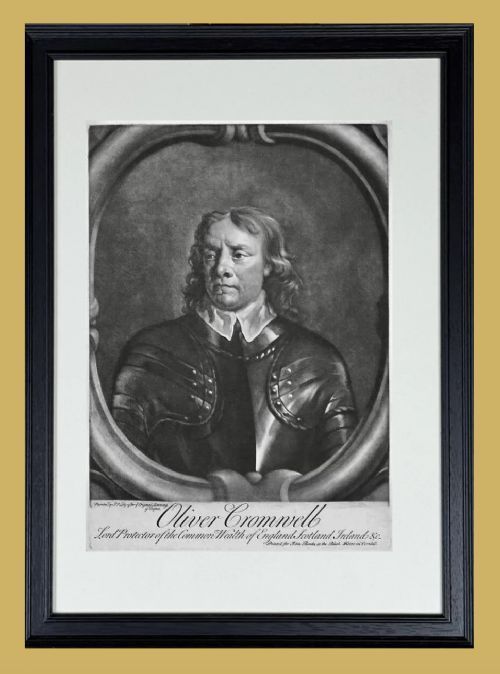
Black Framed Mezzotint Print
A black framed mezzotint print brings tonal depth and historical portraiture into an interior through skilled copperplate engraving.
Black Framed Mezzotint Print
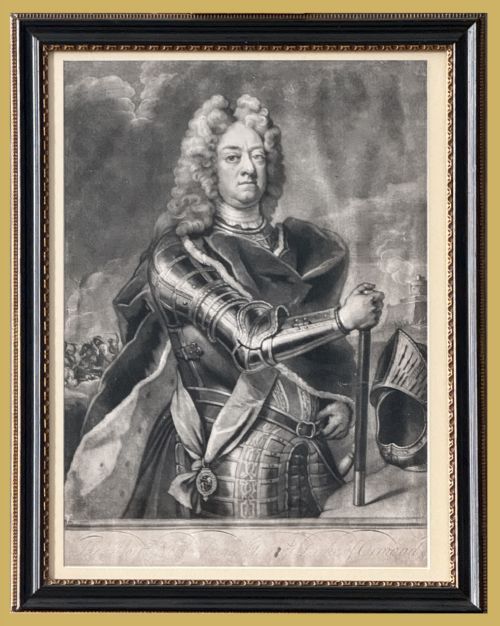
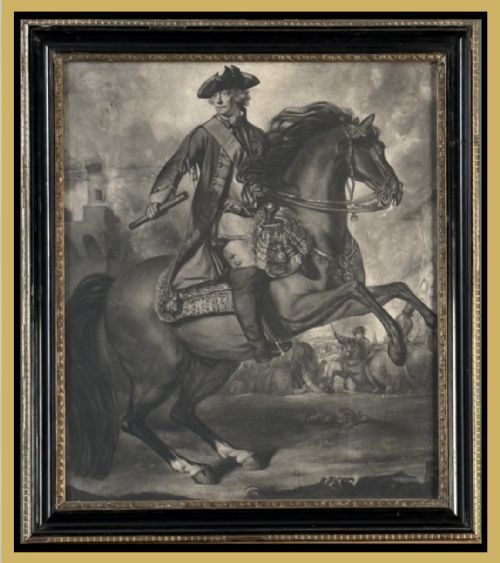
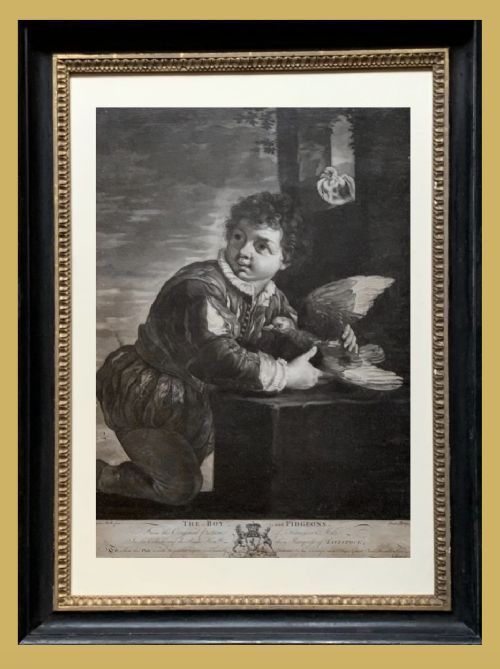
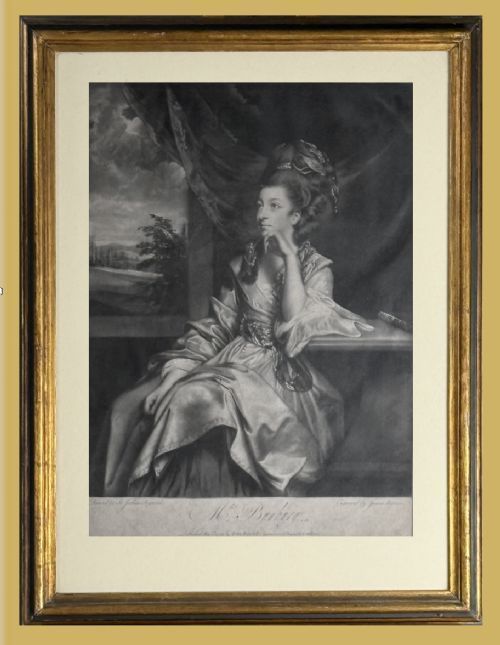
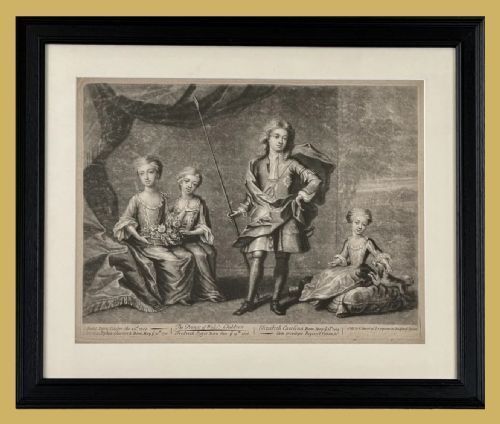
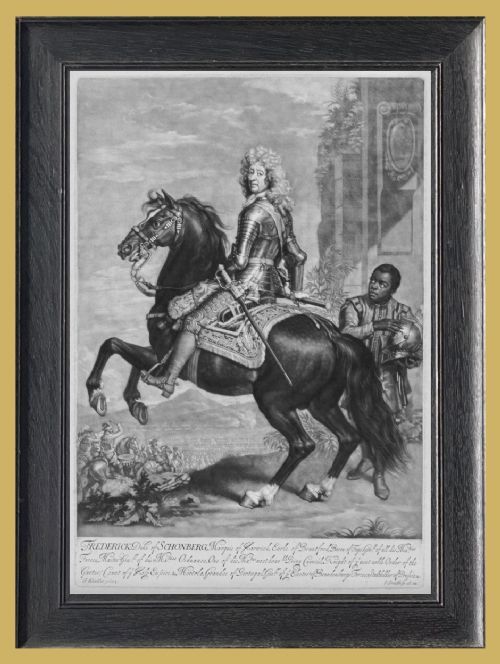
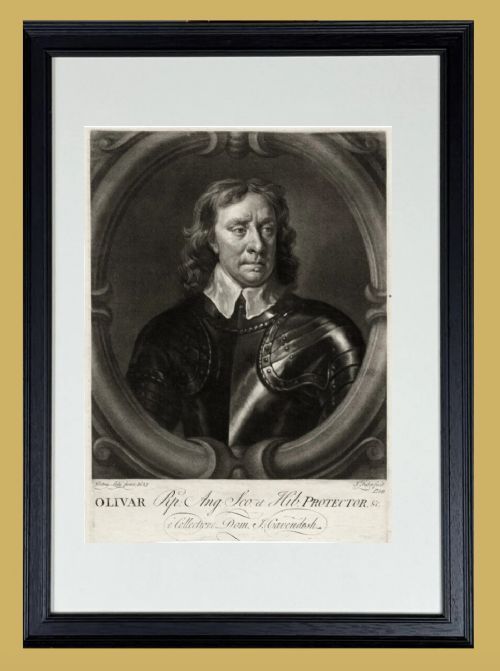
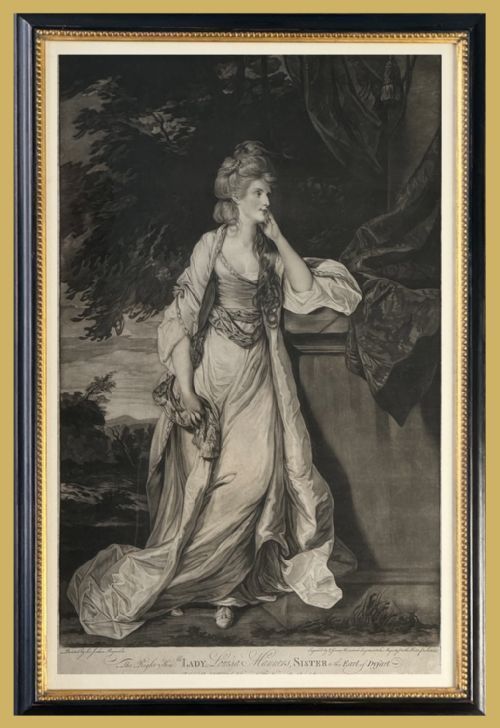
Buyers seeking a black framed mezzotint print will find historical works primarily originating from the seventeenth, eighteenth, and nineteenth centuries, spanning Georgian and Regency periods. These pieces are predominantly wall art and framed prints depicting British portraiture, aristocratic figures, and allegorical scenes.
The selections available here emphasise traditional portrait subjects engraved by notable printmakers after painters like Sir Joshua Reynolds and Sir Godfrey Kneller. Most examples are mounted behind glass within dark timber frames, often utilising Hogarth moulding styles.
Collector interest centres on the rich velvety darks and subtle tonal gradations achievable through the mezzotint technique, distinguishing these prints from standard line engravings or etchings.
Materials and production techniques
Makers prepared a copper plate by roughening the entire surface uniformly with a rocking tool, creating a burr that would hold ink to print solid black. They then scraped and burnished areas of this roughened surface to varying degrees to produce lighter tones and highlights.
The resulting paper prints utilise black and coloured printing inks, occasionally enhanced with hand-colouring or reverse glass painting techniques. Finished works were secured behind protective glass within wooden frames, frequently finished with gold leaf accents or simple dark mouldings.
Listings feature seventeenth and eighteenth-century British works utilising paper, ink, and glass within wooden frames.
Factors determining quality
The richness of the impression dictates the visual impact, as plates wore down over successive printings, causing the darkest velvety areas to lose their density and depth. Early impressions pulled directly from the newly scraped copper plate exhibit superior contrast and fine tonal transitions compared to later printings.
The integrity of the paper support, the preservation of the original hand-colouring where applicable, and the retention of period framing elements such as Hogarth mouldings and glass contribute significantly to the standing of an individual piece.
John Simon·Edward Fisher·John Boydell·James Watson·John Smith·Valentine Green·John Faber Jr·Thomas G Appleton
The Black Framed Mezzotint Print Glossary
- Mezzotint
- A printmaking process of the intaglio family where the copper plate is roughened evenly and smoothed selectively to achieve rich tonal gradations rather than sharp lines. This technique allows for subtle shadows and atmospheric portraits.
- Hogarth frame
- A style of narrow, profiled wooden picture frame typically finished in black lacquer, often with gilt inner edges. These frames are frequently associated with eighteenth and nineteenth-century British prints.
- Reverse glass painting
- An artistic technique where the image is painted or printed directly onto the reverse side of a glass panel to be viewed from the front. This method imparts a glossy sheen and protects the pigments from atmospheric damage.
- Intaglio
- A printmaking category where the ink is held within incised or pitted recesses below the surface of the printing plate. Plates are wiped clean before pressing damp paper into the grooves under high pressure.
- Burnisher
- A smooth, rounded steel tool used by the printmaker to flatten the burr on a copper plate. This reduction of texture lightens specific areas to generate highlights.
Black Framed Mezzotint Print: Frequently Asked Questions
What is a mezzotint?
A mezzotint is an intaglio printmaking method that builds up images through tones and shades rather than lines. The process relies on a roughened copper plate scraped down to create smooth, luminous gradients.
This technique excels at rendering soft flesh tones and rich velvet drapery, making it the preferred medium for eighteenth-century portraiture.
How should I hang these prints?
These works require protection from direct sunlight to prevent the ink and paper from fading over time. Stable indoor humidity levels protect both the antique paper and the wooden frames.
Grouping several portraits together creates a traditional gallery wall effect suited to historical interiors.
Are the frames original?
Many seventeenth and eighteenth-century prints retain period wooden frames, such as black-finished Hogarth mouldings. Some pieces have undergone reframing in subsequent eras to preserve the fragile paper within.
Examining the corner joints and backing materials helps determine the age relationship between the print and its housing.
How do I identify the subject?
Titles often record the sitter's name alongside the original painter and the printmaker responsible for the engraving. Inscriptions along the lower margin frequently provide biographical dates and heraldic details.
Reference volumes on British engraved portraits catalogue these historical identities and their various print states.