


Black Enamel Vase
A black enamel vase brings deep, light-absorbing tone and precise surface decoration to a room, offering a striking display for stems or standing alone as sculpture.
Black Enamel Vase
A black enamel vase spans multiple eras and origins, uniting distinct regional traditions in glass, metal and ceramic production under a single dark aesthetic. When searching for a black enamel vase, buyers encounter everything from the geometric designs of the Art Deco period to intricate Asian metalwork and nineteenth-century European glass.
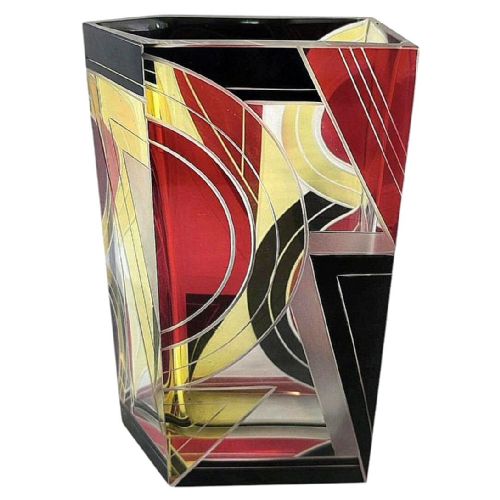
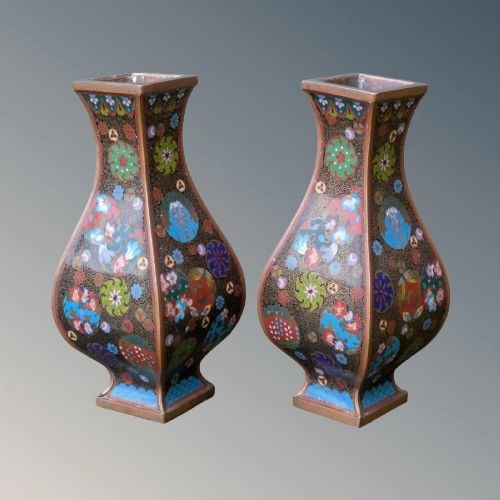
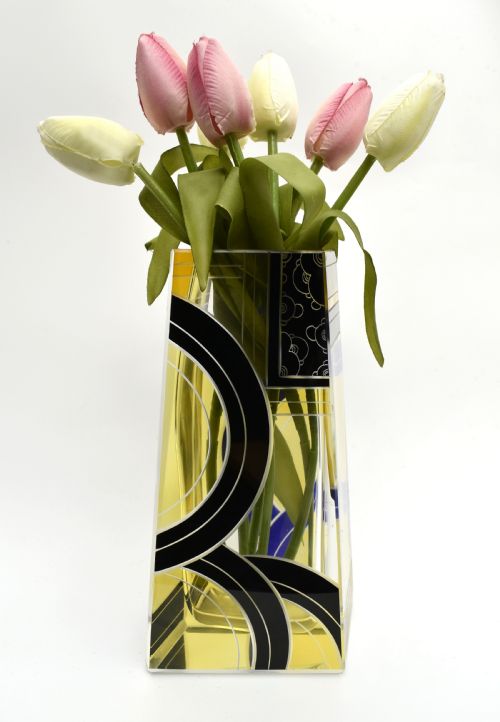
The most common examples on this page date from the nineteen-thirties and originate in Czech workshops, featuring etched glass decorated with bold geometric enamel patterns. Alongside these glass vessels, buyers find antique Japanese cloisonné works from the Meiji period and Chinese Qing dynasty pieces using traditional wirework and enamel techniques.
Victorian glass vessels also appear, demonstrating heavy black glass grounds paired with hand-painted or enamelled surface details. Whether tall and slender or squat and square, these pieces serve practical functions as vases and table lamps or stand purely as decorative objects.
How they were made
Makers utilised opaque black glass, porcelain and metal bases such as copper, brass and bronze, applying vitreous enamel directly to the surface by hand. On metal vessels, thin wire partitions known as cloisons formed individual cells to contain the coloured enamels before firing.
Glass pieces from the nineteen-thirties relied on acid-etching and surface cutting to create tactile geometric motifs alongside painted enamel decoration. Victorian makers worked directly onto dark glass grounds, applying hand-painted designs that required careful kiln firing to bond the pigments permanently.
Listings feature items spanning the Victorian era through the Art Deco period, utilising glass, copper, brass, bronze and porcelain.
What varies in quality
Quality rests in the precision of the surface decoration, the crispness of the etched or wirework lines, and the depth of the enamel finish. Superior examples display clean borders between colours and balanced proportions that elevate the object beyond simple utility.
The complexity of the manufacturing technique dictates the tier of the piece, distinguishing mass-produced decorative items from meticulously hand-finished studio and factory output. Condition of the delicate enamel surface and originality of any accompanying stands or fittings also determine the standing of each vessel.
Karl Palda·Ando Jubei·Harrach·Mary Gregory
The Black Enamel Vase Glossary
- Cloisonné
- A metalwork technique where fine wires are soldered to a base to create cells filled with enamel paste before firing.
- Meiji Period
- A Japanese historical era lasting from eighteen sixty-eight to nineteen twelve, noted for exceptional metalwork and enamel production.
- Uranium glass
- A type of glass containing trace amounts of uranium oxide, which glows vividly under ultraviolet light.
- Qing Dynasty
- The final imperial dynasty of China, spanning from sixteen forty-four to nineteen twelve, renowned for sophisticated ceramics and cloisonné.
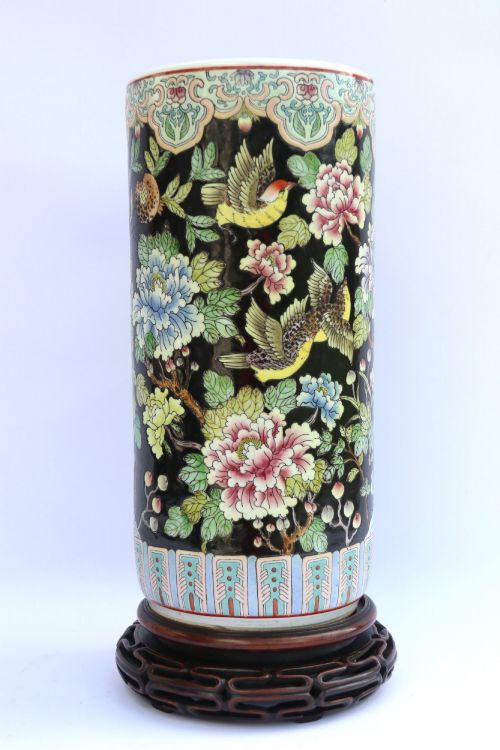
- Famille noire
- A Chinese porcelain classification distinguished by a glossy black enamel ground painted with colourful floral or figurative scenes.
Black Enamel Vase: Frequently Asked Questions
How do I date a glass vase?
Dating relies on examining the manufacturing style, such as the distinct geometric cutting and acid-etching characteristic of nineteen-thirties Czech production.
Maker marks, signature styles and the composition of the glass or enamel further help narrow the period of creation.
What is Japanese cloisonne?
Japanese cloisonne involves applying fine metal wires to a bronze, copper or brass base to form compartments that are subsequently filled with enamel.
The piece is then fired in a kiln and polished to create a smooth, decorated surface featuring birds, flowers or geometric patterns.
How should I clean antique glass?
Antique glass requires gentle cleaning with lukewarm water and a mild, unfragranced soap to protect the delicate enamel and etched surfaces.
Harsh chemicals, scrubbing brushes and immersion in water for extended periods should be avoided to prevent surface damage.
Are these pieces waterproof?
Many older enamel and glass vessels were designed primarily for decorative display rather than holding water for fresh flowers.
Testing the interior for cracks or old repairs is sensible before introducing moisture to nineteenth-century or fragile antique items.