

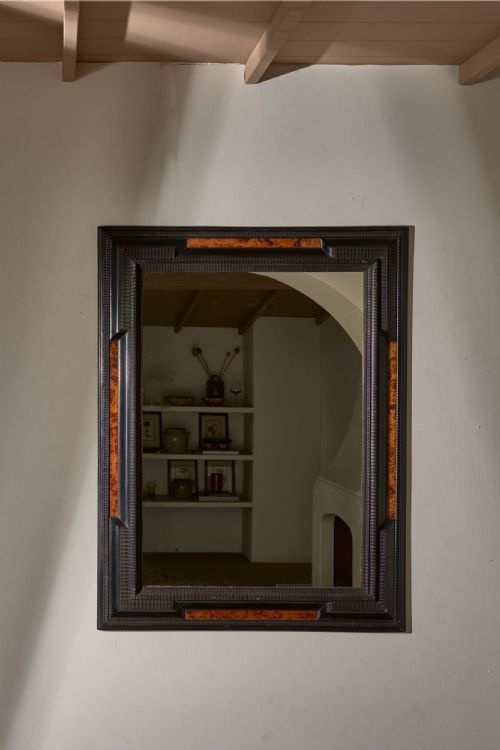
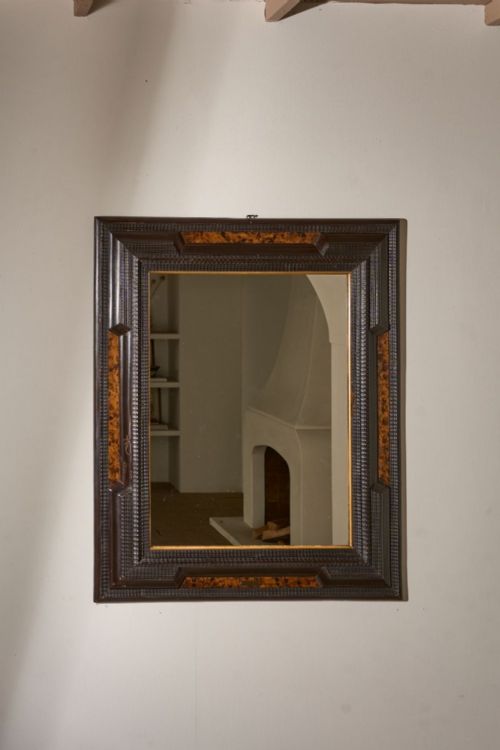
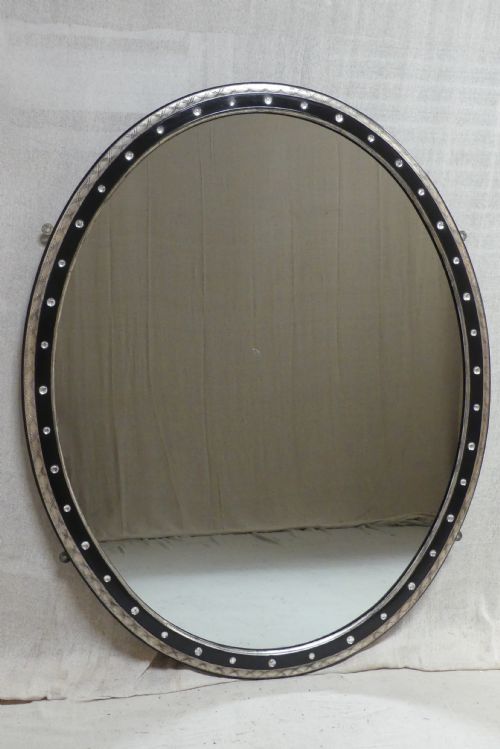
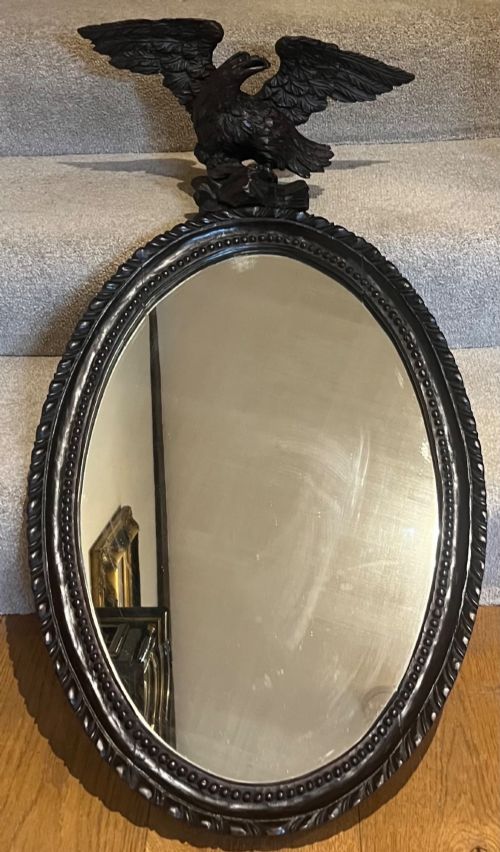
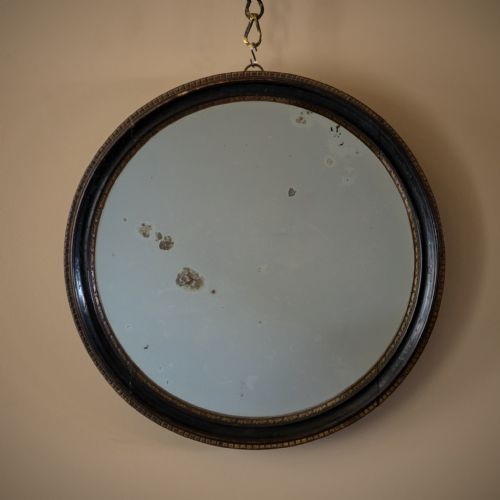


Black Ebonised Mirror Frame
A black ebonised mirror frame brings strong architectural lines and deep contrast to a room through dark timber and reflective glass.
Black Ebonised Mirror Frame
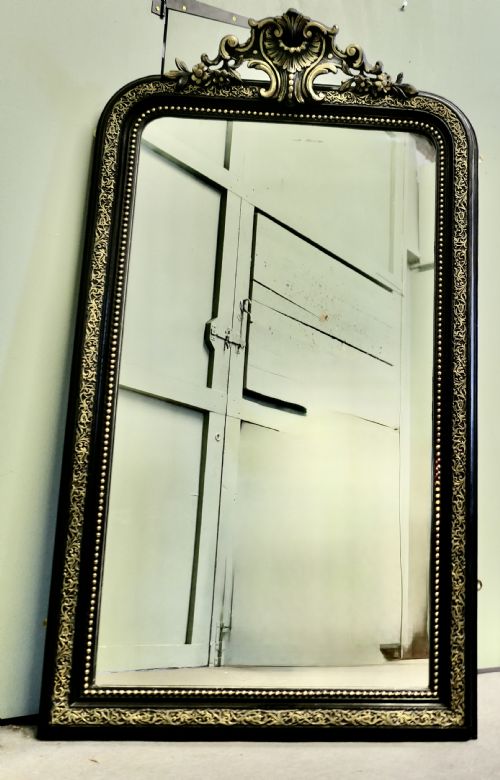
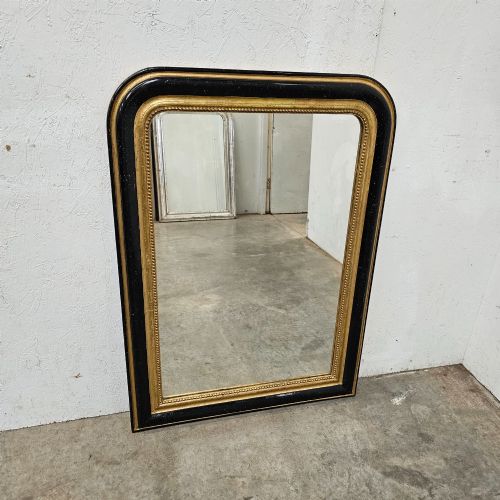
A black ebonised mirror frame offers a striking dark finish applied to timber, creating an assertive border around glass plates designed for walls, mantels, and dressing tables. Buyers seeking a black ebonised mirror frame encounter Victorian overmantels, tall Napoleon III pier glasses, and Aesthetic Movement designs that utilise ebonised wood alongside gilt highlights.
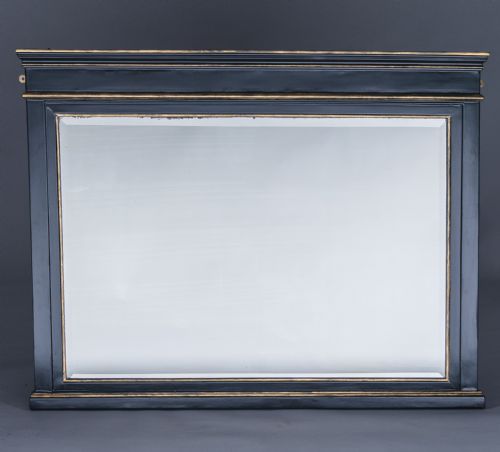
These pieces range from restrained rectangular formats to ornate arch-top and cushion frames spanning the nineteenth and early twentieth centuries. Overmantel mirrors dominate the selection, built to anchor the space above a fireplace with substantial proportions and dark moulded timber.
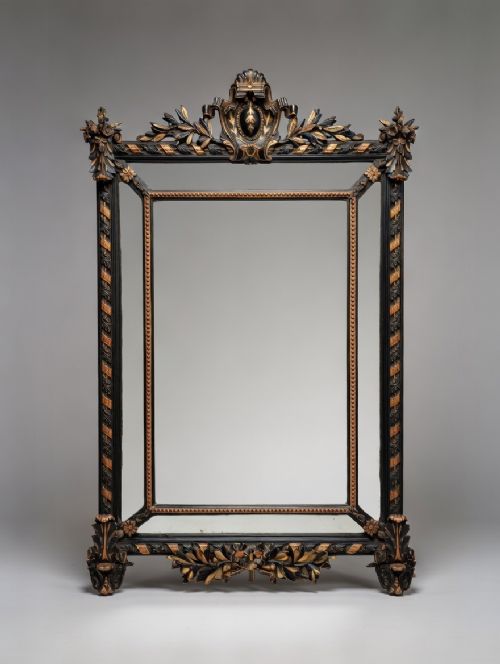
Originating across English, French, and Italian workshops, the selection spans periods from the Regency era through to Edwardian and later twentieth-century examples. The dark ebonised surface frequently combines with parcel-gilt details, faux tortoiseshell, or painted elements to catch the light.
How they were made
Craftsmen built these frames using timber bases coated with ebonising agents to imitate expensive ebony, often applying gesso to create raised mouldings and decorative reliefs. Gold leaf and parcel-gilt details were then applied by hand to selected portions of the carved wood surfaces to provide contrast against the dark background.
Mirror glass plates were set into the frames, ranging from flat polished panes to acid-etched pub mirrors and bevelled cushion glass. Construction methods relied on traditional joinery to support heavy overmantel and floor mirror proportions, finished with paint or lacquer where specified by the design style.
Common object forms across the inventory include large overmantel mirrors, wall mirrors, hall mirrors, and table mirrors.
What varies in quality
The refinement of the carved gesso and the crispness of the wood moulding set finer examples apart from simpler utilitarian pieces. Depth of the ebonised finish and the preservation of the original parcel-gilt or painted highlights determine the visual impact of the frame.
Structural integrity of the heavy timber carcass and the originality of the mirror glass plate influence the overall integrity of the piece. Elaborate ornamentation found on Victorian neoclassical revival or Italian baroque revival frames requires careful execution to maintain proportion and balance.
The Black Ebonised Mirror Frame Glossary
- Ebonised
- Wood treated with stain, dye, or paint to simulate the appearance of natural ebony. This dark finish gained widespread popularity during the Victorian period for accentuating architectural forms.
- Parcel-gilt
- Partially gilded with gold leaf or silver leaf over a contrasting base finish. The technique highlights specific carved details and mouldings on an ebonised frame.
- Overmantel
- A large mirror specifically proportioned to hang above a fireplace mantelpiece. These frames often feature landscape orientations and substantial decorative crestings.
- Cushion mirror
- A frame profile featuring a convex, outward-sloping wooden border that frames the central glass plate. This form creates a distinct three-dimensional appearance on the wall.
- Gesso
- A plaster-like mixture applied to wood frames to provide a smooth surface for carving and gilding. Artisans modelled intricate relief ornamentation directly into this compound before finishing.
Black Ebonised Mirror Frame: Frequently Asked Questions
Where should an overmantel mirror hang?
An overmantel mirror typically mounts securely directly above a fireplace mantelpiece to reflect light and anchor the vertical space in a reception room.
Due to their substantial weight and size, these frames require sturdy wall fixings and careful placement relative to surrounding furniture proportions.
What is an ebonised finish?
An ebonised finish involves treating lighter timber with specialised stains or black paint to achieve the deep, dark appearance of dense ebony wood.
This technique was widely adopted in nineteenth-century cabinet making to create dramatic contrast against gilt details and decorative carvings.
How do I identify a Victorian mirror?
Victorian mirrors often display heavy ebonised wood frames combined with parcel-gilt highlights, gesso mouldings, or cushion profiles designed for grand interiors.
Examination of the timber construction, backing boards, and glass silvering helps distinguish pieces produced during this extensive nineteenth-century period.
What is parcel-gilt decoration?
Parcel-gilt decoration describes a surface treatment where only specific raised carvings or architectural details receive a thin application of gold leaf.
This selective gilding stands out sharply against the surrounding black ebonised wood ground of the frame.