

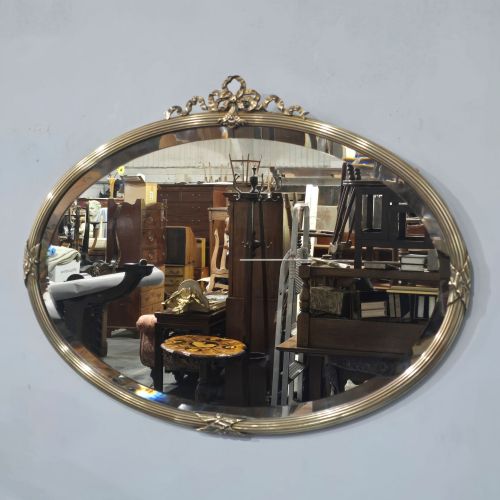
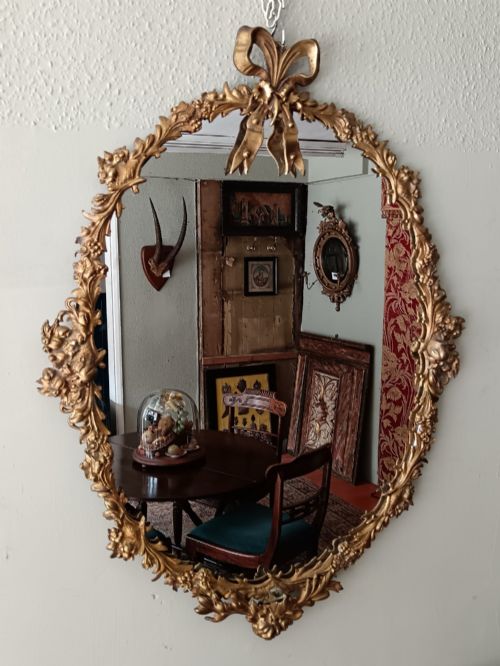
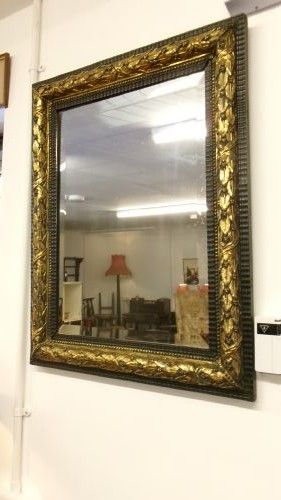


Gilt Brass Wall Mirror
A gilt brass wall mirror brings warm metallic reflection and period depth to a room, drawing the eye with polished ormolu, brass and gilt metal.
Gilt Brass Wall Mirror
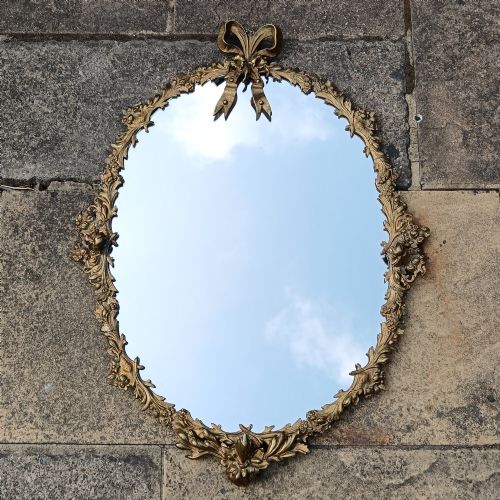
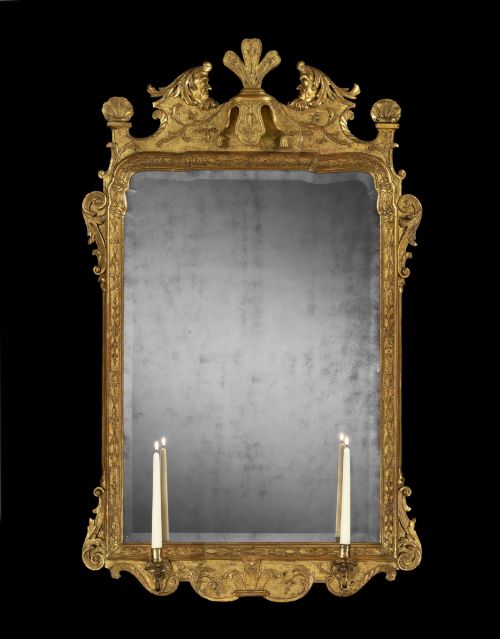
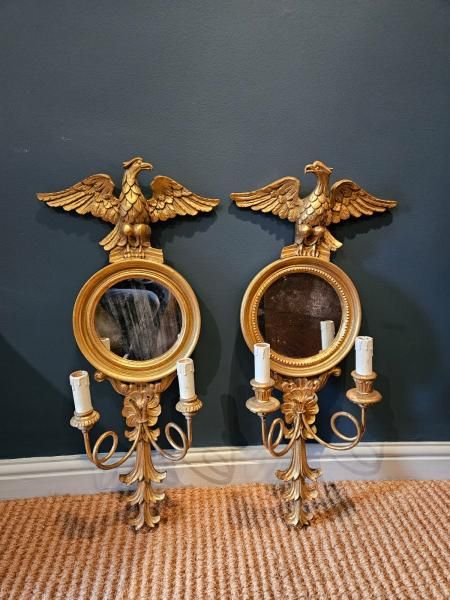
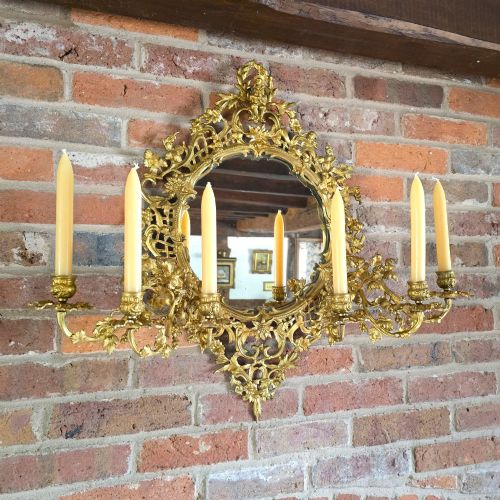
A gilt brass wall mirror is a decorative hanging looking glass framed in yellow metal, often shaped with cast ornamentation or chased detailing. These pieces range from simple domestic brass frames to elaborate French revival designs carrying candelabra branches or girandole arms.
The pieces appearing here span several centuries, with nineteenth-century French and Victorian examples forming the bulk of the selection. Buyers encounter oval formats, rectangular plates, cushion frames, and paired wall sconces designed to bounce candle or gas light around an interior.
How they were made
Construction relies on a base structure of wood, gesso, or cast metal supporting reflective glass plates secured by metal mounts and screws. Brass and bronze components are cast, sometimes chased by hand to sharpen surface details, and then gilded or left in their natural polished state.
French examples often utilise ormolu, which is mercury-gilded bronze, whilst British pieces frequently employ brass frames mounted onto wooden carcasses or rope-twist timber surrounds. Mirrored glass of the period is silvered using traditional chemical processes, producing subtle imperfections and depth.
Listings feature materials including glass, brass, gilt bronze, giltwood, gilt metal, wood, and gesso across several centuries.
What varies in quality
Quality rests principally in the crispness of the metal casting and the depth of the chasing on French bronze and brass mounts. Finer examples display sharp relief in floral swags, scrolls, and figural elements, whereas lesser pieces show soft edges and simpler stamped construction.
The preservation of the original mercury gilding or gold leaf marks the distinction between superior and standard execution. Original bevelled mirror plates with minimal silver degradation also elevate a piece above those with modern replacement glass.
The Gilt Brass Wall Mirror Glossary
- Ormolu
- Gilded bronze produced by applying a mercury and gold amalgam to the metal base and heating it until the mercury vaporised. This technique creates a durable, warm metallic lustre characteristic of fine French pieces.
- Girandole
- A decorative wall mirror fitted with one or more candle branches attached to the frame. The polished metal and glass surfaces amplify the candle illumination.
- Cushion mirror
- A looking glass featuring a convex or sloping outer frame panel that directs the eye inward toward the central glass plate. This form gained popularity during the Victorian period.
- Gesso
- A plaster-like mixture applied to a wooden base and carved or moulded before gilding. It provides the detailed relief work seen on many period frames.
- Wall sconce
- A bracket fixture attached to the wall designed to hold candles or lights, frequently incorporating a mirrored backplate to reflect the illumination.
Gilt Brass Wall Mirror: Frequently Asked Questions
How do I hang a heavy mirror?
Heavy period mirrors require robust wall fixings anchored directly into masonry studs or supported by a secure picture rail hanging wire rated for the weight.
Because many nineteenth-century frames utilise dense bronze, brass, and wooden carcasses, checking the structural integrity of the hanging loops on the reverse is essential before installation.
Can I clean the brass frame?
Dusting with a soft, dry cloth is usually sufficient for maintaining the surface without disturbing the original patina or the delicate gilding beneath.
Harsh metal polishes should be avoided entirely, particularly on ormolu or gilt surfaces, as abrasive cleaning strips away the gold layer and reduces the historical value.
Are the mirror plates original?
Period glass often exhibits slight foxing, small dark spots, and minor distortion resulting from the historical manufacturing methods used to flatten and silver the plate.
Completely flawless reflection frequently indicates a modern replacement mirror glass, whereas authentic nineteenth-century glass shows the soft grey shadows of age.
How do I identify French pieces?
French wall mirrors generally exhibit distinct stylistic traits such as Louis XVI revival symmetry, Rococo scrolls, or Empire period neoclassical motifs executed in bronze and brass.
Construction details, including French backboards and specific mounting screws, also help separate continental workshop output from domestic British Victorian production.