
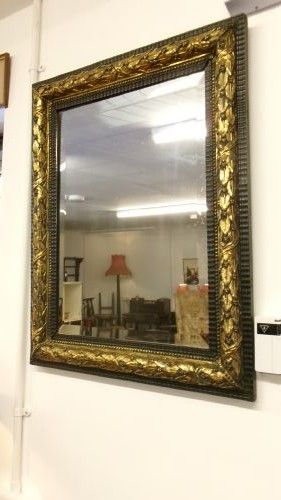


Gold Brass Framed Mirror
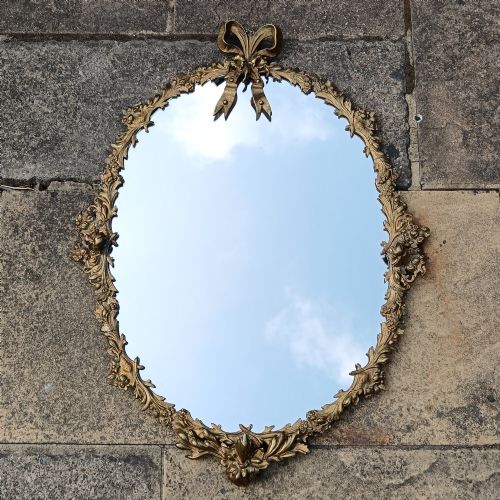
A gold brass framed mirror brings warmth and depth to a room through heavy metalwork and aged glass.
Gold Brass Framed Mirror
When you search for a gold brass framed mirror, you encounter a diverse range of wall mirrors, table mirrors, and cheval mirrors spanning multiple centuries. The selection includes Victorian cushion frames, French bistro mirrors, and elaborate Louis XVI revival pieces.
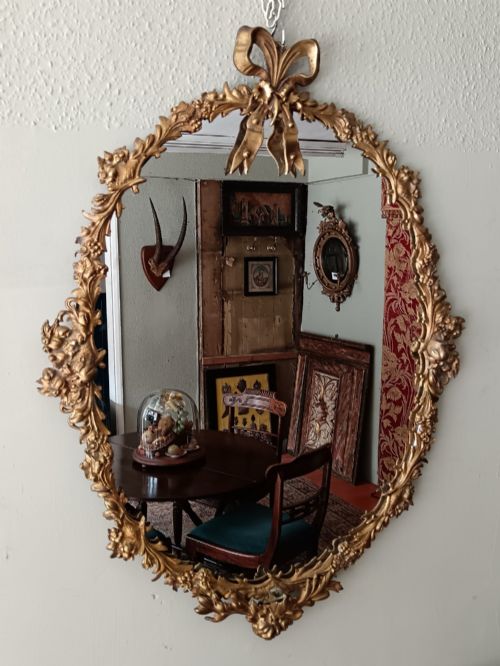
You are most likely to meet 19th-century and Edwardian examples featuring brass, gilt bronze, or gilt metal constructions. Forms vary from simple rectangular brass-mounted wooden frames to ornate repoussé work and sunburst designs.
Originating largely from British, French, and Dutch workshops, these pieces function equally well as utilitarian looking glasses and striking decorative wall focal points.
How they were made
Craftsmen built these frames using brass, gilt bronze, and gilt metal, often mounted onto a wooden or oak carcass for structural support. Detailed ornamentation relied on techniques such as hand embossing, repoussé, and fine casting to achieve intricate motifs like rams' heads and cherubs.
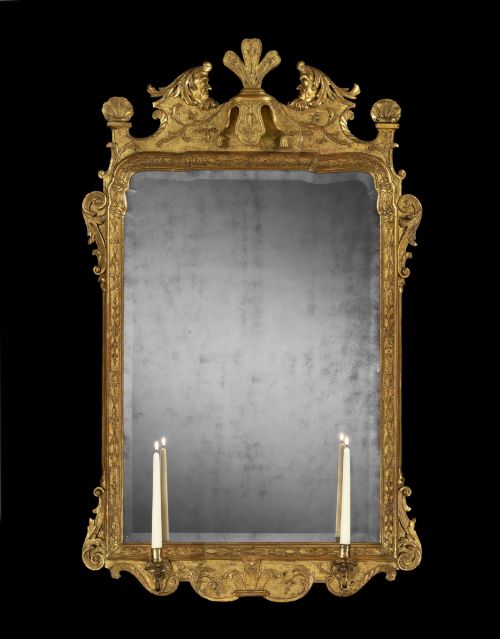
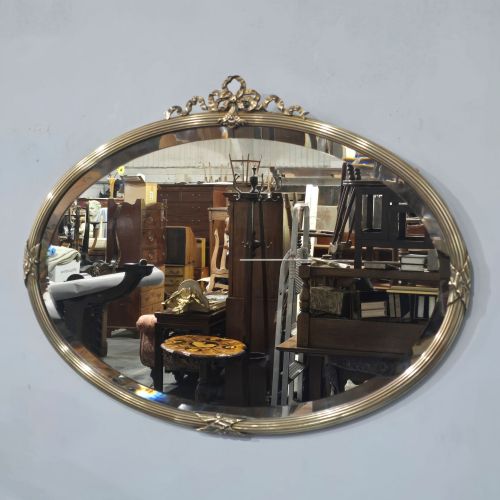
Glass plates were commonly bevelled or left flat, housed securely within thick metal channels or cushion frames. Many surviving examples retain their original distressed silvered plates, displaying authentic age through oxidation and spotting.
Several mirrors feature small brass cherubs and rams' heads keeping permanent watch over your reflection.
What varies in quality
The distinction between standard production and exceptional work lies in the depth and crispness of the metal casting and hand-tooling. Finely cast examples exhibit sharp relief in ornamental details like cherubs and floral scrolls, whereas lesser pieces show softer, shallower definition.
The integrity of the frame construction and the preservation of the original glass plate also determine overall merit. Heavy gauge brass securely fixed to a sound wooden backing commands greater presence than thin, modern-substitute framing.
The Gold Brass Framed Mirror Glossary
- Repoussé
- Metalwork beaten into relief from the reverse side by means of hammers and punches. This technique defines the richly textured borders seen on Flemish and Victorian frames.
- Cushion mirror
- A frame profile featuring a rounded, convex slope that pushes the reflective glass inward. It creates a pronounced three-dimensional border around the room reflection.
- Bevelled glass
- A mirror plate with edges angled and polished to a thinner margin. This traditional treatment catches the light and adds visual depth to the piece.
- Cheval mirror
- A full-length looking glass hung in a frame that tilts on vertical pivots. They typically stand independently on the floor as large dressing mirrors.
- Gilt bronze
- Copper alloy treated with a gold-coloured finish or mercury gilding. It provides a heavy, durable metallic sheen on French revival pieces.
Gold Brass Framed Mirror: Frequently Asked Questions
How do I clean a vintage brass frame?
Dust the metal gently with a soft, dry cloth to remove surface particles.
Avoid abrasive polishes that strip away the aged patina built up over decades.
Are these mirror plates original?
Many older pieces retain their original glass, which often displays charming foxing and minor oxidation.
Replacement plates appear bright and uniform without the characteristic dark speckles of age.
How do I hang a heavy brass mirror?
Secure the hanging hardware directly into wall studs or utilise heavy-duty wall anchors rated for the weight.
Check that the wire or brackets fixed to the wooden backing remain sturdy before mounting.
What is a bistro mirror?
Bistro and brasserie mirrors were designed for commercial French establishments, typically featuring robust wooden or thick brass frames.
They bring an industrial yet decorative aesthetic well suited to domestic hallways and living spaces.