



Black Ebonised Accent Chair
A black ebonised accent chair brings dark drama and historical presence into a room, spanning periods from Regency to Art Deco.
Black Ebonised Accent Chair
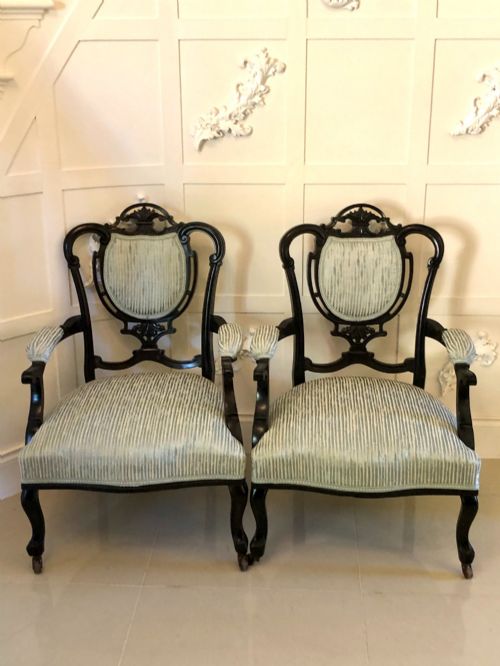
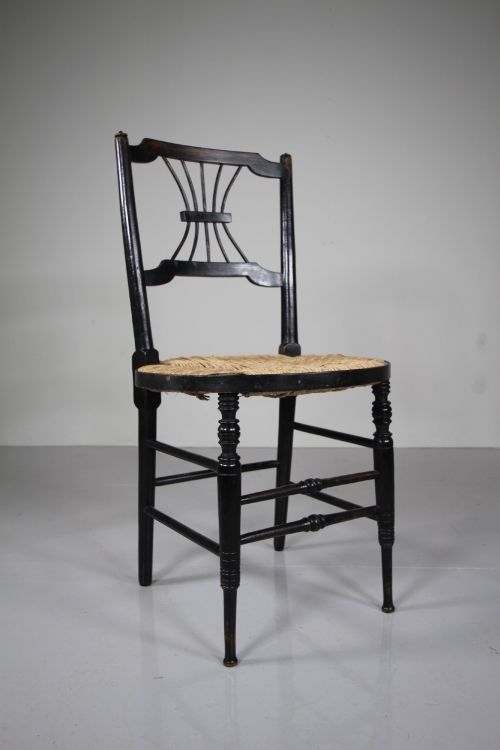
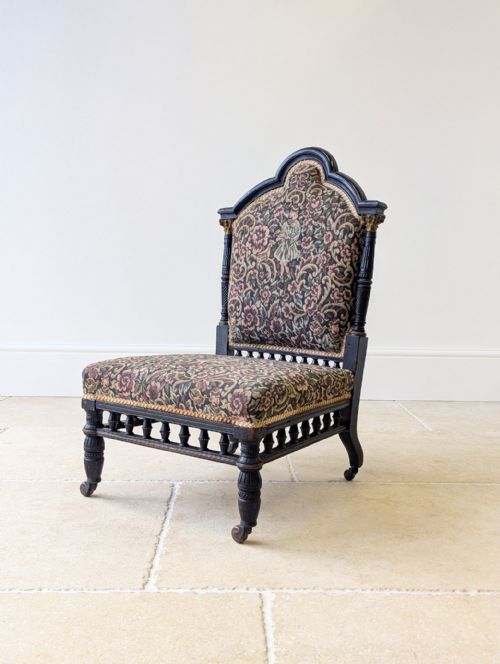
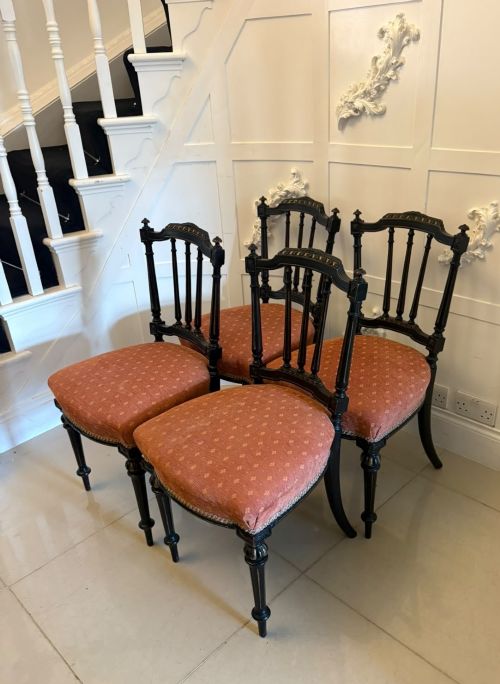
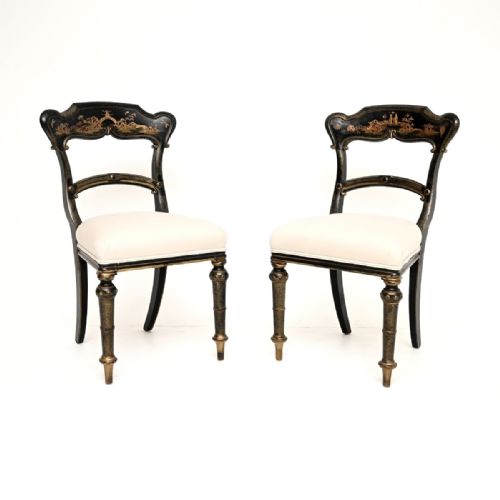
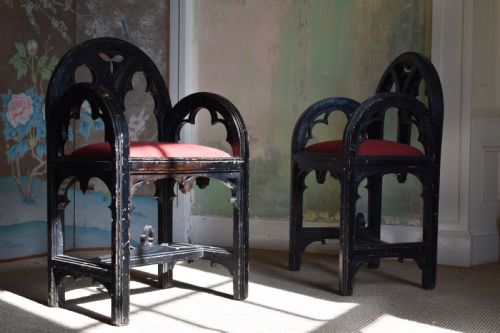
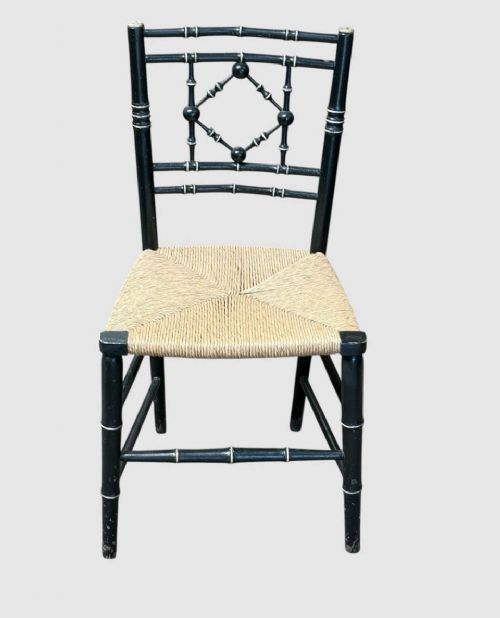
A black ebonised accent chair sits in many forms across this collection, most frequently appearing as Victorian salon chairs, nursing chairs, and side chairs. These pieces draw the eye through dark finishes applied to timber, functioning as decorative seating rather than primary dining furniture.
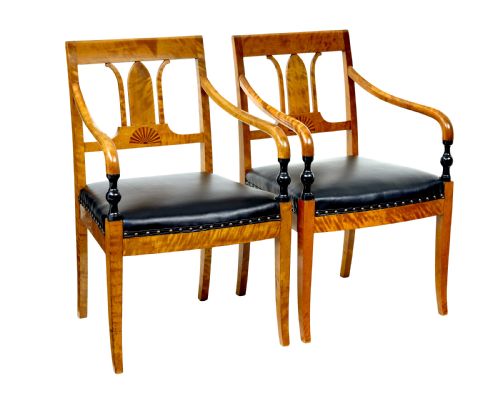
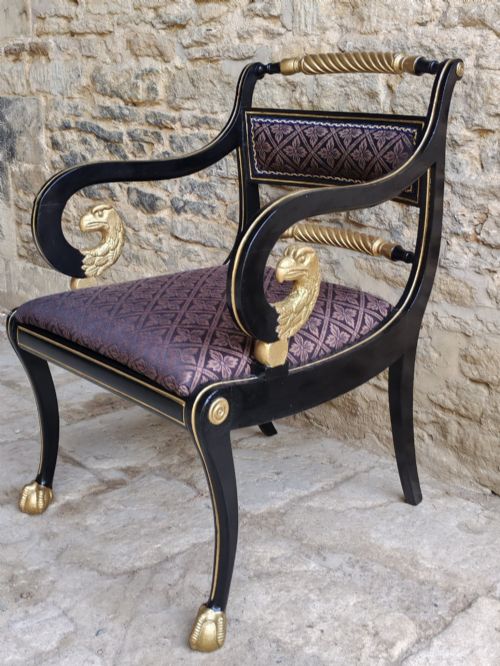
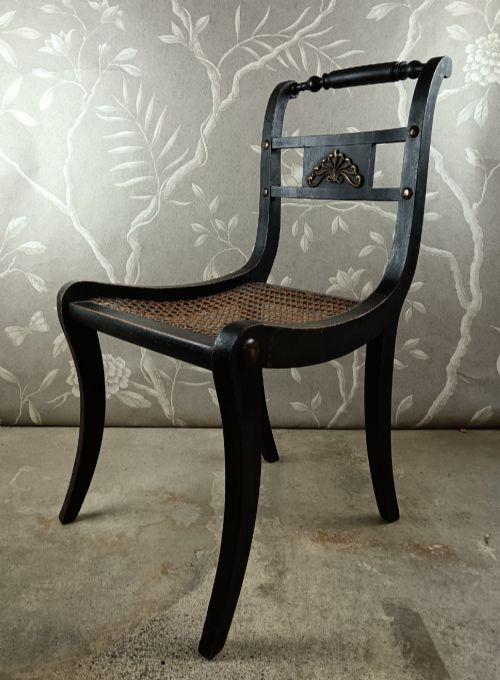
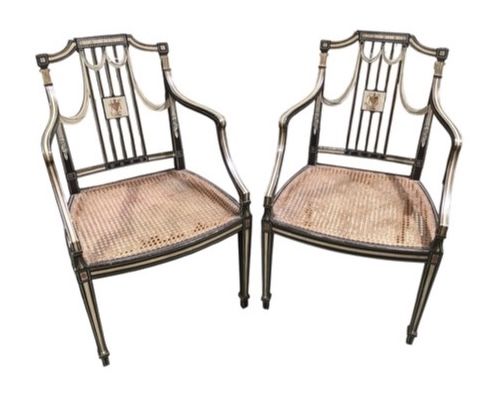
The selection extends from early nineteenth-century Regency library chairs and Trafalgar sabre leg designs through to Aesthetic Movement and Arts and Crafts examples. Later twentieth-century pieces introduce Art Deco Scandinavian birch armchairs and painted Gothic Revival seating.
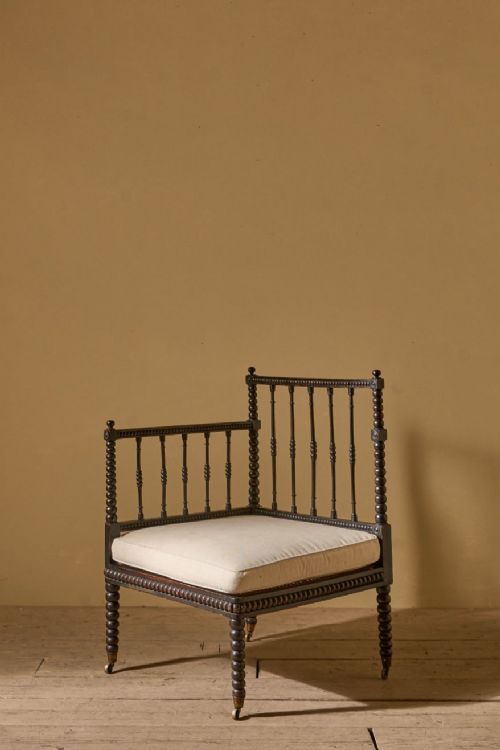
Makers and designers working in these styles utilised traditional forms such as the Cockpen armchair, Windsor chair, and bobbin corner chair. Buyers encounter diverse seating types including low salon chairs, child chairs, and rocking chairs.
Judging quality in ebonised seating
Quality rests upon the crispness of carved wooden details and the integrity of the ebonised surface treatment over the underlying timber. Superior examples exhibit refined proportions and purposeful joinery that withstands the passage of time without looseness in the frame.
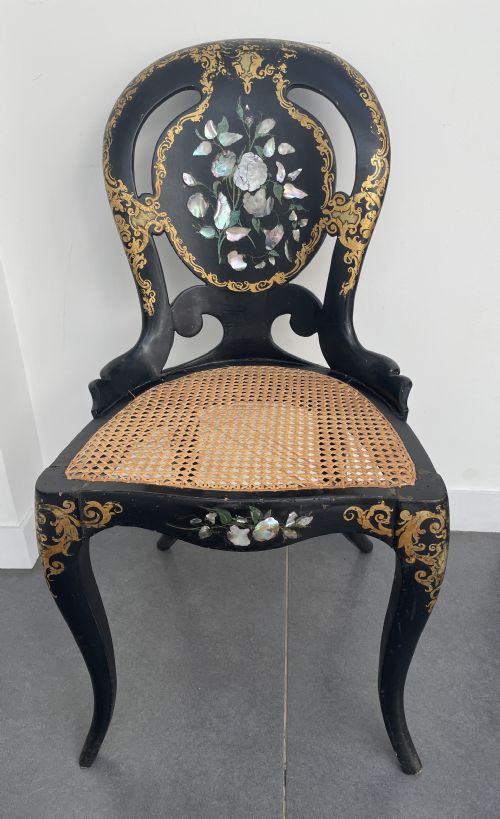
The sophistication of decorative elements, such as applied gilt, inlaid mother of pearl, or hand-woven cane seats, separates standard production from exceptional pieces. Original upholstery materials and documented provenance elevate the standing of individual chairs within this tradition.
Black Ebonised Accent Chair Retail Price Guide 2026
Typical asking prices for black ebonised accent chair among the pieces listed under this phrase on Sellingantiques today, from the lower quarter to the upper quarter. They describe what is for sale here now, not the wider market.
Materials documented across the pieces include ebonised timber, ash, elm, birch, oak, cane, rush, brass, velvet, and mother of pearl.
William Morris·Rossetti·Collier and Plucknett·Bruce J. Talbert·Liberty of London·Ford Maddox Brown·Jennens and Bettridge
The Black Ebonised Accent Chair Glossary
- Ebonisation
- The chemical or finishing process of staining light timber to resemble solid ebony. This technique gained immense popularity during the Victorian and Aesthetic periods.
- Aesthetic Movement
- A late nineteenth-century design style emphasising visual beauty over narrative subject matter. Pieces from this era often feature ebonised frames with incised gilt decoration.
- Cockpen
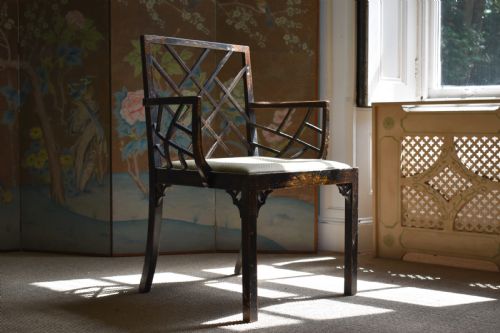
- A type of Chinese Chippendale chair featuring an open lattice-work back. Examples appear in nineteenth and early twentieth-century listings with ebonised or painted finishes.
- Trafalgar
- A style of early nineteenth-century Regency chair characterised by sabre legs and curved back rails. These frames often display painted or ebonised surfaces.
- Cane
- Woven rattan material utilised for lightweight, resilient seat pads. It requires careful hand-weaving around the interior frame aperture.
Black Ebonised Accent Chair: Frequently Asked Questions
What is an ebonised chair?
An ebonised chair is a wooden seat finished with a dark stain or paint to mimic expensive ebony wood. This treatment was widely used across various nineteenth-century design movements to create striking visual contrast.
These chairs range from formal Regency library models to low Victorian nursing chairs and decorative bedroom seating. The finish highlights the underlying form of the timber while offering a uniform dark surface.
How do I date a black chair?
Dating relies on observing structural forms, turning details, and decorative motifs characteristic of specific eras like the Regency or Aesthetic Movement. Chair proportions and joinery methods shift perceptibly from the early nineteenth century into the Edwardian period.
Secondary materials such as cane seating, mother of pearl inlay, or specific fabric choices also provide clues. Comparing the silhouette against documented period styles helps establish a reliable timeframe.
Where should I place an accent chair?
An accent chair functions well in corners, bedrooms, or alongside larger upholstery pieces to introduce a contrasting silhouette and dark tone. Their decorative frames make them ideal focal points in rooms needing a touch of historical character.
Lighter forms, such as side chairs or salon chairs, move easily between spaces depending on seating needs. Their compact profiles suit spaces where a full-sized armchair would overwhelm the floor plan.