




Black Rush Chair
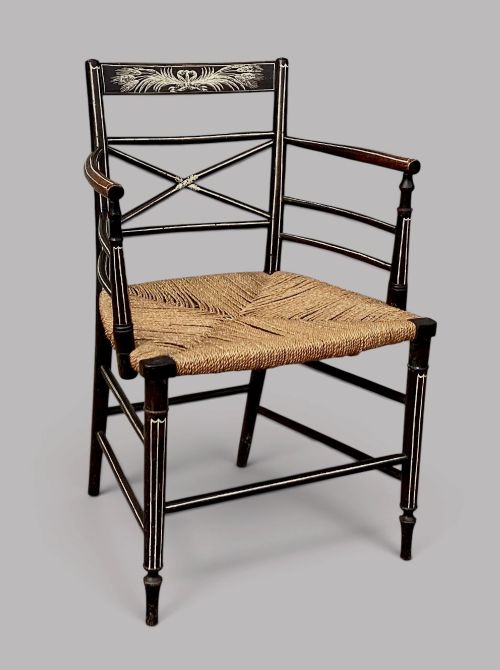
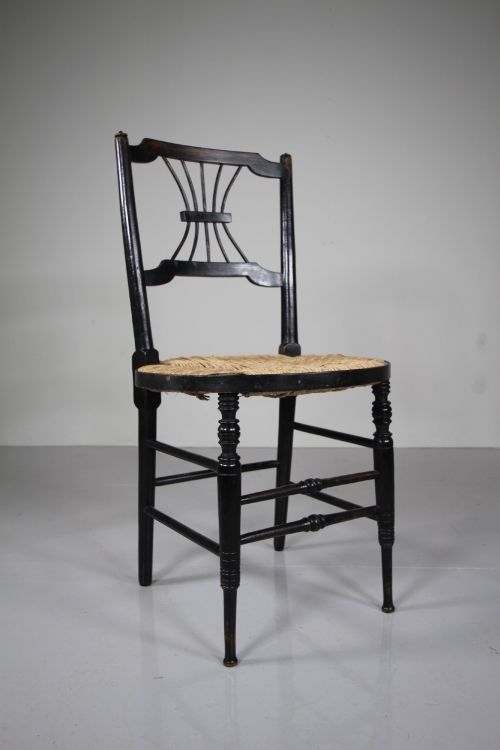
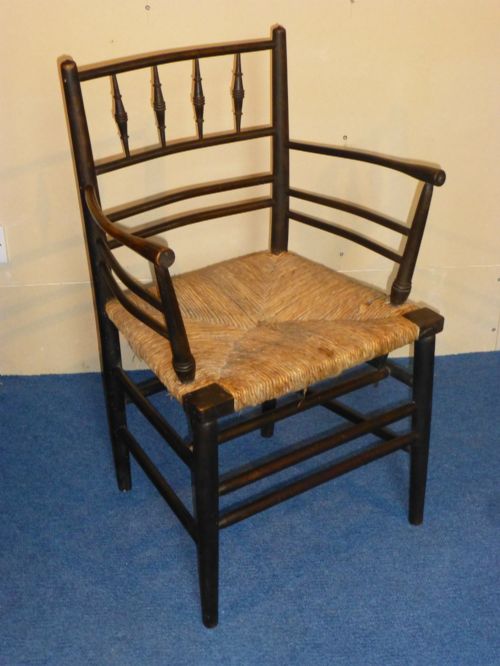
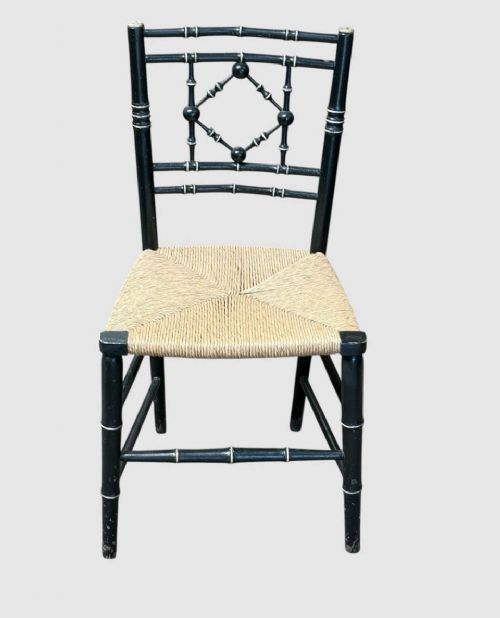
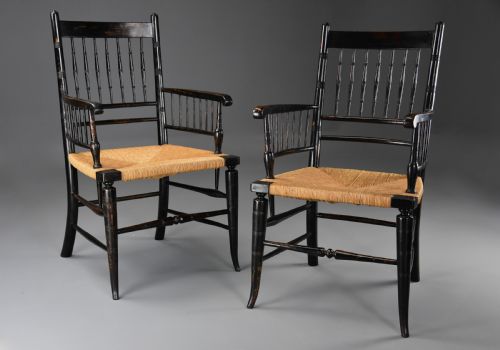
These black rush chair examples offer classic seating forms rooted in the nineteenth century, combining ebonised wood frames with woven natural rush seats.
Black Rush Chair
A black rush chair brings together traditional seating forms and dark ebonised finishes across various periods including the nineteenth century and the Georgian era. Buyers searching for a black rush chair encounter forms ranging from simple side chairs and dining chairs to armchairs, rocking chairs, and childs chairs.
The selection includes specific designs associated with the Arts and Crafts movement, the Aesthetic Movement, and Regency Country styles. Makers and retailers such as Morris & Co, Liberty of London, and Philip Webb appear alongside George III painted pieces and Hitchcock chairs.
Most pieces on this page utilise ebonised wood, ebonised beech, or ebonised timber paired with rush seats, spanning dining sets, pairs, and individual hall chairs.
How They Were Made
Frames utilise beech, timber, and wood treated with black paint or ebonisation processes to achieve a dark surface. Artisans shaped these elements into turned supports and uprights for side chairs, armchairs, and rocking chairs.
Natural rush forms the woven seats, providing a durable and flexible surface across the various periods recorded. Traditional joinery secures the frames while the rush is tightly bound around the seat rails.
Black Rush Chair Retail Price Guide 2026
Typical asking prices for black rush chair among the pieces listed under this phrase on Sellingantiques today, from the lower quarter to the upper quarter. They describe what is for sale here now, not the wider market.
Listings feature the nineteenth century alongside Georgian and Regency periods, utilising natural rush and ebonised wood across various chair forms.
What Varies in Quality
The integrity of the woven rush seat distinguishes standard examples from finer pieces, as tight and even plant fibre tension ensures longevity. Original painted or ebonised surfaces carry greater character than later refinishing.
Attribution to notable designers and firms such as Philip Webb, Rossetti, or Ford Madox Brown elevates the standing of individual items. The structural precision of the turned wooden components and the matching of sets also mark the upper tiers.
William Morris·Rossetti·Morris & Co·Philip Webb·Liberty of London·Ford Madox Brown·Hitchcock
The Black Rush Chair Glossary
- Ebonised wood
- Timber treated with stain or paint to imitate ebony. This finish is characteristic of nineteenth-century Aesthetic Movement and Arts and Crafts seating.
- Rush
- Natural dried marsh grass woven to create chair seats. It provides a resilient and textured surface.
- Arts and Crafts
- A design movement valuing handcraftsmanship and simple forms. Pieces from this style often feature exposed construction and honest materials.
- Aesthetic Movement
- A late nineteenth-century movement emphasising visual beauty over narrative. Ebonised furniture with sparse decoration frequently emerged from this aesthetic.
- Regency Country
- A provincial British style combining classical Regency proportions with vernacular rural making traditions.
Black Rush Chair: Frequently Asked Questions
What periods do these chairs come from?
The listings span the Georgian era, the Regency period, and various decades of the nineteenth century.
Specific dates within the nineteenth century include the eighteen sixties, seventies, eighties, and nineties.
Are these chairs suitable for daily dining use?
Many examples on this page comprise dining chairs and sets intended for regular seating.
The natural rush seats and sturdy wooden frames are built for practical domestic application.
How do I identify an Arts and Crafts chair?
Arts and Crafts pieces typically display simple turned wooden members and an emphasis on natural materials.
They often feature ebonised finishes and woven rush seats without excessive ornamentation.
What is an ebonised finish?
Ebonisation involves staining or painting timber to create a deep black appearance resembling ebony wood.
This technique was widely utilised by nineteenth-century designers working in the Aesthetic and Arts and Crafts traditions.
Do these chairs come in sets?
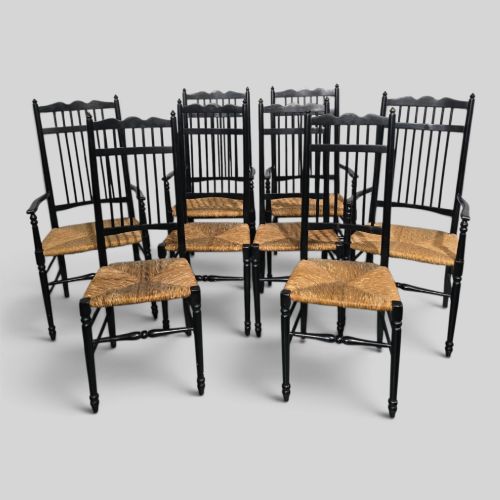
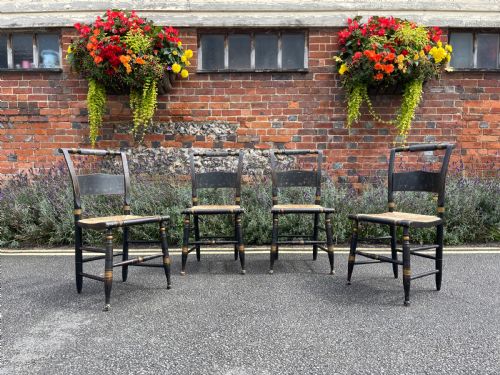
The page includes individual armchairs and side chairs alongside sets of four and eight dining chairs.
Pairs such as his and hers armchairs also appear within the selection.