
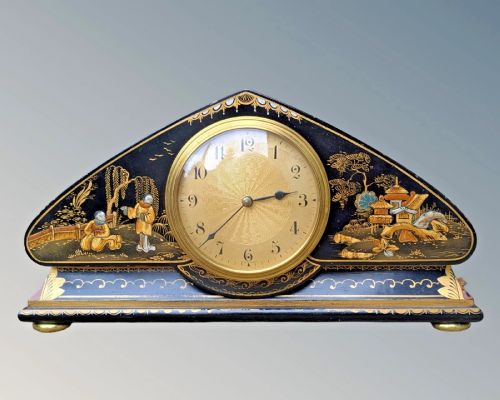
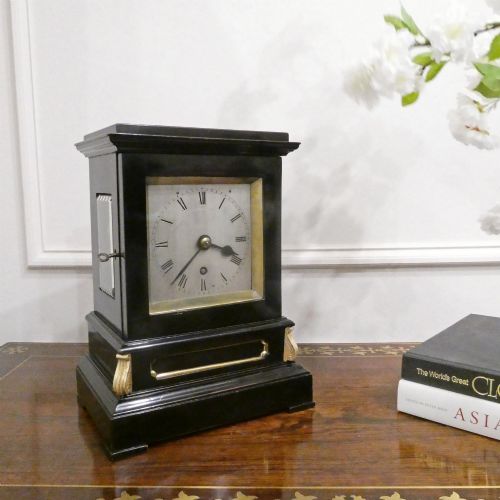
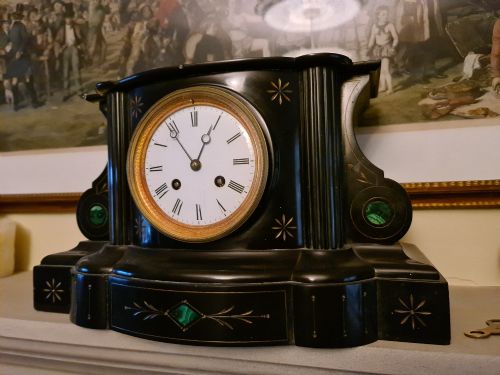


Black Dial Table Clock
A black dial table clock brings serious architectural presence to a room, combining precise mechanical movement with striking dark faces.
Black Dial Table Clock
A black dial table clock sits on mantels, desks and brackets, serving both as a timepiece and a substantial decorative object. When hunting for a black dial table clock, collectors encounter pieces ranging from compact library timepieces to massive musical bracket clocks with multiple bells.
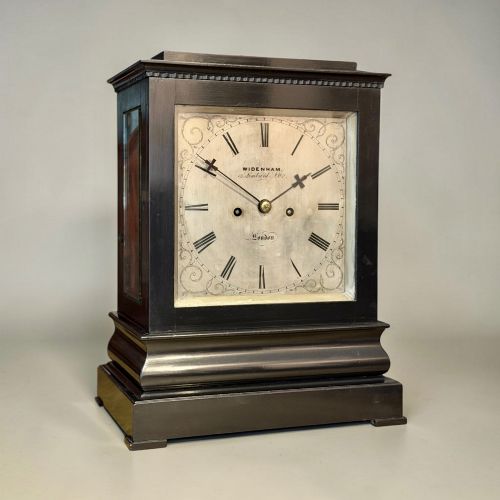
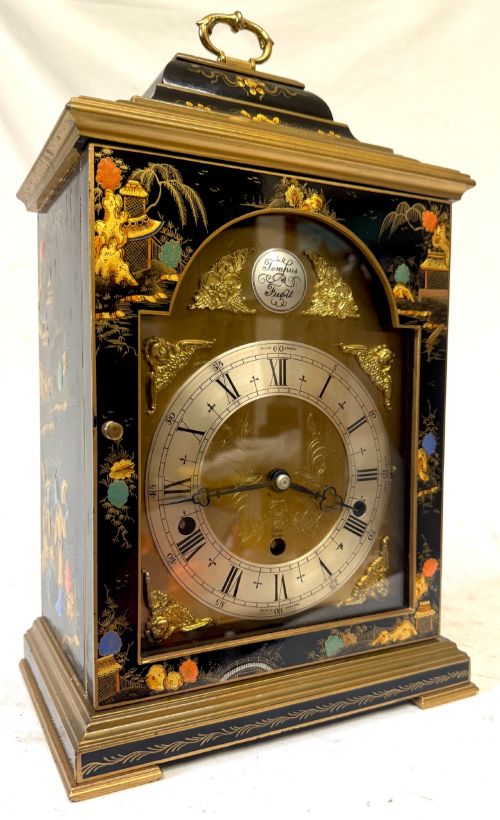
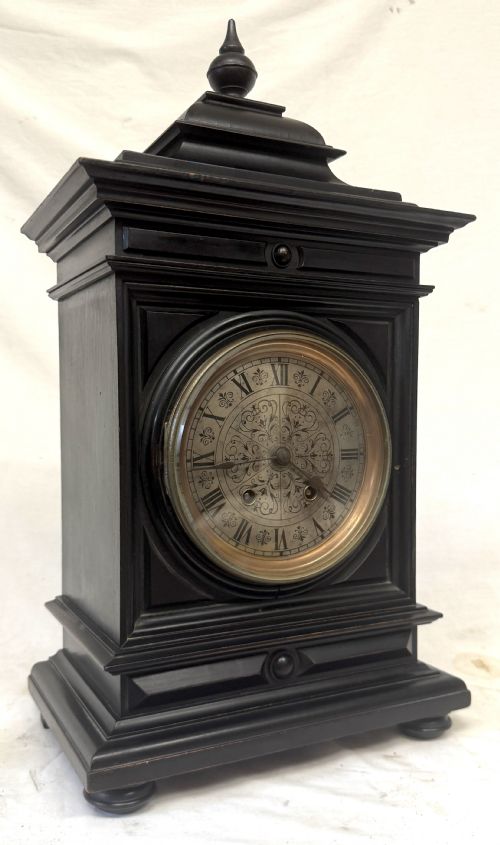
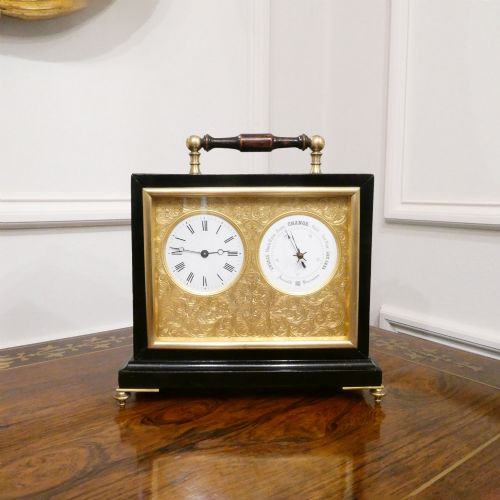
The materials framing these dark faces vary widely across the inventory, featuring deep ebonised wood, heavy black slate, and occasional faux marble alongside rich accents of brass and ormolu. Forms stretch from classic Georgian bell-top bracket shapes to Victorian architectural cases and sleek Art Deco desk designs.
Origins span across English workshops and continental makers, with many pieces carrying the names of notable London clockmakers on their silvered or enamelled chapter rings. These objects bridge functional engineering and domestic display, anchoring period interiors with dark, reflective surfaces.
Materials and construction methods
Makers of the black dial table clock relied heavily on ebonised wood and dense black slate to build the substantial outer cases, often contrasting the dark exteriors with bright brass bezels, ormolu mounts and gilt bronze figures. Dial faces incorporate silvered brass, enamel and painted metal to ensure legibility against the dark surroundings.
Internal mechanics depend on precise brass gear trains, utilising fusee movements for steady power delivery and verge or anchor escapements to regulate time. Finer examples integrate complex striking trains, chime barrels and subsidiary calendars into the robust timber and metal housings.
Several Victorian bracket clocks manage to squeeze eight bells, Westminster chimes and automated moving figures into a single dark wooden case.
Distinctions in craftsmanship and execution
Quality in a black dial table clock rests upon the crispness of the case carving and the integration of metal mounts, where hand-chased ormolu and heavy cast slate distinguish superior workshops from standard production. The weight and finish of the ebonised wood or marble surfaces reveal the time spent by craftsmen in polishing and fitting.
Mechanical sophistication dictates the upper tier of these timepieces, separating simple time-only movements from complex multi-train bracket clocks with quarter-striking, musical barrels and intricate calendar complications. Signed dials by established makers add historical weight and document superior workshop standards.
Widenham of London·Lenzkirch·John Witherston of Hereford·Sacre·Des Granges of London·Phillips Brothers·D. Munsey of Cambridge·Richard Rooker·Payne and Co. London·Jaeger LeCoultre·Grimaldi and Johnson·Somersall London·William Withers·John Fletcher·Barraud and Lunds·John Taylor London·William Smith London·Isaac Hurley London
The Black Dial Table Clock Glossary
- Fusee
- A conical pulley used in mechanical clocks to maintain an equal pull on the gear train as the mainspring unwinds. This device ensures consistent timekeeping throughout the running period.
- Ebonised
- Timber treated with a dark stain or finish to imitate true ebony wood. This finish is prevalent on many period bracket and mantel clock cases.
- Bracket clock
- A portable spring-driven clock originally designed to sit on a matching wall bracket or table. These pieces frequently feature elaborate bell-top or break-arch wooden cases.
- Verge escapement
- An early mechanical regulating mechanism that controls the release of power from the gear train. It works in conjunction with a balance spring or pendulum.
- Ormolu
- Gilt bronze ornamentation applied to clock cases and dials. The technique involves fusing a mixture of gold and mercury to a bronze base.
Black Dial Table Clock: Frequently Asked Questions
What powers a vintage black dial table clock?
Most period examples rely on spring-driven brass movements regulated by a balance wheel or pendulum. Many incorporate fusee chains or cords to deliver steady power to the gear train.
Some later or continental pieces utilise alternative escapements and shorter 8-day movements requiring regular manual winding with a matching key.
How do I care for a slate clock case?
Heavy slate and marble cases need gentle dusting with a soft, dry cloth to protect the polished surface. Avoid using harsh chemical cleaners or water directly on the stone.
Ensure the surface supporting the clock is completely level to prevent uneven wear on the delicate internal escapement and gear teeth.
How can I distinguish a Victorian clock from an earlier Georgian piece?
Georgian examples often feature simpler, architectural ebonised wooden cases with bell-tops and traditional verge escapements. Victorian models frequently introduce heavier black slate, marble finishes and complex triple-fusee or chiming movements.
Examining the signature style of the dial lettering and the mounting hardware also helps place the piece within its correct manufacturing period.