
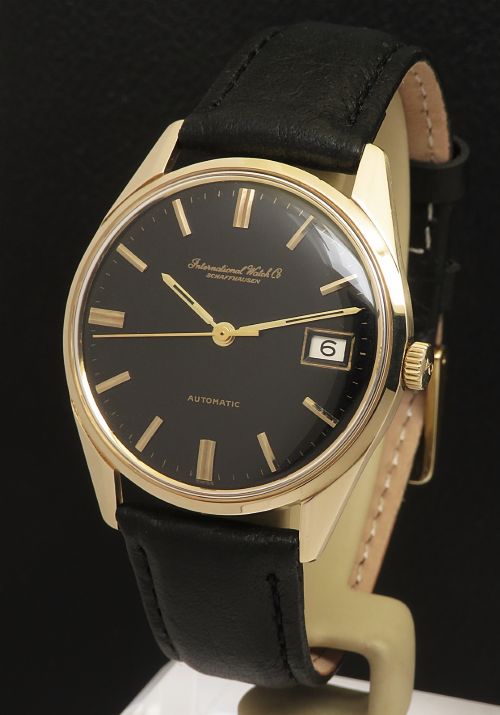
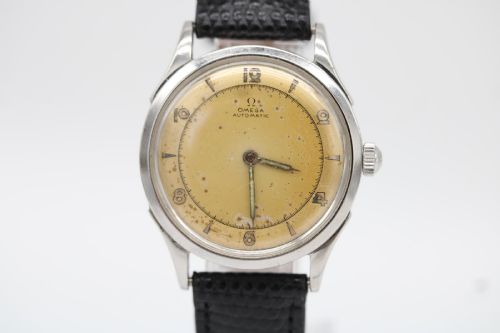
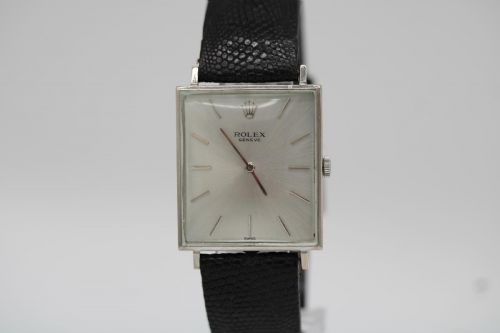
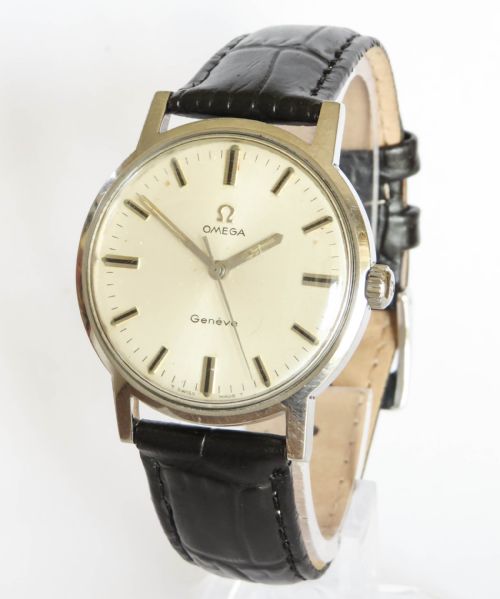
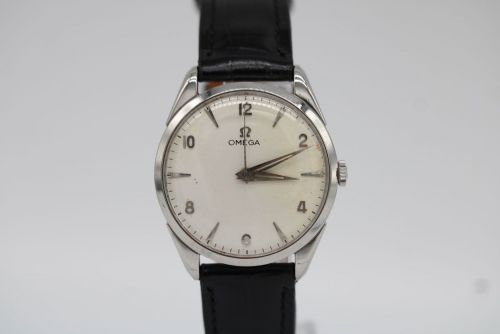
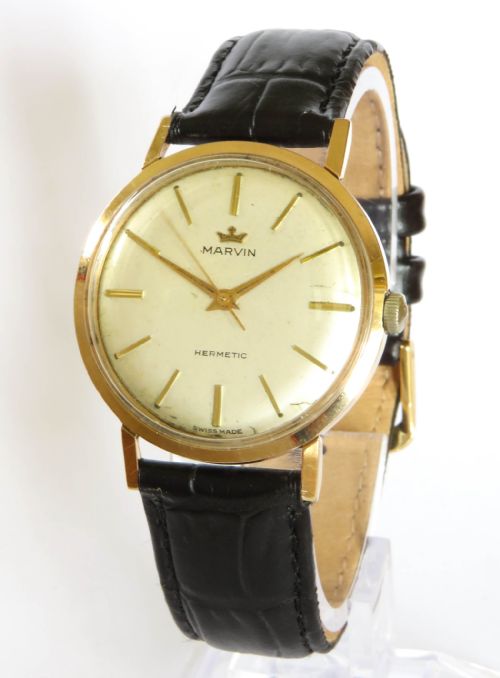
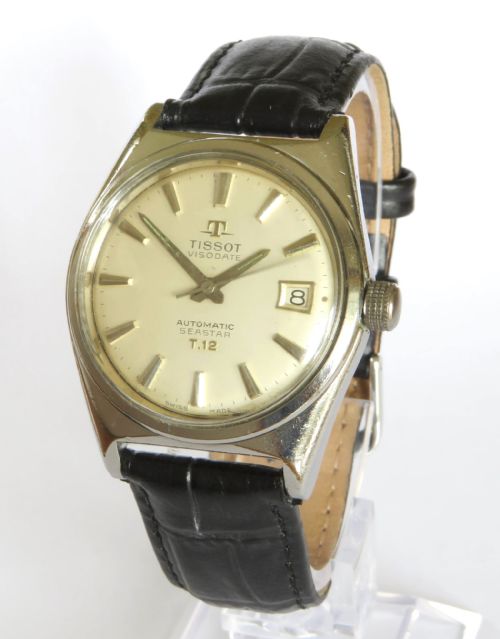
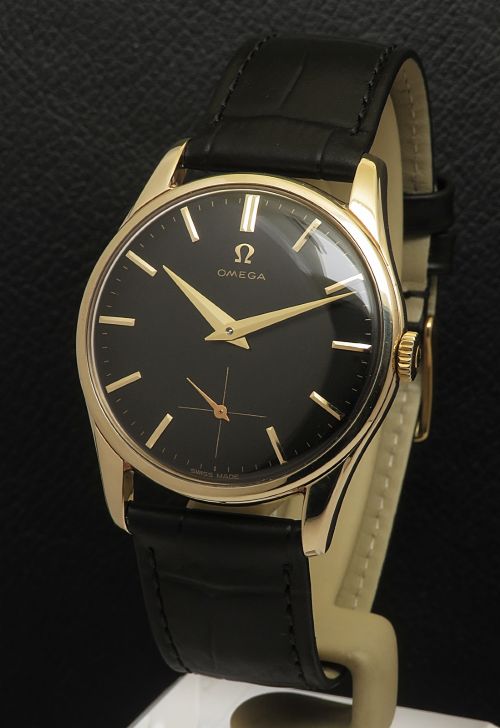
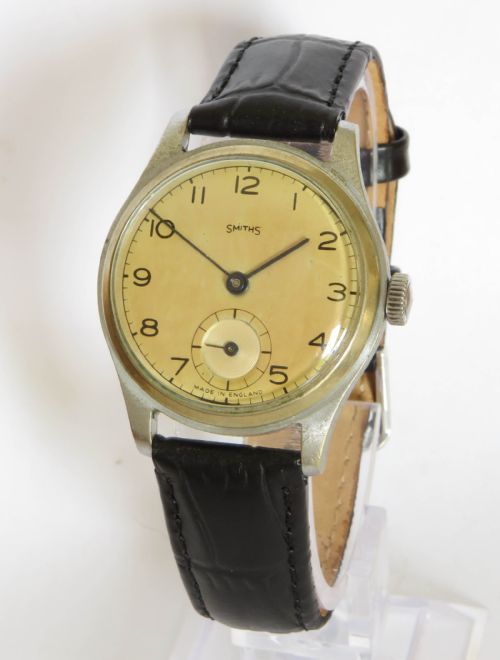
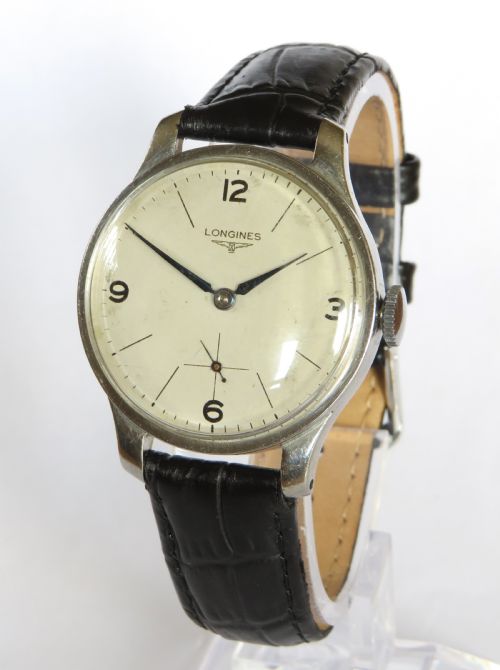
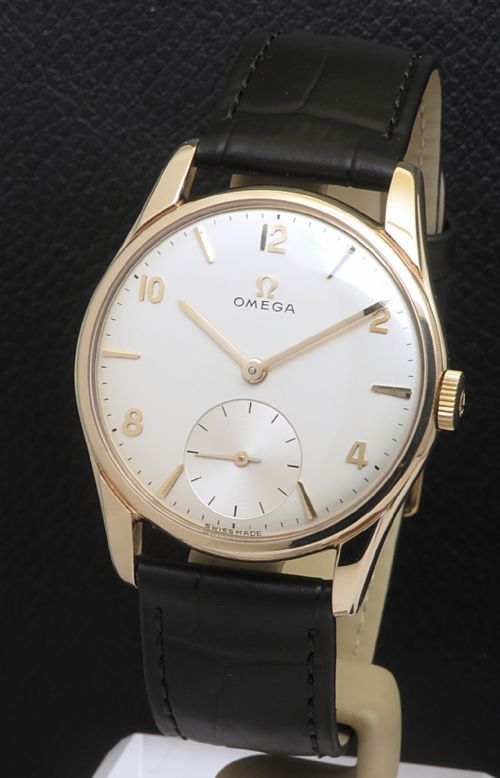

Black Dial Dress Watch
A black dial dress watch offers an understated alternative to standard white faces, bringing depth and contrast to wristwear from the 1930s to the 1960s.
Black Dial Dress Watch
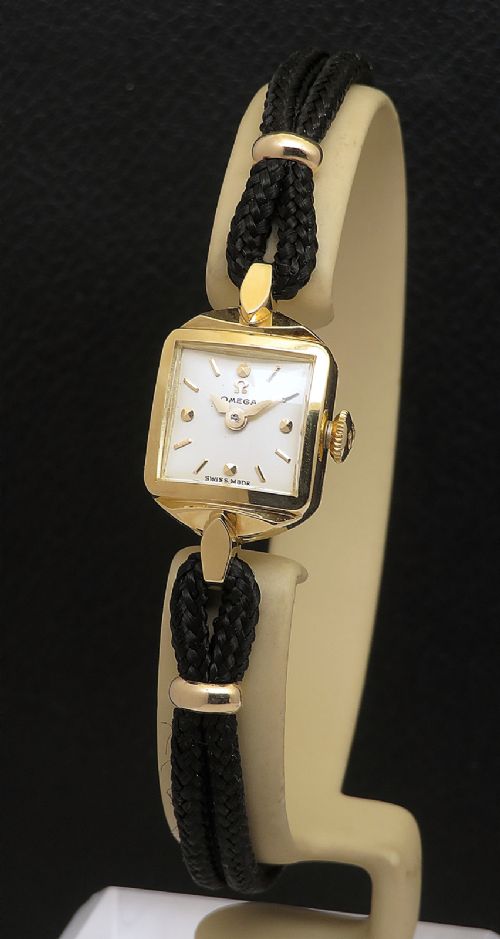
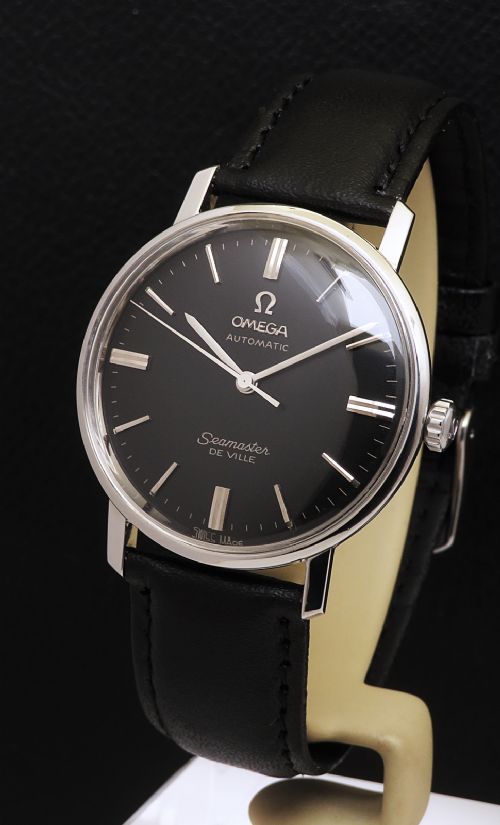
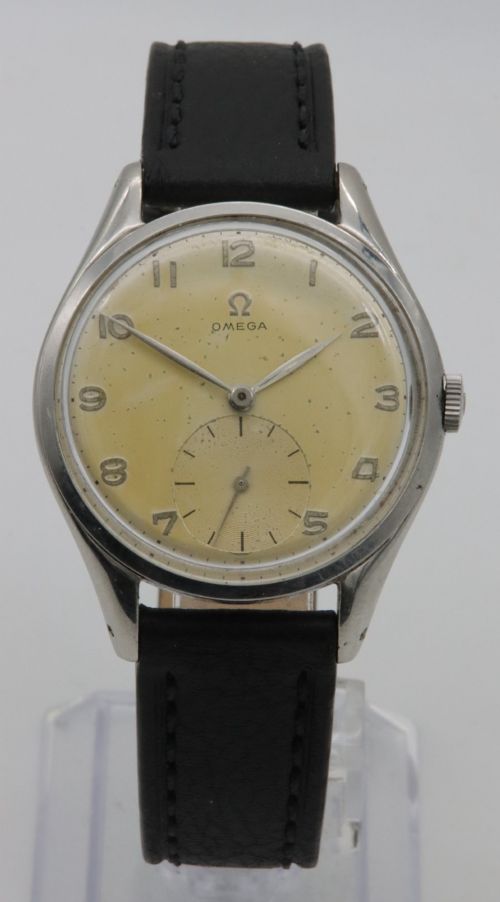
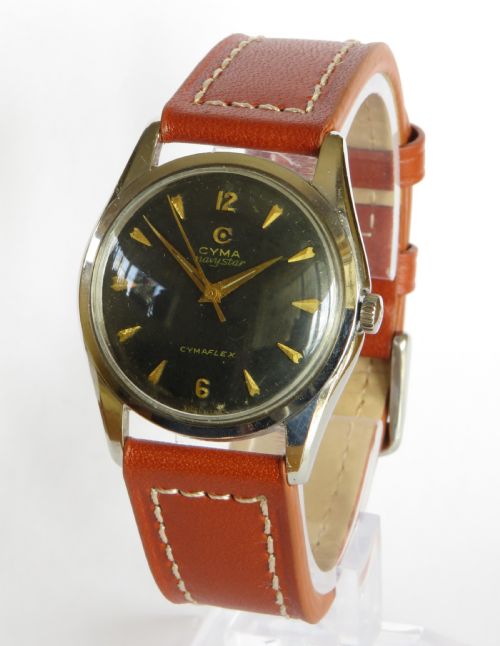
A black dial dress watch is a timepiece designed for formal wear, distinguished by a dark face that sets it apart from typical silver or white dials. When exploring this selection, buyers frequently encounter pieces originating from the 1930s through to the 1960s, spanning Art Deco, Mid-Century Modern, and 1940s vintage styles.
These wristwatches take the form of men's and ladies' wristwatches housed in materials such as stainless steel, solid gold, and gold plate. The offerings reflect horological output from Swiss and British makers, presenting mechanical movements alongside occasional quartz pieces.
Materials and construction
Cases are formed from stainless steel, chrome, or solid gold, paired with glass or acrylic crystals to protect the dial. Movements rely on manual wind or automatic calibres, often encased alongside specialised components like bumper weights.
Dials are finished with applied markers and paired with leather straps or matching metal bracelets. Materials such as mother-of-pearl, diamond, and black onyx occasionally accent the gold and steel architecture.
Materials utilised across the inventory include stainless steel, 9ct gold, 18ct gold, chrome, and leather.
Assessing quality and finish
Quality rests in the preservation of the dial and the precision of the movement, separating standard pieces from chronometer-grade examples. Originality of components, from the signed crown to the crystal, dictates the integrity of the watch.
The refinement of the case finishing, whether a curved Art Deco silhouette or a robust steel waterproof housing, defines the upper tier of production.
Omega·Cyma·IWC·Rolex·Marvin·Tissot·Smiths·Longines·Rotary·Zenith·Baume and Mercier·Tudor·Avia·Le Coultre
The Black Dial Dress Watch Glossary
- Calibre
- The specific internal mechanical movement manufactured by a watchmaker. It identifies the exact design and series of the movement inside the case.
- Chronometer
- A high-precision watch that has been tested and certified to meet strict standards for accuracy. These movements represent the upper tier of horological production.
- Manual wind
- A mechanical watch that requires the wearer to turn the crown by hand to tension the mainspring. Most vintage dress watches rely on this traditional method.
- Acrylic glass
- A lightweight, shatter-resistant plastic material used for watch crystals before the widespread adoption of synthetic sapphire. It can be polished to remove surface scratches.
- Automatic
- A self-winding mechanical movement that uses a weighted rotor to tension the mainspring from the natural motion of the wearer's wrist.
Black Dial Dress Watch: Frequently Asked Questions
How do I wind a manual watch?
Turn the crown clockwise between your thumb and forefinger until you feel gentle resistance. Stop immediately to avoid damaging the mainspring.
Perform this action at roughly the same time each day to maintain steady tension and accurate timekeeping.
Are vintage watches waterproof?
Most vintage pieces lack modern sealing technology and should be kept away from water entirely. Even models designated as water-resistant in period literature lose their gasket integrity over decades.
Avoid swimming, showering, or wearing them in heavy rain to protect the internal movement and dial from moisture.
What is an automatic movement?
An automatic movement contains an internal weighted rotor that spins as your wrist moves throughout the day. This motion winds the mainspring automatically without manual intervention.
If left off the wrist for a day or two, the power reserve depletes and the watch stops until reworn and reset.
How do I identify the decade?
Examine the overall case geometry, numeral typography, and hand shapes, comparing them against known design shifts from the 1930s through the 1960s. Art Deco pieces show geometric lines, while 1950s and 1960s models often feature cleaner, minimalist markers.
Serial numbers stamped on the inside case back or movement can often be cross-referenced with manufacturer archives for a precise year.