


1960s Omega Seamaster
These 1960s Omega Seamaster wristwatches deliver mid-century utility and clean mechanical design for everyday wear.
What 1960s Omega Seamaster wristwatches are
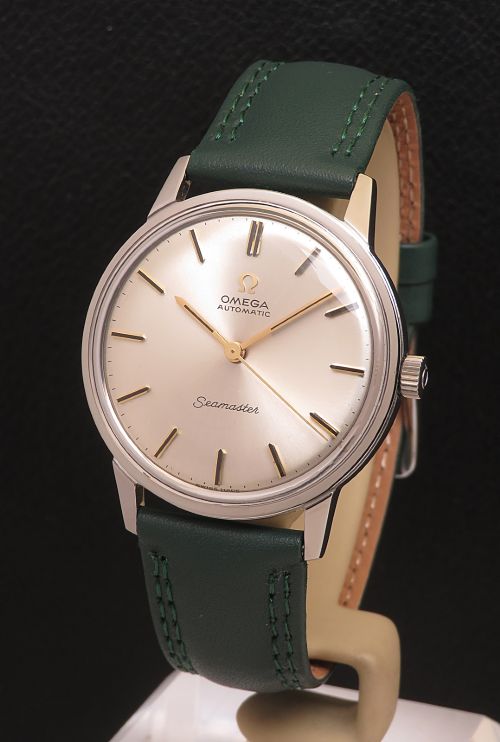
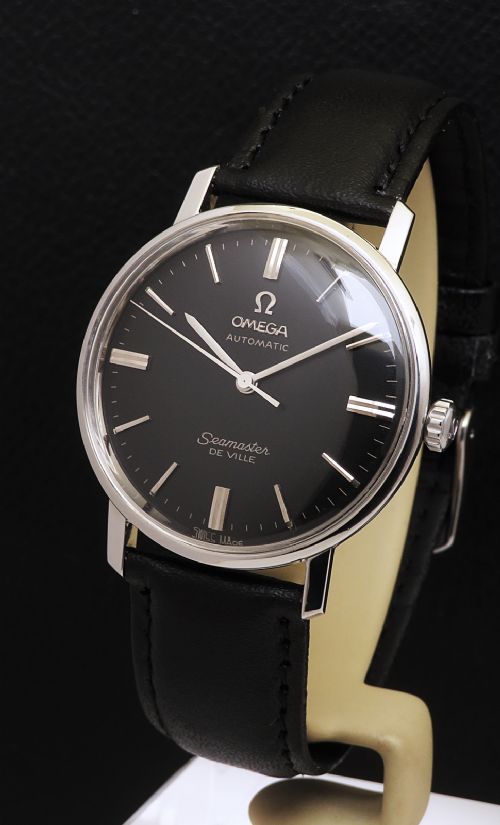
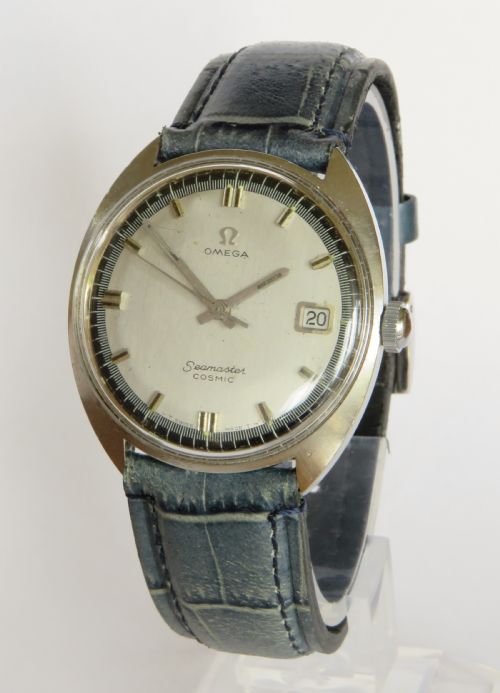
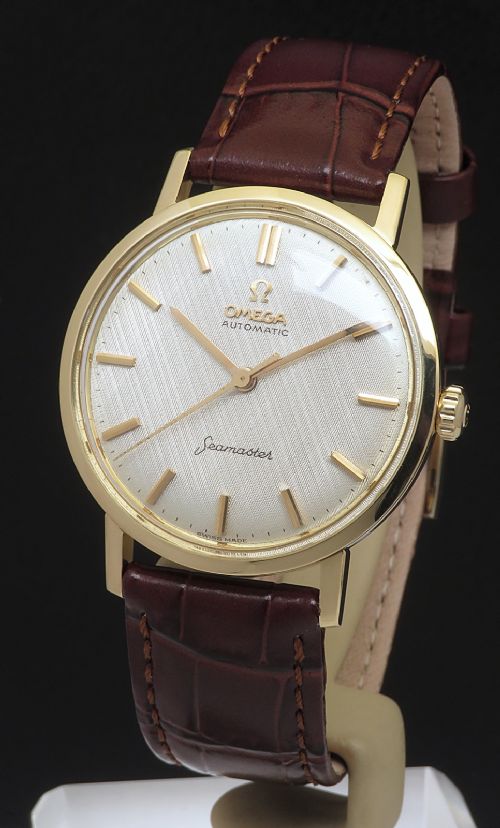
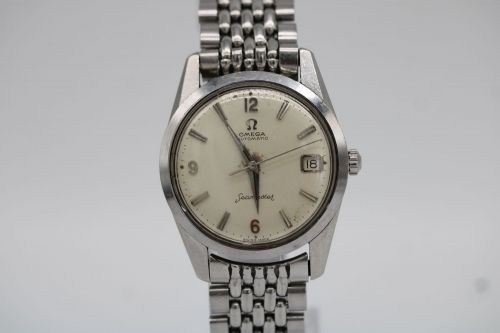
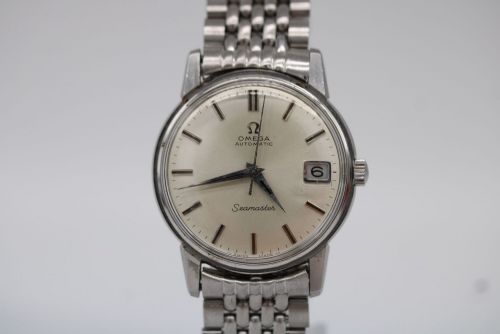
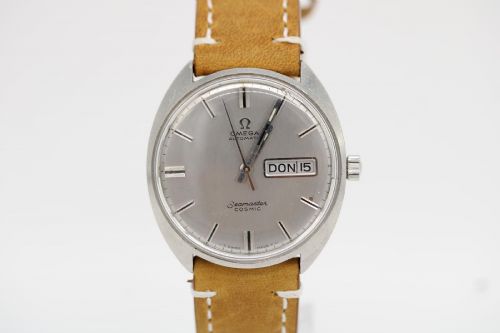
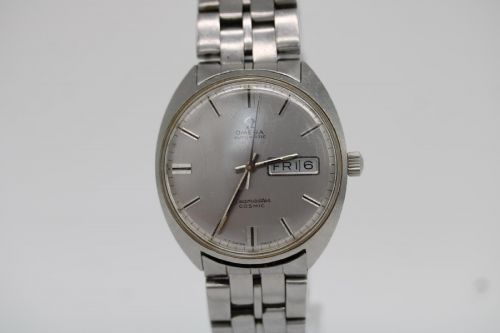
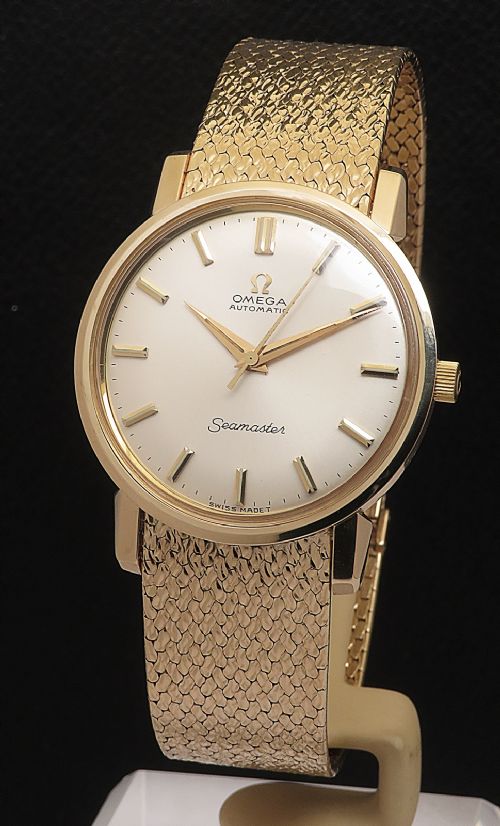
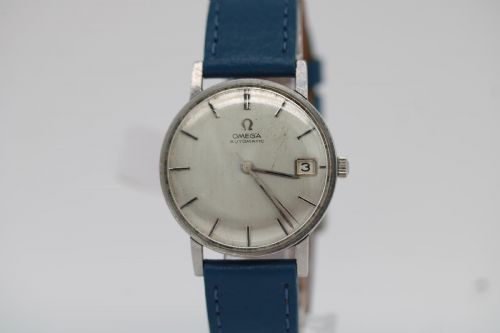
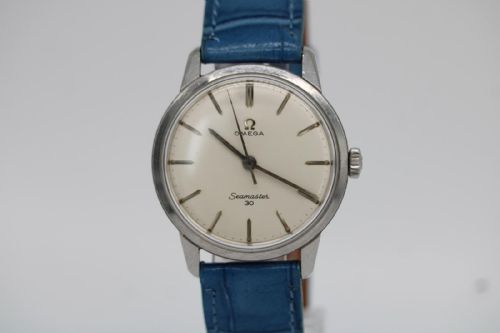
A 1960s Omega Seamaster is a gent's wristwatch from a decade that produced robust automatic and manual wind timepieces. These mid-century modern wristwatches appear in stainless steel and gold plate, often paired with leather straps and acrylic crystals.
The models on this page include the Seamaster 30, the Seamaster Cosmic, and the Seamaster De Ville. Buyers encounter both automatic movements with date displays and manual wind variants spanning years like 1963 and 1967.
How they were made
These wristwatches utilise stainless steel or gold plate for the cases, housing mechanical movements that rely on manual winding or automatic self-winding rotors. The dials sit beneath clear acrylic crystals, protecting the hands and hour markers.
Leather straps complete the assembly, secured to the metal cases by traditional spring bars. The manufacturing techniques of the period focused on durable water-resistant case designs suited to daily utility.
Retail Price Guide 2026
Typical UK retail prices for 1960s omega seamaster, calculated from the Sellingantiques database of over a million retail prices indexed since 2003. This retail price guide relies exclusively on Sellingantiques data; no external sources or auction records are used, so the figures do not describe the wider market.
A good manual wind Seamaster asks only for a daily twist of the crown and a steady wrist.
What varies in quality
The distinction between average examples and the top of the range lies in the originality of components and the precision of the mechanics. Pieces retaining their factory dials and signed crowns command greater respect among collectors than those with replaced parts.
Recent servicing history and the clean preservation of case edges also separate a standard daily wearer from a well-preserved survivor. The clarity of the acrylic crystal and the crispness of the case back engravings further indicate the level of care a watch has received.
Omega
The 1960s Omega Seamaster Glossary
- Automatic
- A self-winding mechanical movement that uses the motion of the wearer's wrist to power the watch. This system removes the need for daily manual winding.
- Manual wind
- A mechanical movement that requires the wearer to turn the crown by hand to tension the mainspring. This traditional method allows for a slimmer case profile.
- Acrylic
- A lightweight plastic material utilised for watch crystals during the period. It offers flexibility and can be polished to remove surface scratches.
- Gold plate
- A layer of gold applied to a base metal core such as steel or brass. This technique provided the appearance of solid gold at a more accessible cost.
Frequently Asked Questions
Are these watches waterproof?
While originally designed with water-resistant sealing systems for swimming and diving, vintage watches lose their watertight integrity over decades as gaskets degrade.
Modern owners should avoid exposing these vintage pieces to moisture unless a watchmaker has recently tested and resealed the case.
How do I wind a manual watch?
Turn the crown clockwise between your thumb and forefinger until you feel gentle resistance. Stop immediately to avoid over-winding and damaging the mainspring.
Perform this action at roughly the same time each day if you wear the watch regularly.
What size are these vintage cases?
The models on this page typically measure around thirty-five millimetres in diameter. This proportion reflects mid-century design standards for men's dress and sports wristwatches.
Such dimensions sit comfortably on a wide variety of wrists today.
How often need they be serviced?
Mechanical watches require periodic cleaning and lubrication of their internal gears every few years. Fresh oils prevent friction from wearing down the delicate metal pivots.
A serviced movement ensures accurate timekeeping and preserves the longevity of the vintage mechanism.