





Black Cased Taxidermy
Black cased taxidermy brings natural history indoors, offering preserved specimens framed in dark glass-fronted enclosures that anchor a room with distinct Victorian character.
Black Cased Taxidermy
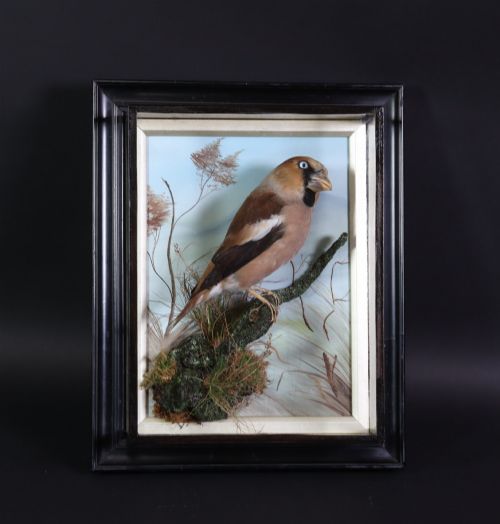
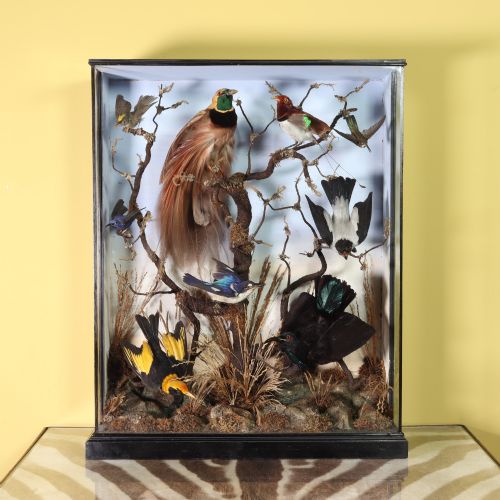
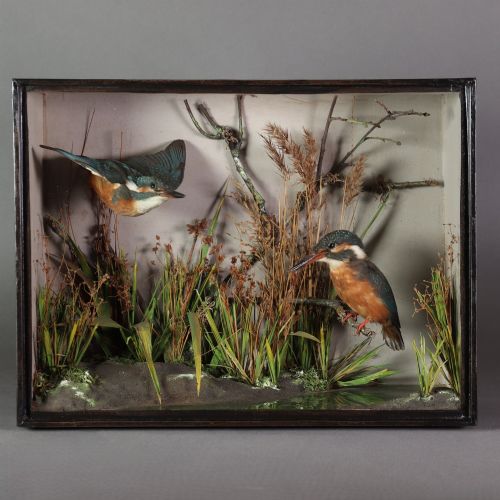
When you search for black cased taxidermy, you encounter preserved birds, fish, and animals arranged in glass display cases and ebonised wooden frames. These pieces span from the Victorian period through the Edwardian era and into the early twentieth century.
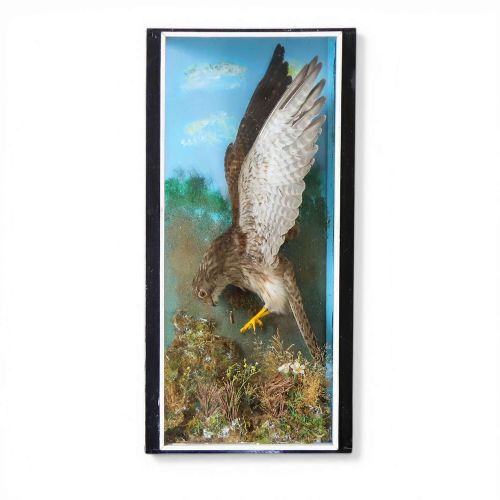
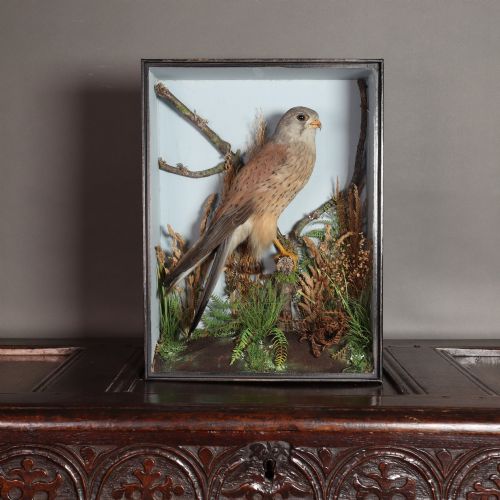
You are most likely to meet Victorian and Edwardian examples featuring single birds, pairs, or complex dioramas. The enclosures take the form of wall-hung timber cases, table boxes, and tall glass display showcases.
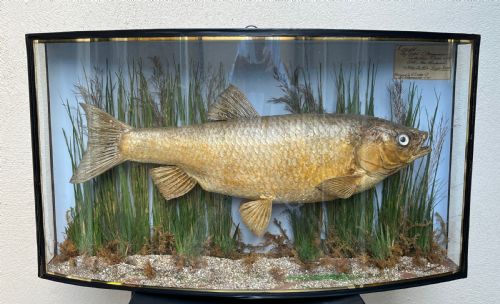
The selection ranges from fish like roach and rudd preserved by notable practitioners to multi-specimen displays containing birds from distant continents. Each item reflects the nineteenth and early twentieth century fascination with natural history.
How they were made
Makers constructed the enclosures using timber and glass, applying ebonised finishes to the wood to achieve a deep black appearance. Paper and fabric often lined the interior backdrops to create a contrasting stage for the specimens.
Taxidermists mounted birds, fish, and mammals over internal armatures, arranging feathers and fur to mimic natural postures within the sealed glass cases. Painted backgrounds and dried botanicals completed the diorama settings inside the timber frames.
Black Cased Taxidermy Retail Price Guide 2026
Typical asking prices for black cased taxidermy among the pieces listed under this phrase on Sellingantiques today, from the lower quarter to the upper quarter. They describe what is for sale here now, not the wider market.
One remarkably confident pet dog secured a permanent place in history by joining the ranks of traditional feathered and finned taxidermy.
What varies in quality
The skill of the taxidermist dictates the lifelike posture and anatomical accuracy of the specimen within the case. Early practitioners achieved greater realism in feather arrangement and taxidermy subject composition.
The construction of the ebonised wood frame and the clarity of the original glass influence the overall visual impact. Cases bearing trade labels from established makers command attention for their documented provenance.
Little & Co·J Griffiths of Burford·T. E. Gunn·Hutchings of Aberystwyth·W.F. Homer London·J Cooper & Sons
The Black Cased Taxidermy Glossary
- Ebonised wood
- Timber treated to imitate ebony, providing the dark finish characteristic of these display cases. This process involves staining or treating the grain.
- Diorama
- A three-dimensional scene containing preserved specimens arranged against a painted background. These settings often include artificial foliage and natural rocks.
- Cloche
- A bell-shaped glass cover used to display specimens on a wooden base. These domes protect fragile taxidermy from dust and handling.
- Specimen case
- A glazed wooden box designed to house and exhibit natural history items. Such enclosures protect the contents while allowing clear viewing from the front.
Black Cased Taxidermy: Frequently Asked Questions
Where should I place a taxidermy case at home?
Position cases away from direct sunlight to prevent the fading of feathers, fur, and painted interior backgrounds. Stable room temperatures help preserve the integrity of the timber and historical adhesives.
Keep pieces clear of damp areas and strong heat sources like radiators. A wall or stable surface with minimal vibration protects both the glass and the internal mount.
How can I tell a Victorian case from a later one?
Victorian examples often feature heavy ebonised wooden frames, hand-blown glass with minor imperfections, and detailed painted paper backgrounds. Their construction reflects mid to late nineteenth-century framing techniques. Nineteeth-century trade labels pasted inside the case provide definitive chronological clues. Later twentieth-century versions display machine-cut timber joints and modern glass manufacture.
What types of animals are found in these cases?
Common subjects include British birds such as kestrels, kingfishers, ducks, and jays, alongside freshwater fish like roach and rudd. Some complex pieces contain exotic birds sourced from South America and Australia.
Domestic pets and small mammals also appear in the historical record. Each specimen reflects the specific collecting interests of the original Victorian or Edwardian owner.