



Black Carved Wall Mirror
These black carved wall mirror pieces bring dark, dramatic woodwork and deep mouldings to a room, spanning Victorian, Edwardian, and Black Forest origins.
Black Carved Wall Mirror
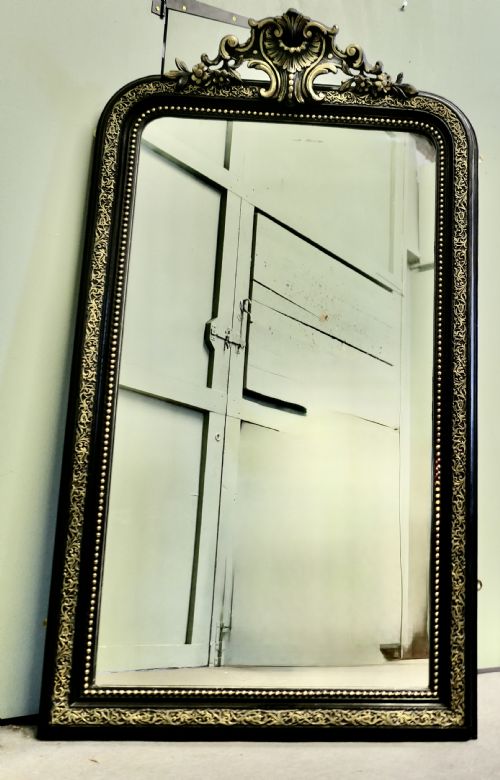
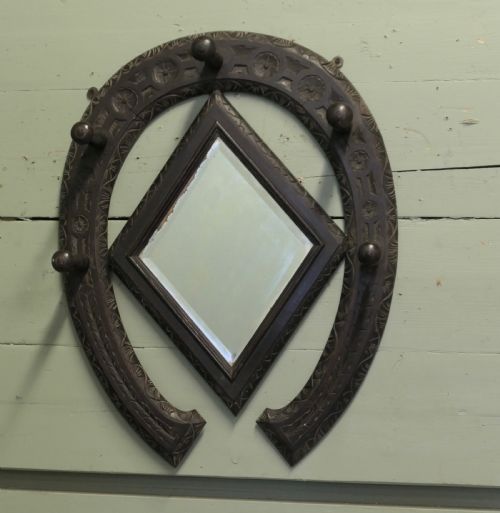
A black carved wall mirror brings heavy architectural presence to an interior, drawing the eye with dark timber and deeply modelled decoration. When you search for a black carved wall mirror, you meet pieces ranging from compact hall stands and coat racks to expansive overmantel mirrors and tall pier glasses.
The selection on this page leans heavily toward nineteenth-century production, incorporating Victorian, Edwardian, and earlier Continental examples. Oak, ebonised wood, and walnut provide the primary dark foundations for these wall-hanging pieces.
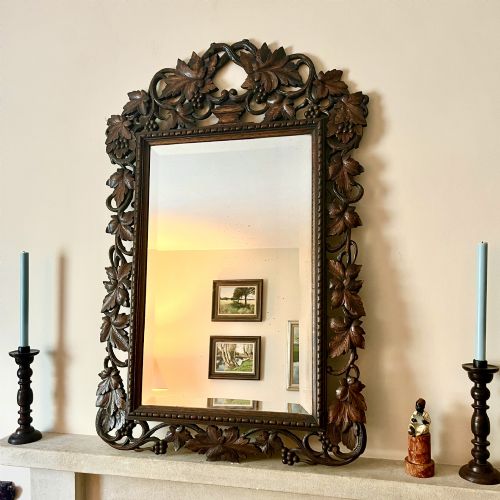
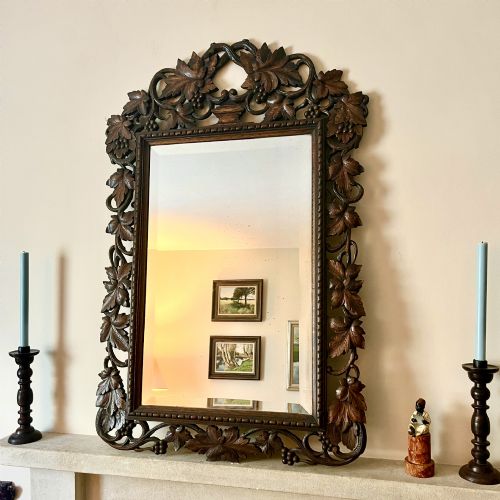
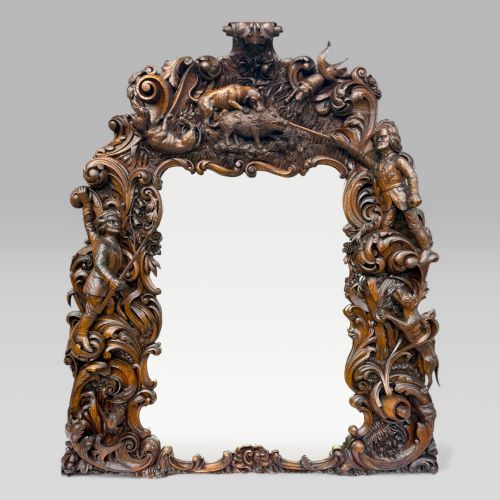
Makers and workshops across England, France, Germany, and Italy produced these dark frames using distinct regional vocabulary. You encounter the naturalistic fauna of Black Forest carvers alongside the formal symmetry of Napoleon III and the solemn verticality of Gothic Revival designs.
How they were made
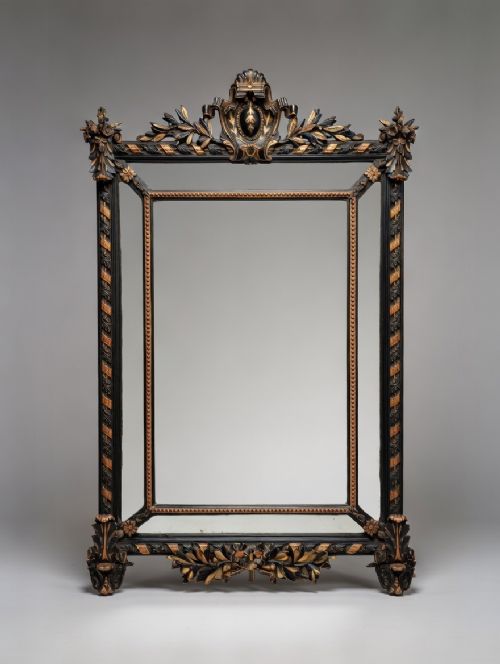
Carvers shaped solid oak, walnut, and pine before applying ebonised finishes, black lacquer, or dark paint. Many frames incorporate gesso layers beneath surface gilding, allowing craftsmen to crisp up scrollwork, crests, and figurative elements.
Gold leaf and parcel-gilt highlights were brushed or laid over selected details to catch the light against the dark ground. Mirror glass, often bevelled or cushion-moulded, was secured into rebated backs behind heavy timber structures.
Listings feature periods from the 18th century through to the 1920s, employing glass, ebonised wood, gesso, oak, and gold leaf.
What varies in quality
The depth and conviction of the hand-carving dictate the distinction between ordinary production and superior workshop output. Crisp undercut foliage, cleanly modelled birds or dragons, and well-proportioned architectural mouldings reveal the hand of a skilled artisan.
The integrity of the ebonised finish and the condition of the underlying gesso and gilt work determine the visual punch of the piece. Heavy overpainting or crude repairs obscure the original definition of the carved wooden substrate.
The Black Carved Wall Mirror Glossary
- Ebonised Wood
- Timber treated with chemical stains or dark pigments to imitate expensive ebony. This dark finish gained widespread popularity during the Victorian and Aesthetic periods.
- Gesso
- A plaster-like preparation applied to wood surfaces to create a smooth base for gilding or painting. It holds sharp, crisp details when carved or moulded.
- Overmantel Mirror
- A large horizontal mirror designed to hang specifically above a fireplace mantelpiece. These often integrate architectural cornices and gilt crests.
- Parcel-Gilt
- A decorative treatment where only specific portions of a carved frame receive gold leaf or gilt paint. This technique creates contrast against the surrounding ebonised wood.
- Black Forest
- A regional style of wood carving originating from the wooded mountain range in Germany. These pieces commonly feature deep relief work depicting natural flora and fauna.
Black Carved Wall Mirror: Frequently Asked Questions
Where should I hang a large overmantel mirror?
These wide pieces traditionally sit directly above a fireplace mantelpiece to reflect light and anchor the reception room. Ensure the wall structure and fixings can support the substantial weight of the timber and glass.
Alternatively, position one above a low sideboard or console table in a dining room to create a strong focal point. Keep surrounding wall decorations minimal to let the dark carved frame hold the space.
How do I distinguish Black Forest mirrors from other styles?
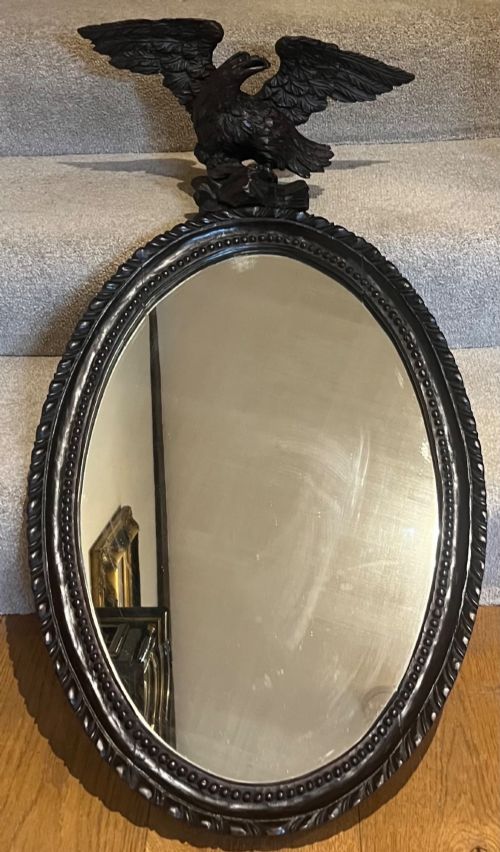
Black Forest pieces are defined by deeply undercut, naturalistic wood carvings depicting animals, birds of prey, hunting motifs, and tangled foliage. Walnut and lime wood serve as the primary timber mediums for these rustic German works.
Other nineteenth-century styles rely more on architectural geometry, classical symmetry, or ebonised mouldings rather than lifelike carved wildlife. Look for signature elements like eagles, oak leaves, and game birds to confirm the Black Forest attribution.
Can these mirrors be cleaned safely?
Dust the carved wooden elements gently with a dry, soft-bristled brush to reach inside deep crevices without snagging the grain. Avoid chemical sprays or excess water that might damage old ebonised finishes or fragile gesso.
Clean the mirror glass using a cloth dampened sparingly with mild glass cleaner, taking care not to let liquid seep behind the frame. Old mirror plates often feature sensitive silvering that reacts poorly to moisture.
What periods do these mirrors come from?
The listings span the eighteenth, nineteenth, and early twentieth centuries, with a strong concentration of Victorian and Edwardian examples. You find eighteenth-century Italian work alongside 1860s ebonised overmantels and 1920s lacquer pieces.
Stylistic cues such as Gothic Revival arches, Aesthetic Movement ebonising, and Napoleon III crests help date individual items. Regional workshops in England, France, and Germany each contributed distinct construction methods across these eras.