



Victorian Eagle Wall Mirror
A victorian eagle wall mirror brings undeniable drama to a room, catching the light and holding the eye with its carved bird of prey.
Victorian Eagle Wall Mirror
When you search for a victorian eagle wall mirror, you encounter imposing decorative glass made to anchor a room. These pieces combine substantial timber frames with the distinctive motif of an eagle perched or surmounting the glass.
Most examples found here date across the nineteenth century, drawing heavily on earlier eighteenth-century designs such as the George II revival and Regency styles. Makers produced both substantial overmantel mirrors designed for chimney breasts and smaller wall-hanging formats.
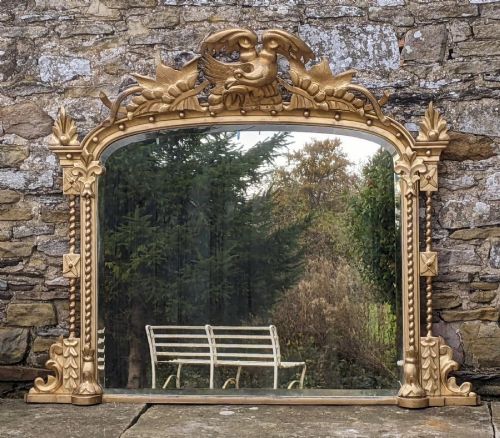
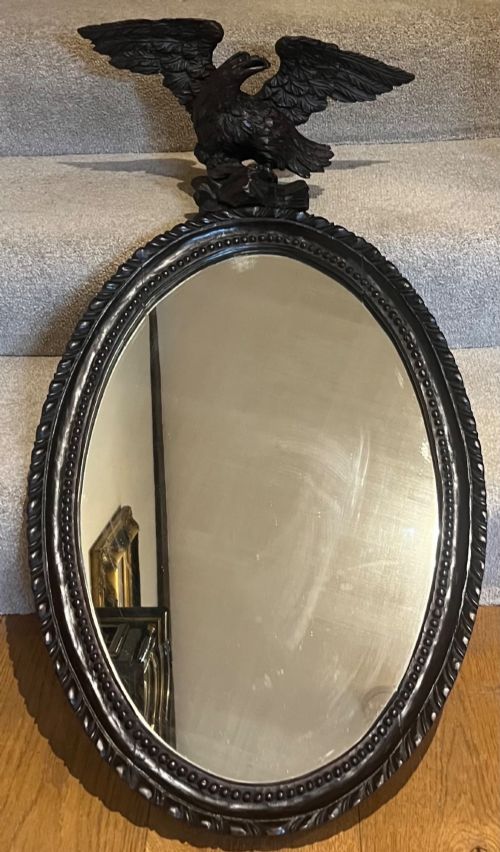
The selection ranges from architectural mahogany fretwork pieces to rustic Black Forest carved wood versions and gilded convex glass. You meet both classical giltwood interpretations and dark timber frames suited to traditional interiors.
How they were made
Carvers shaped these frames from solid timbers including mahogany, walnut, and ebonised wood, alongside softer woods prepared for gesso and gilding. Artisans built intricate fretwork panels and sculptural birds of prey by hand, applying giltwood leaf or paint directly onto the prepared wooden surfaces.
Convex and flat mirror plates were set within rebated frames, often accompanied by parcel-gilt details that catch the ambient light. Workshops utilised traditional joinery and carving techniques, ensuring the heavy timber structures could support the weight of the glass and crestings.
Black Forest carvers turned fierce birds of prey into domestic ornaments that stare down sternly from the parlour wall.
What varies in quality
The distinction between ordinary and exceptional work lies in the depth and sharpness of the wood carving. Superior pieces display crisply rendered feathers, anatomical precision in the eagle, and balanced proportions across the fretwork frame.
Gilding quality and the preservation of the original surface finish dictate the character of the piece. Stronger examples retain their original gesso and giltwood layers without heavy over-painting, while lesser items show dull surfaces or clumsy later repairs.
The Victorian Eagle Wall Mirror Glossary
- Giltwood
- Timber covered with a thin layer of gold leaf over a prepared gesso base. This finish provides the bright reflective quality seen on classical mirrors.
- Gesso
- A plaster-like mixture applied to wood frames to create a smooth surface for gilding or painting. It allows carvers to achieve sharp decorative details.
- Convex mirror
- A round mirror glass curved outward to produce a wide, panoramic reflection of the interior. These pieces were popular during the Regency and Victorian periods.
- Fretwork
- Thin wood panels cut through with ornamental patterns using a scroll saw. It defines the pierced silhouette of mahogany and walnut wall mirrors.
- Overmantel mirror
- A large horizontal looking glass designed specifically to hang above a fireplace mantelpiece. They served as the central decorative focus of nineteenth-century rooms.
Victorian Eagle Wall Mirror: Frequently Asked Questions
Where should I hang a large eagle mirror?
These pieces demand a strong architectural anchor, making the chimney breast in a principal reception room the traditional placement. They also function effectively above a sideboard or console table where the frame can command the wall.
Ensure the wall construction and fixings can bear the substantial weight of the timber and glass. Positioning the mirror opposite a window will maximise the reflection of natural light into the space.
How do I identify a Victorian revival piece?
Nineteenth-century makers frequently looked back to earlier eras, producing pieces in the George II and Regency revivals. You identify the period through the specific patination of the timber, the composition of the gesso, and construction methods behind the frame.
Examine the backboards, fixings, and secondary woods to confirm nineteenth-century manufacture rather than a modern reproduction. The style often blends classical revival motifs with the heavier proportions favoured in Victorian interiors.
What is a convex mirror used for?
Convex mirrors were originally placed in rooms to monitor gatherings and provide a wide-angle view of the interior space. The curved glass gathers light from across the entire room, brightening dark corners.
Their distinct optical effect adds depth and focal interest to smaller walls or narrow hallways. They function primarily as decorative art objects rather than for checking reflections.