

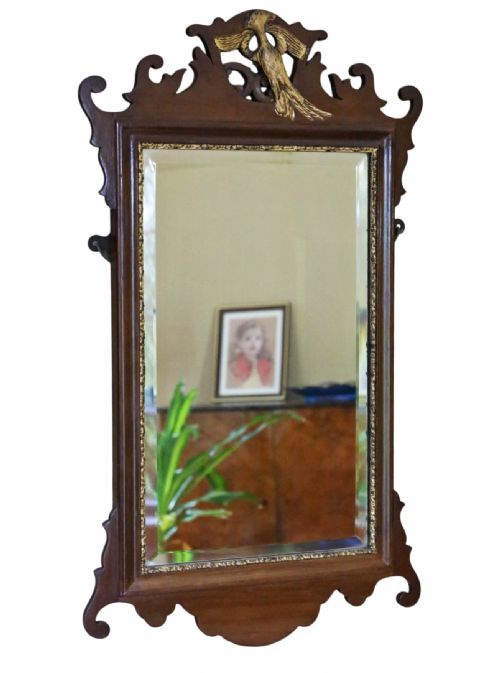


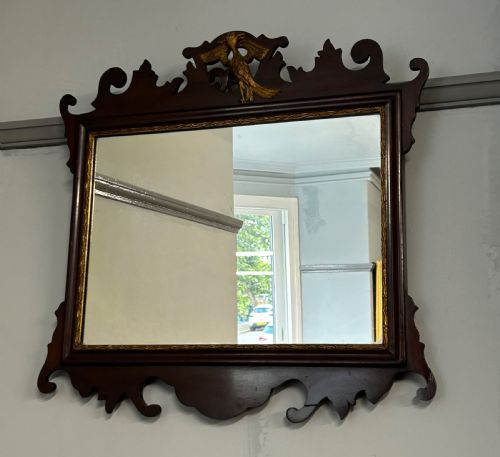


Carved Bird Crest Mirror
A carved bird crest mirror brings character to a room through traditional woodworking and classical avian motifs.
Carved Bird Crest Mirror
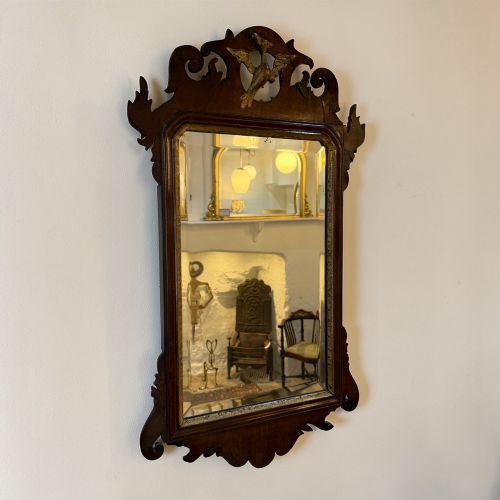
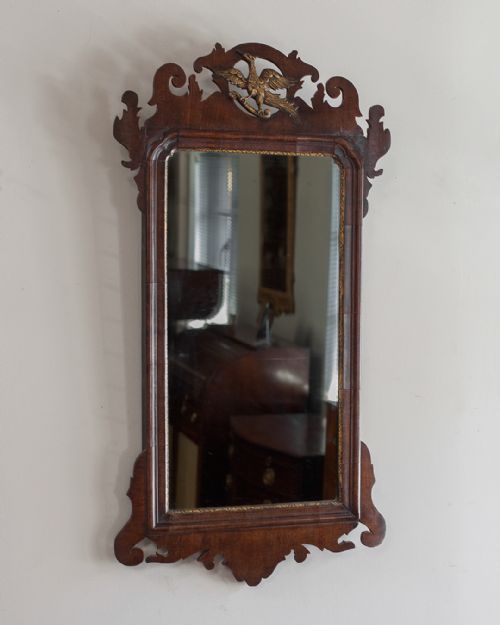
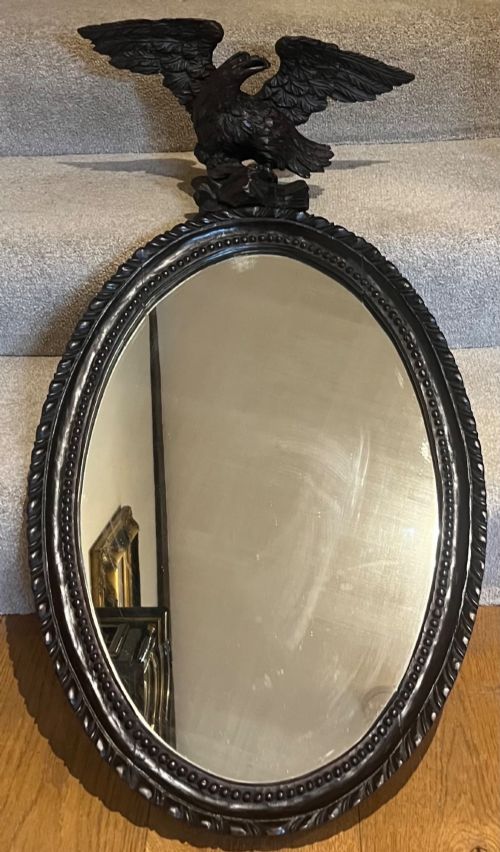
A carved bird crest mirror is a framed looking glass featuring an avian carving at the top, most often a mythical ho-ho bird, eagle, or similar decorative creature. These pieces appear across several eras, including the eighteenth century, the Regency period, and the Victorian revival movements.
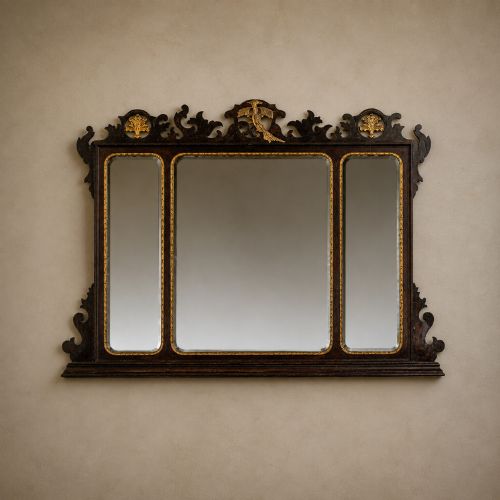
The most common formats on this page are wall mirrors and overmantel mirrors constructed from mahogany, giltwood, and gesso. Styles range from Georgian fretwork designs to elaborate French rococo and French chateau influences.
Buyers also encounter related forms such as chests of drawers fitted with mirrored backs and smaller hallway looking glasses. Each variation relies on traditional woodwork and decorative crests to define its visual presence.
Materials and construction methods
Makers shaped these frames from solid timbers such as mahogany, yew wood, and maple, often applying delicate fret-cut silhouettes. Carvers worked wood directly to form the intricate scrolling outlines and the prominent bird crests.
Giltwood and gesso pieces required layers of plaster applied to a wooden base before finishing with gold leaf or paint. Artisans then burnished the gilt surfaces to create contrast between matte and reflective details.
Distinguishing quality in craftsmanship
Quality rests in the depth and crispness of the carving, particularly around the wings and feathers of the bird crest. Sharp undercutting and refined proportions separate superior examples from softer, more generalized work.
The treatment of the frame finish also dictates standard, with hand-applied gold leaf and well-preserved original paint displaying greater depth than later surface coatings.
The Carved Bird Crest Mirror Glossary
- Fretwork
- Openwork ornamentation carved in relief from a thin sheet of wood. This technique created the light, geometric frames popular during the Georgian era.
- Ho-Ho Bird
- A stylized, mythical Chinese phoenix often depicted with an open beak and ornate tail feathers. It serves as the prominent crest on many eighteenth and nineteenth century mirrors.
- Gesso
- A plaster mixture applied to wood frames as a smooth base for gilding or painting. It allowed carvers to add fine decorative relief before applying gold leaf.
- Giltwood
- Timber coated with gold leaf or gold paint. This finish catches the light and adds a decorative sheen to formal interior spaces.
- Overmantel Mirror
- A large looking glass designed to hang directly above a fireplace mantelpiece. These pieces often feature extended widths and elaborate crestings.
Carved Bird Crest Mirror: Frequently Asked Questions
What is a ho-ho bird on a mirror?
A ho-ho bird is a mythical phoenix motif adapted from Chinese art and popularized in European decorative design during the eighteenth century. It typically sits atop the frame with spread wings and detailed tail plumage.
Carvers used this creature as a symbol of nobility and exotic taste, making it a defining feature on high-style Georgian and revival looking glasses.
Where should I hang an overmantel mirror?
An overmantel mirror is traditionally placed directly above a fireplace mantel to reflect light and anchor the room's primary focal point. It can also serve as a striking wall piece in a large hallway or dining room.
Ensure the wall structure can support the weight of the timber and gesso frame before installation.
How do I date a carved bird crest mirror?
Dating relies on examining the timber species, construction joints, glass characteristics, and the specific stylistic details of the carving. Georgian pieces often show lighter mahogany fretwork, while Victorian revivals incorporate heavier proportions and distinct machine-sawn backing.
Comparing the style of the bird crest to documented period examples helps confirm the era of manufacture.
Are these mirrors fragile?
The projecting wooden crests and delicate gesso details require careful handling during moving and cleaning. Regular dusting with a soft brush keeps the carved crevices clear without stressing the joins.
Avoid using liquid cleaners on gilt surfaces to preserve the original finish.