




Black Bronze Clock
When you search for a black bronze clock, you find heavy architectural and figural timepieces spanning the nineteenth century.
Black Bronze Clock
A black bronze clock combines dark patinated metal, slate or marble with contrasting cast details to create a commanding interior object. These pieces appear most frequently as mantel clocks, table timepieces and garniture sets from the nineteenth century.
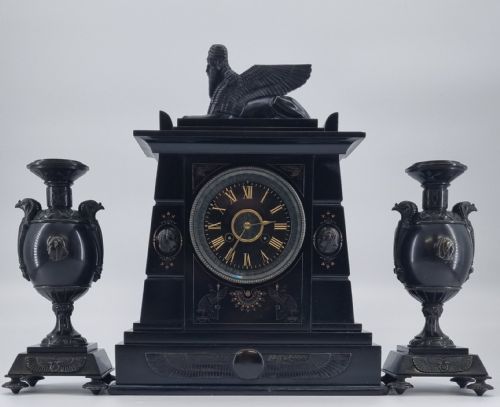
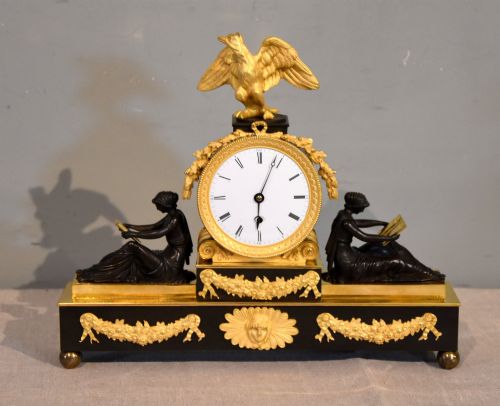
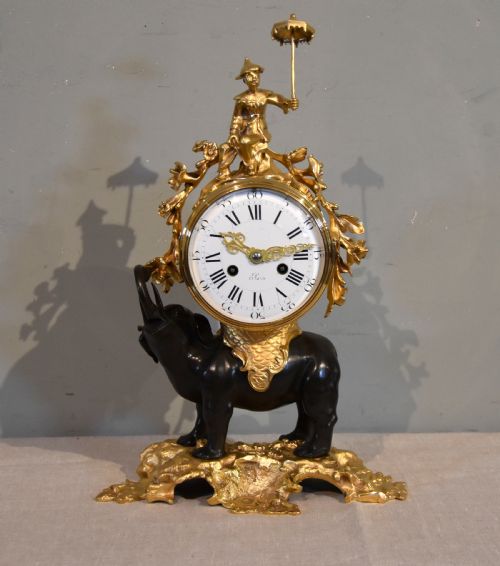
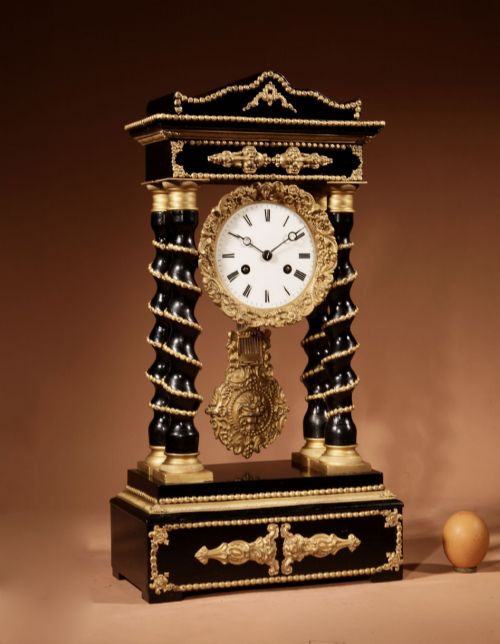
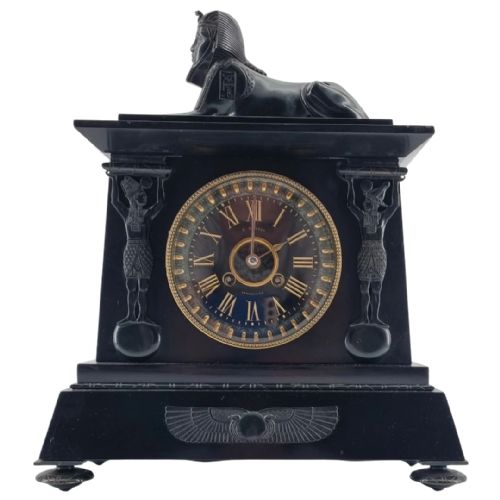
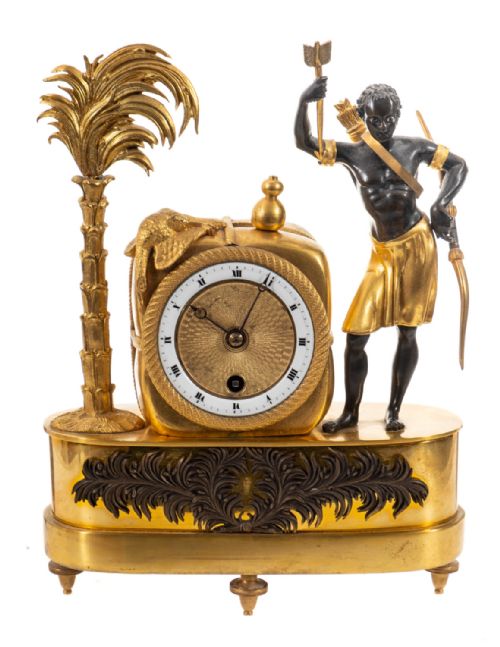
The designs draw heavily upon French Empire, Regency, Victorian and Egyptian Revival styles, often featuring figures, animals or architectural porticos. Buyers encounter both English fusee movements and French striking mechanisms housed within dark stone and metal cases.
Materials and construction
Makers utilised patinated bronze, dark marble, slate and ebonised wood to build heavy foundational cases that could support intricate metallic decoration. Gilt bronze, ormolu and brass mounts were cast and applied to contrast sharply against the dark stone and bronze bodies.
Movements required precise mechanical engineering, incorporating fusee or anchor escapements alongside enamel dials and glass covers. Artisans combined foundry casting, stone cutting and gilding techniques to produce durable timepieces.
Materials seen across these listings include marble, brass, gilt bronze, enamel, ormolu, glass, patinated bronze and standard bronze.
Assessing quality
Quality rests upon the crispness of the bronze casting and the depth of the chasing in the applied mounts. Superior examples display sharply defined figural details, harmonious proportions and robust, original mechanical movements.
The integration of the materials dictates the overall success of the piece, where fine marble or slate works in balance with the bronze elements rather than serving as mere support. Master workmanship shows in the clean execution of dials, bezels and internal components.
Philippes Paris·D. Munsey of Cambridge·Payne and Co London·Pons de Paul·Achille Brocot·Barraud and Lund London·Henri Dasson·Kienzle
The Black Bronze Clock Glossary
- Garniture
- A matching set consisting of a central clock flanked by decorative side pieces such as urns or candelabra.
- Ormolu
- Gilded bronze achieved through a mercury amalgamation process used extensively in decorative mountings.
- Fusee
- A conical pulley connected to the mainspring by a chain or cord to maintain equal power as the spring unwinds.
- Portico clock
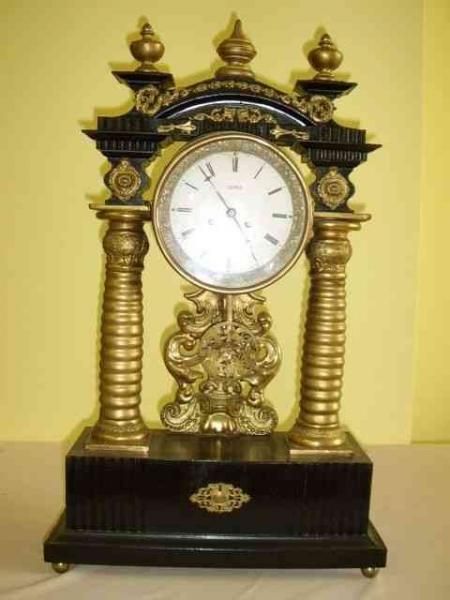
- A timepiece housed within an architectural frame supported by four or more columns.
- Escapement
- The internal mechanism that controls the release of power to regulate the movement of the clock hands.
Black Bronze Clock: Frequently Asked Questions
How do I wind a fusee clock?
A fusee movement requires a specialised winding key inserted into the dial aperture, turned gently until resistance is met. Care must be taken not to overwind the chain mechanism.
Most fusee movements run for eight days on a single wind, making weekly maintenance standard practice for these timepieces.
Where should I place a marble clock?
These heavy stone and bronze pieces require a stable, level surface capable of supporting considerable weight. A sturdy mantelpiece or heavy sideboard provides a suitable foundation.
Keep the clock away from direct sunlight, damp environments and strong heat sources to protect the marble and the delicate interior movement.
What is a clock garniture set?
A garniture set comprises a central mantel clock accompanied by two matching side objects, designed to be displayed together on a mantelpiece. These matching sidepieces often take the form of urns or decorative vases.
Such sets create a balanced, symmetrical display that was highly fashionable in nineteenth-century formal interiors.
How do I identify an Egyptian Revival clock?
Egyptian Revival pieces feature distinct motifs such as sphinxes, obelisks, hieroglyphs and lotus capitals cast in bronze or carved into the stone case. These designs gained popularity following archaeological discoveries in the nineteenth century.
The combination of black slate or marble with golden or patinated bronze figures gives these clocks an imposing architectural presence.