
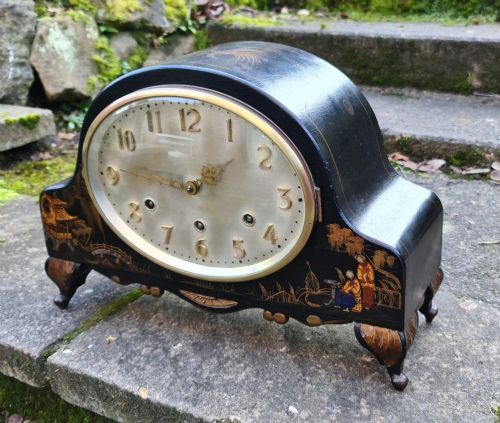
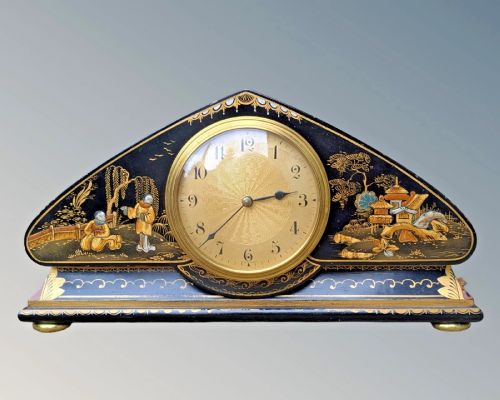
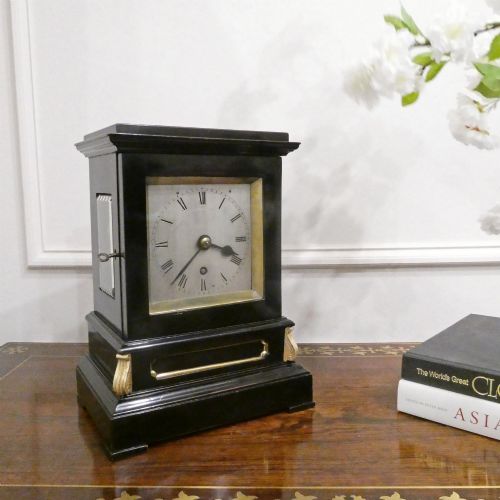
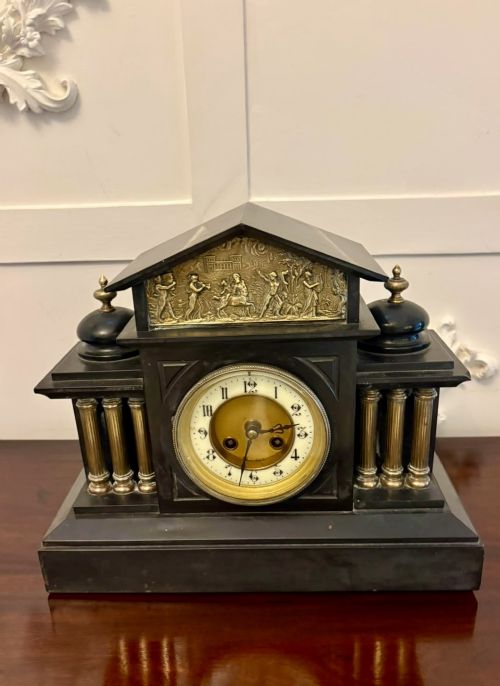
Black Brass Table
A black brass table combines dark timber, ebonised surfaces, or black lacquer with warm metallic mounts, offering a striking surface for a lamp or timepiece.
Black Brass Table
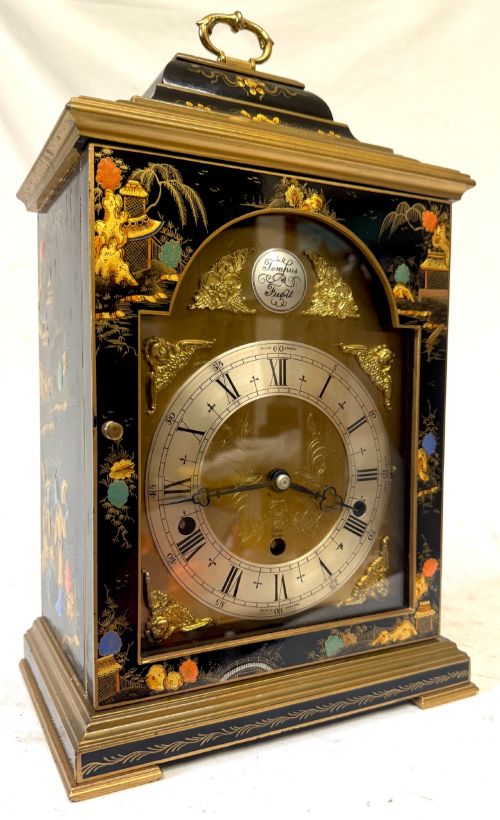
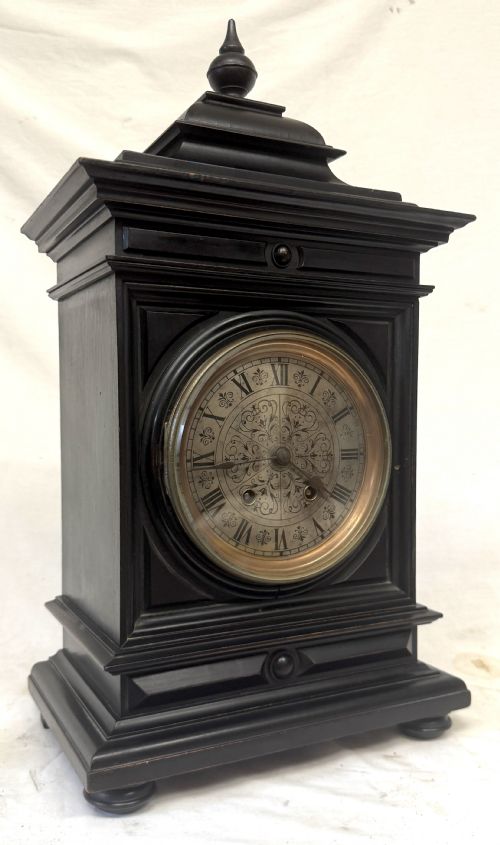
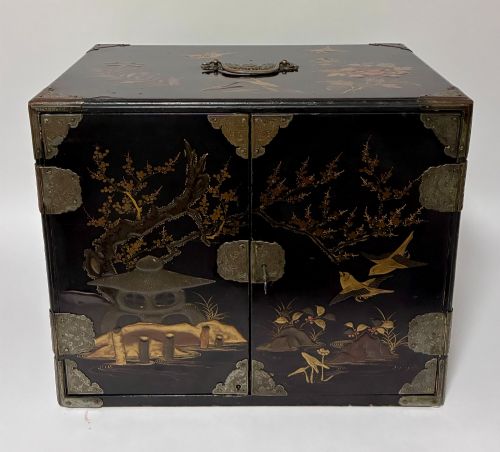
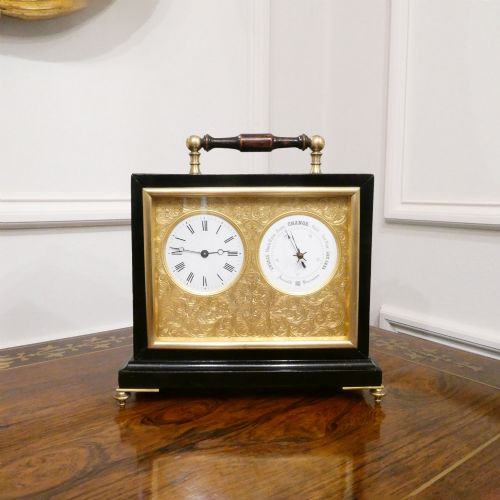
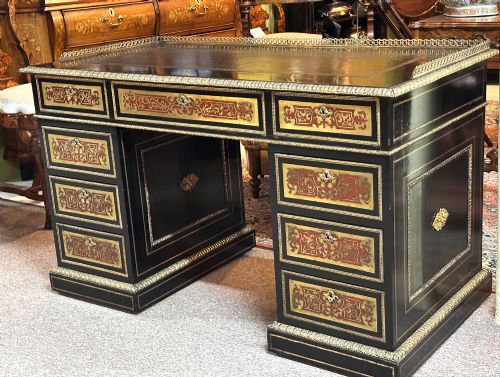
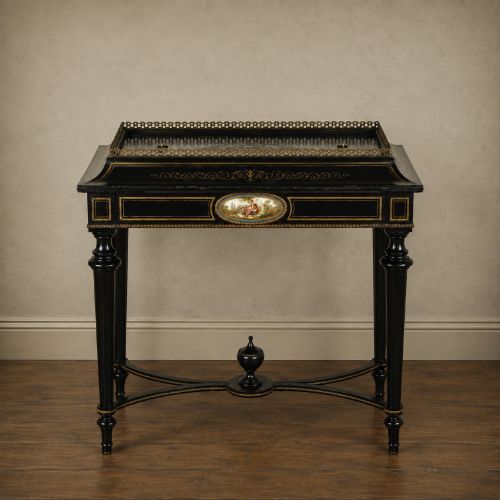
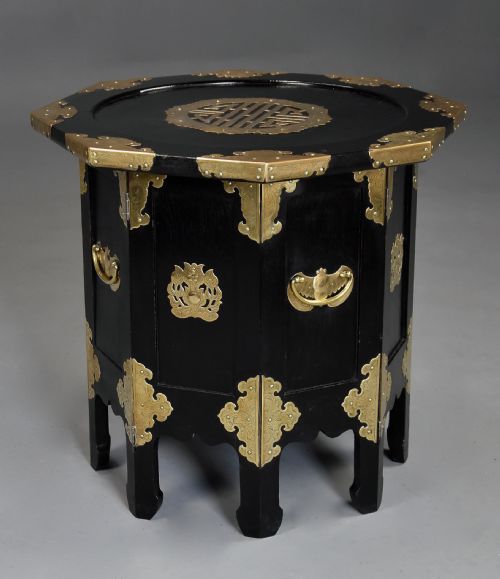
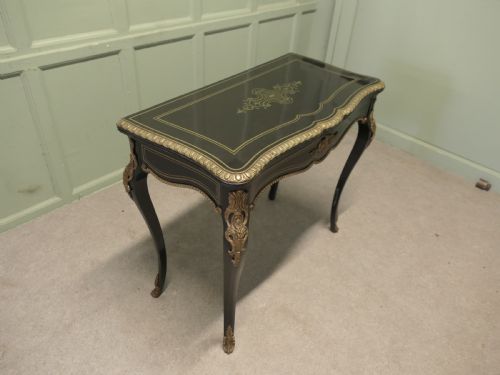
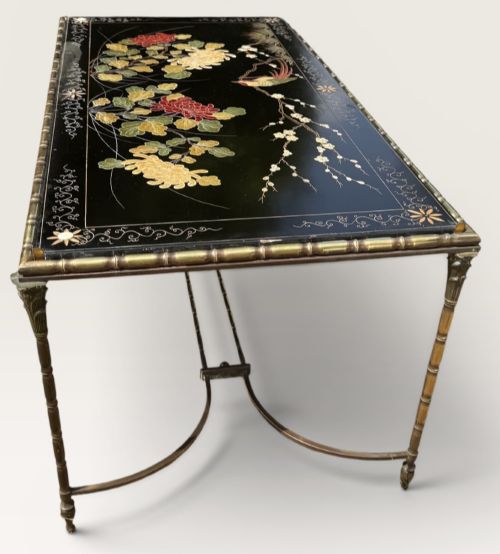
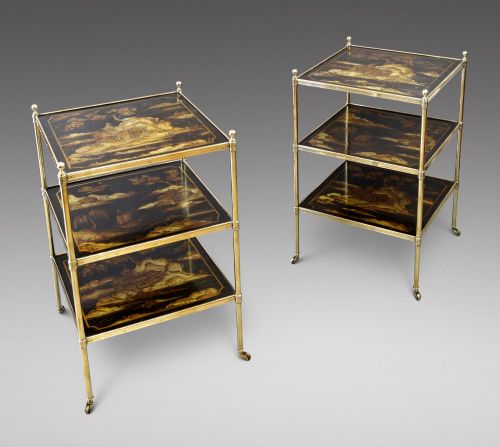
A black brass table encompasses pieces like occasional tables, coffee tables, games tables, and desks that merge dark foundational surfaces with metallic mounts or inlay. When searching for a black brass table, buyers encounter examples ranging from nineteenth-century French ebonised designs with brass stringing to twentieth-century chinoiserie lacquer and etageres.
The selection on this page demonstrates how makers applied brass feet, galleries, or inlays to black, ebonised, or lacquered wood. Centre tables and side tables frequently feature round or octagonal tops supported by robust frames, balancing dark tones with bright metallic highlights.
How they were made
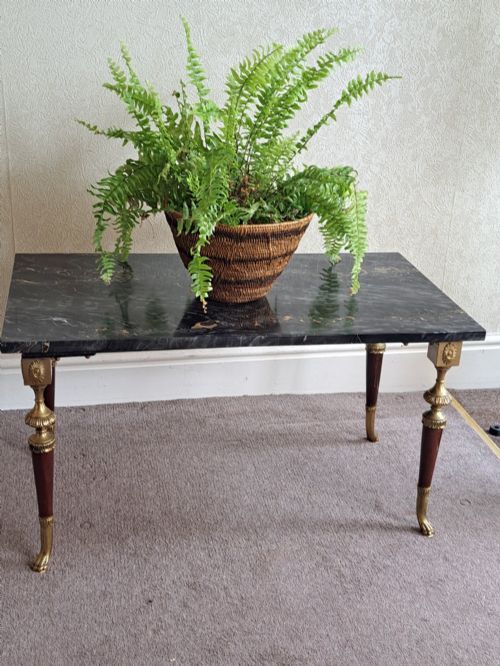
Makers achieved the dark body of a black brass table through ebonising timber, applying black lacquer, or mounting black marble. Brass was utilised for cast mounts, sabots, column capitals, and delicate stringing inlaid directly into the wood surface.
Construction techniques combined traditional cabinetmaking with specialist metalwork, securing cast or ormolu mounts with pins and screws. Lacquered pieces involved building up multiple layers of varnish to achieve a deep, reflective black finish before metallic details were applied.
One travel trunk from the selection retains its original hardware, ready for an adventure that ended a century ago.
What varies in quality
Quality in a black brass table rests upon the crispness of the brass casting and the depth of the ebonised or lacquered finish. Finer examples display hand-chased mounts, precise inlay work, and stable timber construction that resists warping over time.
Weaker pieces rely on stamped, shallow metal elements and thin surface staining rather than deep ebonising or proper lacquer. The integration between the dark body and the brass components reveals the standard of the workshop.
Maison Bagues·Karl Palda·Philippes Paris·Baetens London·John Witherston·William Speakman·Lenzkirch·Elliott London
The Black Brass Table Glossary
- Ebonised
- Timber treated to resemble ebony, typically fruitwood or beech stained and polished black. This process creates a dark, uniform surface suited to highlighting brass mounts.
- Ormolu
- Gilt bronze mounted onto furniture or clocks, providing a bright gold-coloured contrast against dark timber. The technique involves applying a mercury and gold amalgam to bronze.
- Chinoiserie
- European decorative style reflecting Chinese artistic motifs, frequently executed in black lacquer with raised gold and painted details. It appears across tables, cabinets, and clocks.
- Inlay
- Material embedded into a contrasting surface to form a decorative pattern, such as brass lines set into wood. Precision in cutting the recess determines the sharpness of the design.
- Sabot
- A metal shoe fitted to the foot of a table leg to protect the timber and add decoration. They are commonly cast in brass or ormolu.
Black Brass Table: Frequently Asked Questions
How do I clean a black brass table?
Dust regularly with a soft, dry cloth to prevent particles from settling in the grain or around the metal mounts. Avoid harsh chemical cleaners that can strip ebonisation or damage lacquered surfaces.
Polish the brass elements sparingly using a dedicated metal cleaner, taking care not to let the liquid touch the surrounding wood or lacquer. Professional wax can be applied occasionally to maintain the sheen of the dark timber.
Are these tables sturdy enough for daily use?
Most antique examples are constructed from solid hardwoods like mahogany or beech underneath the ebonised finish, providing robust support for everyday living. Occasional tables and coffee tables handle normal domestic placement well when kept on level floors.
Avoid overloading delicate games tables or writing desks with heavy objects. Checking the stability of the joints periodically ensures the frame remains secure.
How can I tell the period of a table?
Examine the construction methods, screw types, and wood shrinkage patterns underneath the piece. Nineteenth-century examples often display hand-cut joinery and heavy brass casting, whereas twentieth-century items show different machine tolerances.
Compare the decorative style, such as Napoleon III ebonising or Art Deco geometry, with documented pieces from the same era. Hardware styles and secondary woods also offer reliable clues to dating.
Where should I place a black brass table in a room?
Position the piece where natural light can catch the brass mounts and create subtle reflections against the dark surface. A centre table works well in an open hallway or living space as a focal point.
Keep wooden and lacquered tables away from direct sunlight and heat sources to prevent the finish from fading or cracking. Pairing the dark tones with lighter walls helps the silhouette stand out.