




Birds and Flowers Vases
These birds and flowers vases bring avian and botanical scenes into rooms through Japanese bronze and European porcelain.
Birds and Flowers Vases
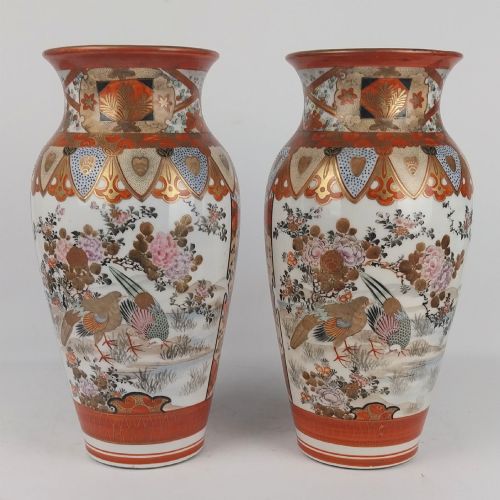
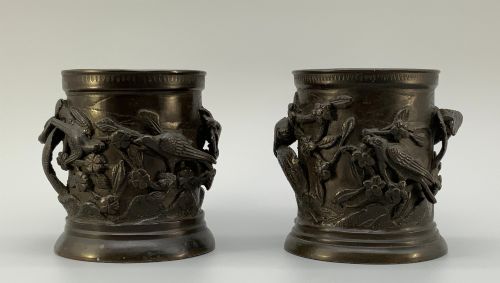
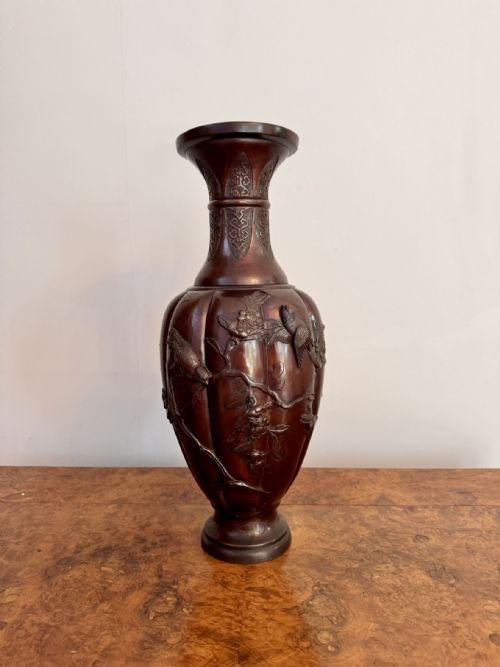
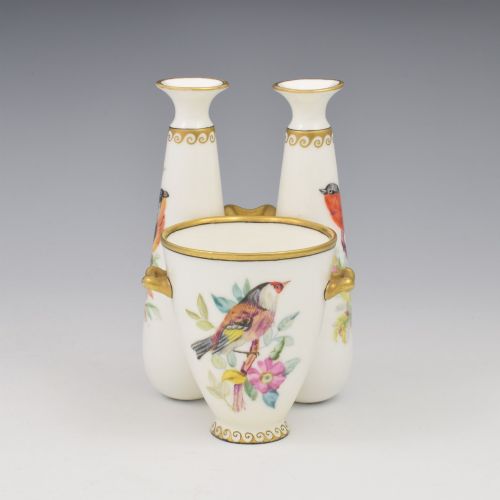
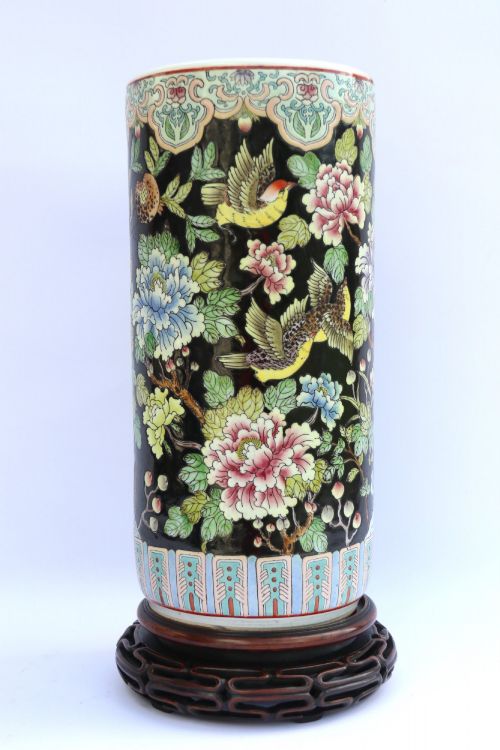
When you search for birds and flowers vases, you encounter a selection spanning Japanese bronze work, Chinese porcelain, and European ceramic production. The pieces range from Meiji period baluster urns to Victorian earthenware posy vessels.
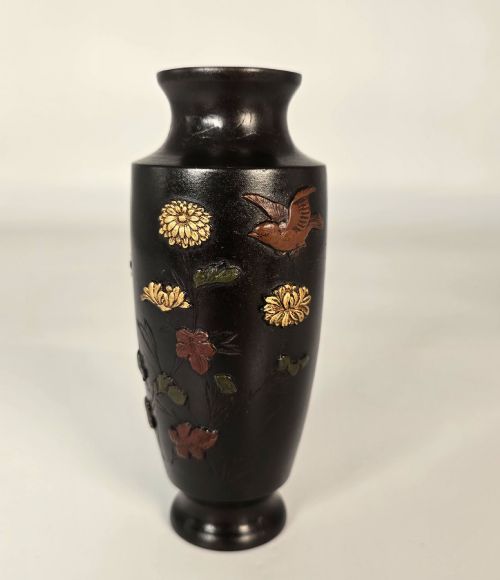
Japanese bronze and cloisonne examples dominate the selection, often featuring patinated surfaces decorated with birds and blossom. Chinese porcelain jars and European ironstone posy vases provide alternative ceramic interpretations of avian and floral themes.
How they were made
Bronze vessels utilise casting and patination techniques, occasionally incorporating mixed metals or wire cloisonne work to render plumage and petals. Totai shippo examples combine enamel directly onto ceramic or earthenware cores.
Porcelain and ironstone pieces employ hand-painted enamels, gilding, and gold leaf over fired clay bodies. Potters shape these materials into baluster urns, posy vases, and lidded jars.
Birds and Flowers Vases Retail Price Guide 2026
Typical asking prices for birds and flowers vases among the pieces listed under this phrase on Sellingantiques today, from the lower quarter to the upper quarter. They describe what is for sale here now, not the wider market.
Listings feature materials including bronze, enamel, porcelain, ceramic, gold leaf, gilding, patinated bronze, and copper.
What varies in quality
The definition and depth of the casting separate standard bronze vessels from finer Meiji period pieces. Crisp chasing along the bird plumage and controlled patination indicate superior workshop output.
Porcelain quality depends on the brushwork precision within the enamel decoration and the clarity of the glaze. Finer ceramic pieces display carefully applied gilding and balanced composition across the avian and floral motifs.
Royal Worcester·Mason·Rene Lalique·Royal Dux·Coalport
The Birds and Flowers Vases Glossary
- Meiji Period
- The era in Japanese history spanning from 1868 to 1912, known for accomplished bronze casting and cloisonne production. Pieces from this time frequently depict natural subjects.
- Totai Shippo
- A Japanese technique where enamel is applied directly onto a ceramic or earthenware base rather than a metal body. It often simulates textured surfaces like tree bark.
- Famille Rose
- A palette of opaque Chinese ceramic enamels introduced in the Qing dynasty, characterised by pink or rose colours used for floral scenes.
- Posy Vase
- A small vessel designed to hold a compact arrangement of flowers or stems. These decorative items were common in Victorian and Edwardian domestic interiors.
- Cloisonne
- An enamel technique where metal wires form small compartments on a vessel surface, which are then filled with coloured paste and fired.
Birds and Flowers Vases: Frequently Asked Questions
What periods do these vases come from?
The selection includes pieces spanning the eighteenth, nineteenth, and early twentieth centuries. Victorian and Edwardian European ceramics sit alongside Meiji period Japanese bronzes.
Chinese Qing dynasty porcelain and later interpretations also appear across the listings, showing various historical traditions.
How were these vases used originally?
Many larger bronze and porcelain vessels served as decorative garnitures or centrepieces in period rooms. Smaller posy vases and stem vases held cut flowers for interior display.
Covered jars and urns functioned as ornamental containers, while some larger porcelain bodies were later adapted as lamps.
How do I distinguish bronze from cloisonne?
Bronze vessels rely on cast metal with patinated surfaces, sometimes enhanced through mixed metal inlay or subtle carving. They display the bare texture of the metal.
Cloisonne pieces feature coloured enamels separated by thin metal wires across the exterior body, creating a smooth and colourful patterned surface.
How do I care for antique ceramic vases?
Dust ceramic and porcelain surfaces gently with a soft, dry cloth to protect delicate overglaze enamels and gilding. Avoid using harsh chemical cleaners or abrasive materials.
Keep bronze pieces away from excessive moisture to preserve the stability of the patinated metal surface over time.