
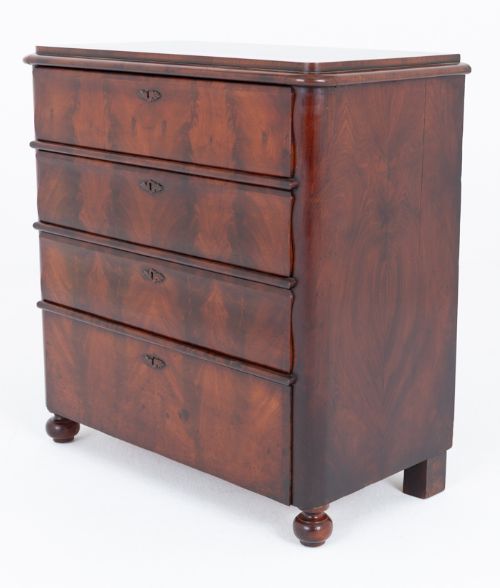
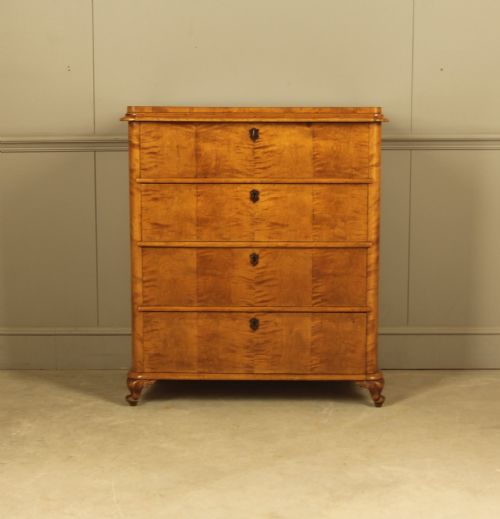
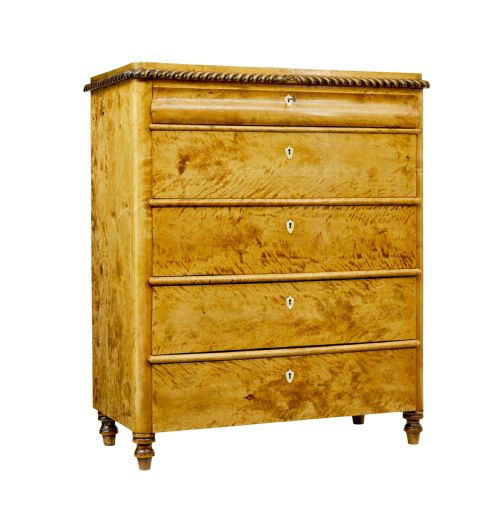


Biedermeier Tallboy Chest
A biedermeier tallboy chest brings architectural calm and rich wood grain to a room, offering tall storage with clean geometric lines.
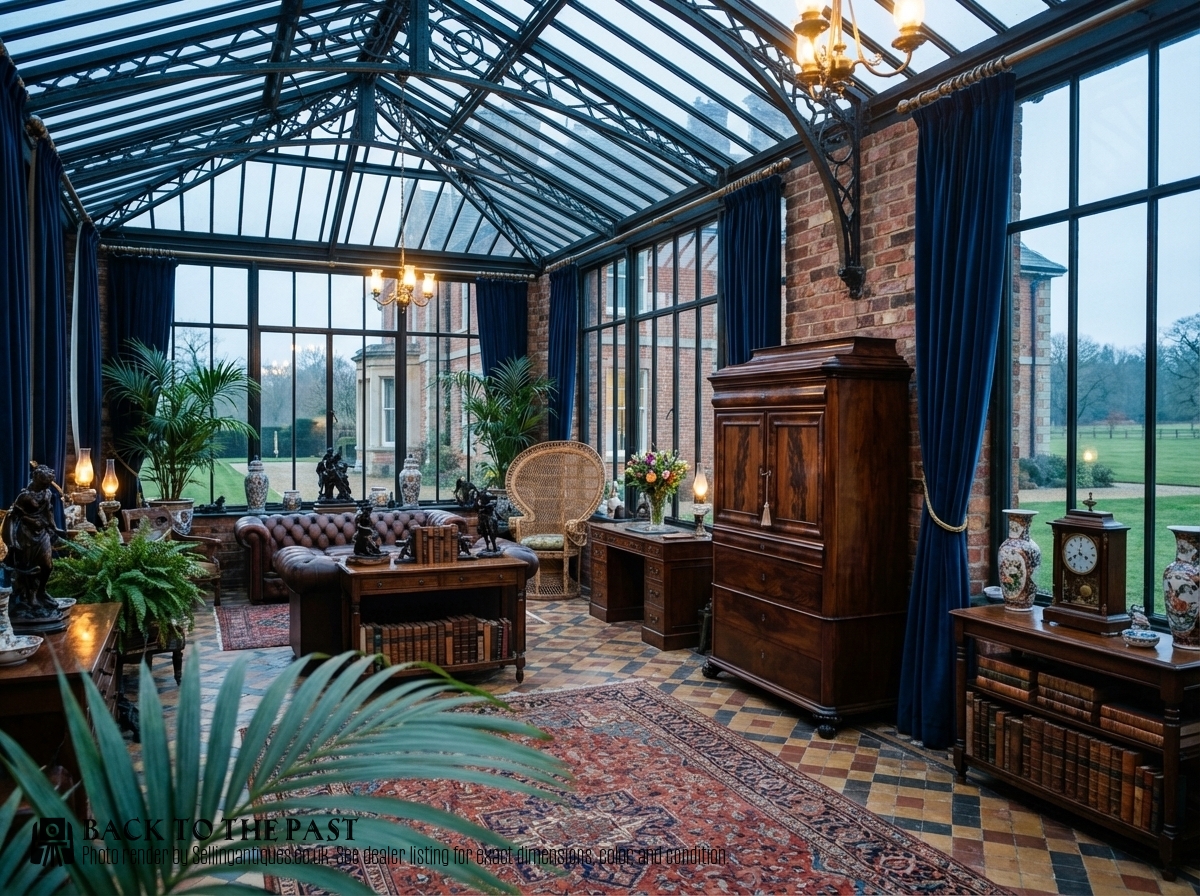
Biedermeier Tallboy Chest
When you search for a biedermeier tallboy chest, you enter a domain of tall, vertical timber storage driven by 19th-century Scandinavian and European design. These pieces combine straightforward upright proportions with disciplined drawer arrangements, providing generous capacity without heavy ornamentation.
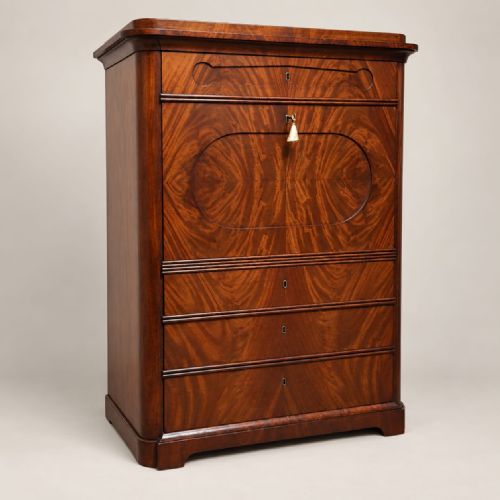
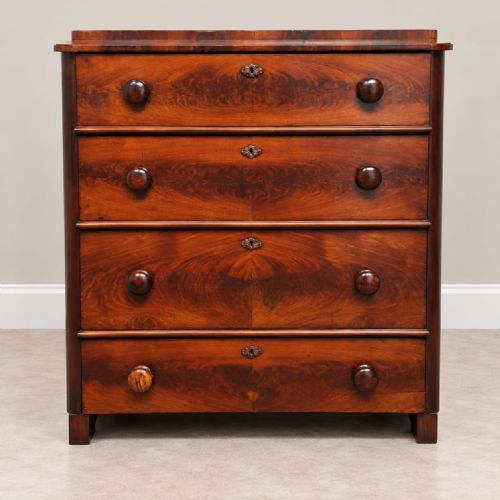
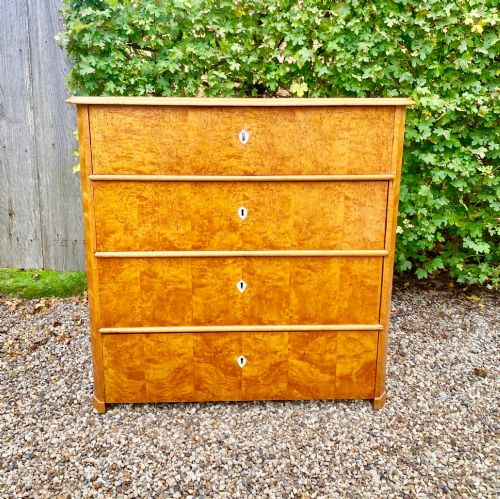
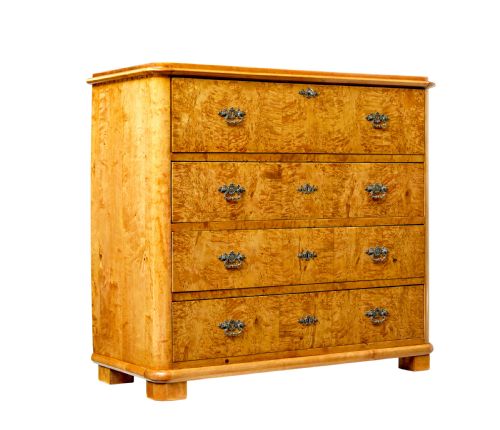
The version you meet most often on this page is a 19th-century Swedish birch chest of drawers or secretaire chest. Swedish Biedermeier and Scandinavian interpretations dominate, alongside occasional Victorian mahogany examples and French Louis Philippe variations.
Forms range from standard straight-drawer chests of four or five heights to secretaire chests featuring drop-down writing compartments. Woods such as flame birch, satin birch, mahogany, elm, and burr walnut define the surfaces.
How they were made
Cabinet makers built these carcasses using sturdy secondary timbers like pine, applying carefully selected hardwood veneers across the primary exterior faces. Flame birch veneer, flame mahogany veneer, and burr birch create dramatic, symmetrical grain patterns across the drawer fronts.
Makers utilised brass hardware for key escutcheons and handles, while bone inlay sometimes accented the detailing. Surface finishing relied on hand polishing to bring out the natural figure and warmth of the timber.
Listings feature 19th-century pieces built from pine, birch, mahogany, elm, and walnut, styled in Swedish Biedermeier and Empire Revival.
What varies in quality
The grade of timber veneer selection dictates much of the visual impact, separating simple utility furniture from masterwork display pieces. Highly figured burr, tiger, and flame birch veneers require expert book-matching across multiple drawers.
Structural integrity depends on the precision of the drawer joints and the stability of the tall carcass over decades of use. Refined carving, subtle Empire revival proportions, and integrated secretaire drop-fronts separate standard storage from elevated cabinet work.
Gemla Fabrikers
The Biedermeier Tallboy Chest Glossary
- Biedermeier
- A style of Central European and Scandinavian furniture from the 19th century that prioritised utility, clean lines, and warm wood grains over heavy historical revivalism. It strips away excess ornament to celebrate the natural beauty of timber.
- Secretaire
- A chest of drawers incorporating a hinged writing flap that pulls down to reveal small pigeonholes and internal compartments. This dual-purpose form allows a tall chest to double as a compact desk.
- Flame Birch
- A decorative timber cut that yields undulating, flame-like patterns across the surface of the wood. Cabinet makers prized this figure for prominent drawer fronts.
- Caddy Top
- A raised, stepped moulding profile along the upper edge of a chest of drawers. This traditional top style adds subtle architectural depth to the silhouette.
- Commode
- A European term for a set of drawers or a low cabinet used for bedroom storage. In certain regional traditions, it applies to large case pieces with marble tops.
Biedermeier Tallboy Chest: Frequently Asked Questions
What is a biedermeier tallboy chest?
A biedermeier tallboy chest is a vertical storage unit featuring multiple stacked drawers, shaped in the clean, restrained aesthetic of 19th-century Scandinavia and Central Europe.
These pieces rely on beautiful wood veneers rather than carved decoration to create their visual impact.
How do I identify a secretaire chest?
A secretaire chest includes a middle drawer that drops open horizontally to function as a writing desk.
Inside this fold-down flap, you find small drawers and pigeonholes designed for correspondence and paperwork.
What woods are used in these chests?
Construction typically involves solid pine carcases faced with decorative hardwoods like birch, satin birch, mahogany, elm, and walnut.
Many examples showcase striking grain figures such as flame birch or burr walnut across the primary drawer fronts.
Where were these pieces made?
The pieces originate primarily from 19th-century Sweden and Scandinavia, reflecting regional interpretations of the Biedermeier and Empire revival styles.
Occasional examples connect to Victorian British workshops or French Louis Philippe traditions.
How do I care for a birch chest?
Keep the wood away from direct sunlight and sudden temperature changes to protect the delicate veneer and hand-polished finish.
Dust regularly with a dry cloth and occasionally feed the timber with appropriate wax.