


Bevelled Glass Mantel Clock
A bevelled glass mantel clock brings weight and precise mechanics to a room, catching the light through heavy corner panes.
What these clocks are
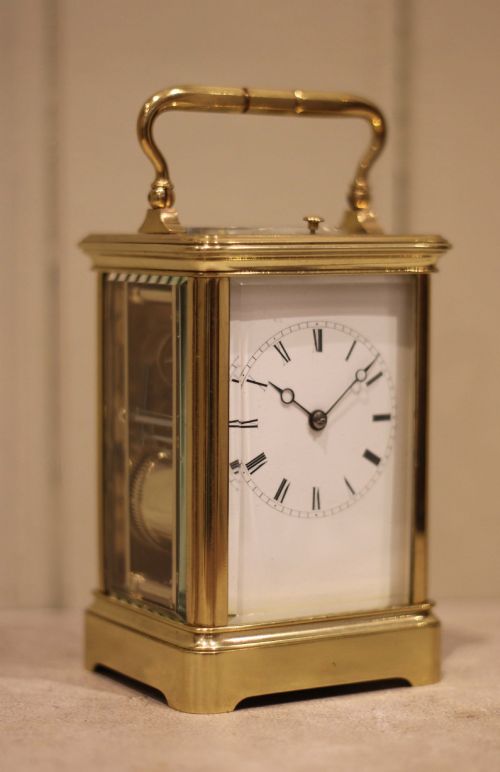
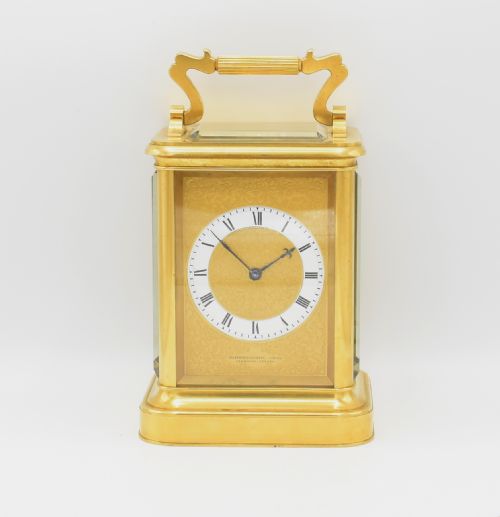
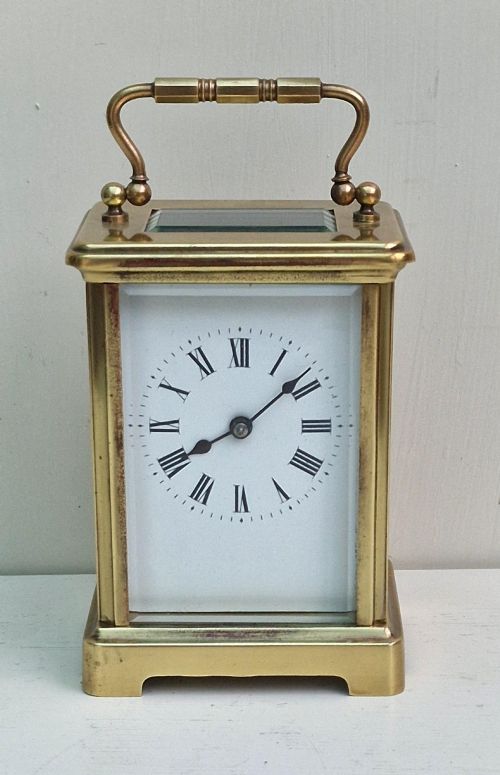
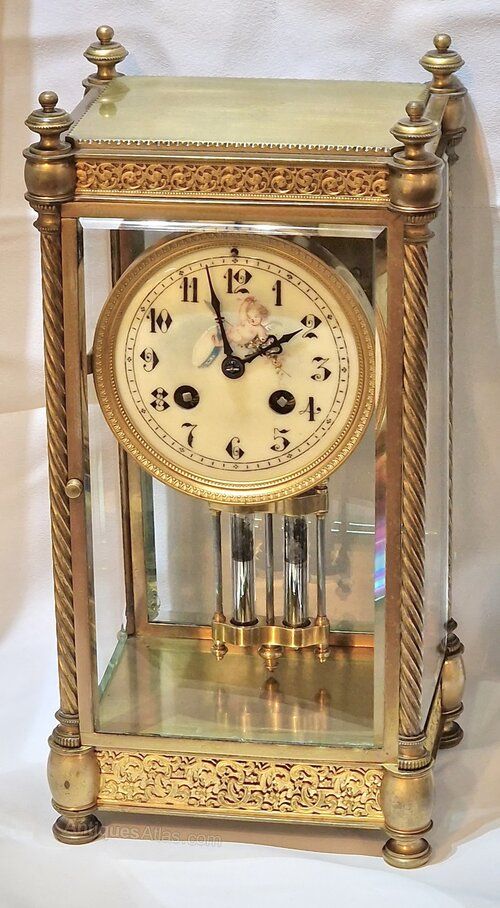
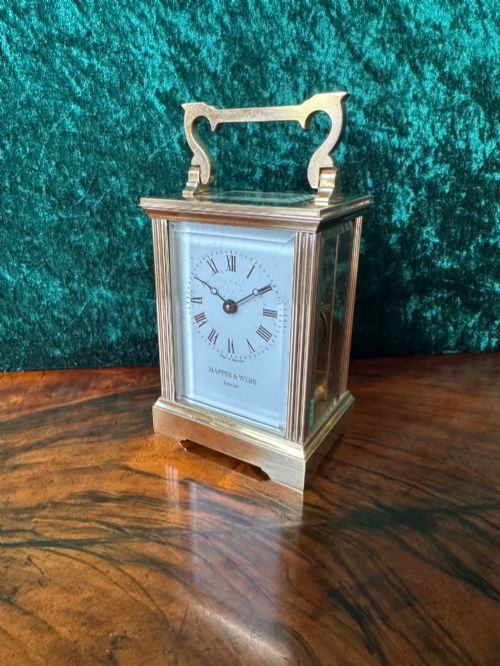
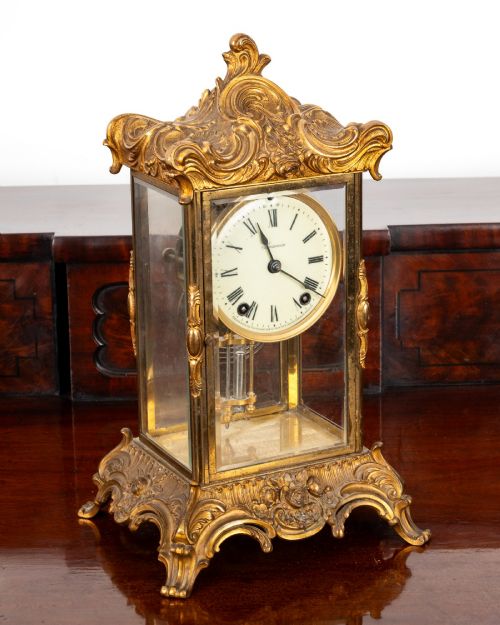
A bevelled glass mantel clock is a housing of glass and metal designed to sit upon a fireplace shelf or sideboard, showing its internal movement from multiple angles. The pieces encountered here span the Victorian period into the mid-twentieth century, with French examples forming the core of the selection.
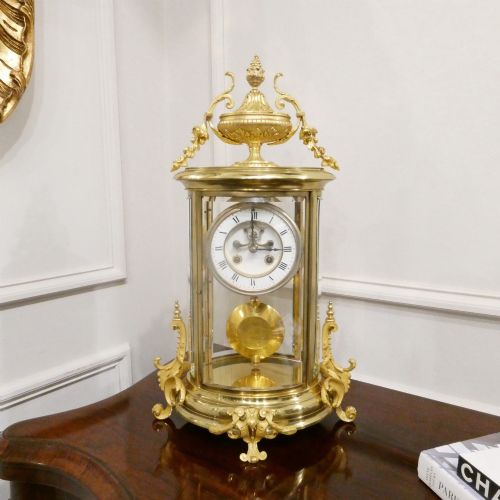
Most pieces take the form of four glass mantel clocks or crystal regulators, where thick transparent panels reveal the swinging pendulum and moving gears within. Brass and gilt brass framing holds the structure together, often paired with enamelled dials that display Roman or Arabic numerals.
Origins stretch from late nineteenth-century French workshops to later twentieth-century production, alongside British library variations featuring bevelled panels. Buyers seek these items for their architectural transparency and the mechanical theatre they display on any surface.
Materials and construction
Internal components combine brass gear trains with enamelled dial faces, sometimes embellished with paste stones for added visual detail. Mahogany frames appear in select British library pieces, combining timber cabinetry with inset bevelled glass windows.
Retail Price Guide 2026
Typical UK retail prices for bevelled glass mantel clock, calculated from the Sellingantiques database of over a million retail prices indexed since 2003. This retail price guide relies exclusively on Sellingantiques data; no external sources or auction records are used, so the figures do not describe the wider market.
Listings feature brass, gilt brass, and glass alongside enamelled dials and paste stones across Victorian and mid-twentieth-century periods.
Distinctions in quality
Quality in a bevelled glass mantel clock rests on the crispness of the brass casting and the depth of the edge bevelling on the glass panels. Finer examples display heavier metal framing, flawless enamel work on the dial, and refined finishing on the internal movement.
The sophistication of the mechanism dictates the upper tier of the range, separating standard timepieces from more complex movements. Maker attribution also separates standard production from works bearing the stamps of established French and American houses.
Tiffany·Samuel Marti·L Epee France·W H
The Bevelled Glass Mantel Clock Glossary
- Bevelled glass
- Glass with an edge ground and polished at an angle, creating a prismatic border that frames the clock mechanism inside.
- Four glass clock
- A mantel clock featuring glass panels on the front, back and both sides, allowing an unobstructed view of the movement.
- Crystal regulator
- A style of spring-driven mantel clock housed in a tall brass and bevelled glass case with a mercury or bob pendulum.
- Gilt brass
- Brass coated with a thin layer of gold or gold-coloured finish, providing a bright and durable metallic sheen.
- Enamel dial
- A metal clock face fused with powdered glass through firing, creating a smooth, white surface for painted numerals.
Frequently Asked Questions
How do four glass clocks work?
These clocks use spring-driven or weight-driven brass gear trains housed within transparent glass panels. The escapement and balance wheel or pendulum regulate the release of power to turn the hands.
Enamelled dials display the time while the surrounding glass exposes every moving component to the observer.
Where should I place a mantel clock?
A sturdy surface such as a mantelpiece, sideboard, or heavy table provides the ideal location for these substantial timepieces. Placing them away from direct sunlight and drafts protects the mechanical movement and delicate enamel dials.
Ensure the placement surface is completely level so the pendulum or balance wheel beats evenly.
How do I identify a French crystal regulator?
French crystal regulators typically feature tall brass frames with thick bevelled glass panels on all four sides and the top. They often include a distinctive gridiron or mercury-filled pendulum visible through the front glass.
Many examples bear maker signatures or foundry marks on the brass backplate behind the movement.
What materials make up these clocks?
The primary materials are heavy cast brass, gilt brass, and thick plate glass with ground bevelled edges. Dials are usually formed of fired white enamel with dark painted numerals, sometimes accented with paste stones.
Certain British library variations incorporate polished mahogany woodwork alongside glass panels.