



Bentwood Bistro Chairs
Bentwood bistro chairs are steam-formed seating staples designed for bustling nineteenth and twentieth-century cafes, offering remarkable lightness and enduring structural elegance.
Bentwood Bistro Chairs
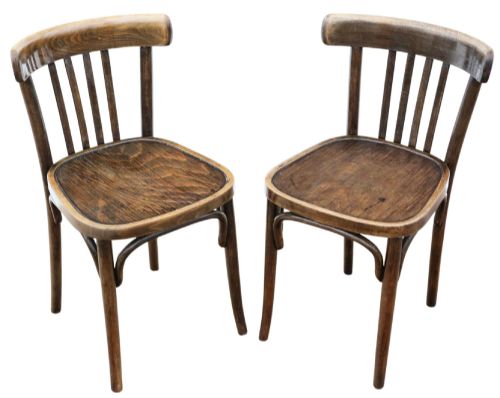
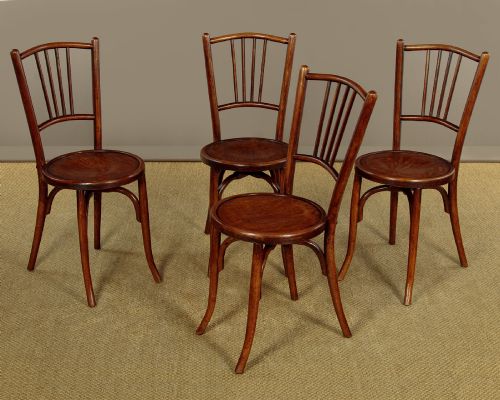
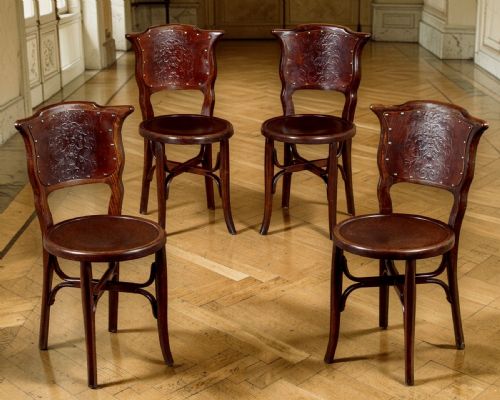
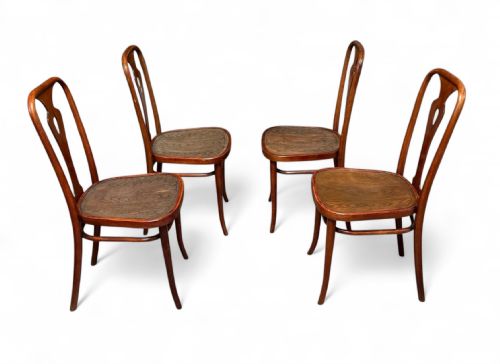
When you search for bentwood bistro chairs, you encounter lightweight seating solutions originating from European cafes and dining rooms spanning the nineteenth and twentieth centuries. These pieces encompass single items, pairs, and extensive matched or harlequin sets suited for modern domestic dining tables.
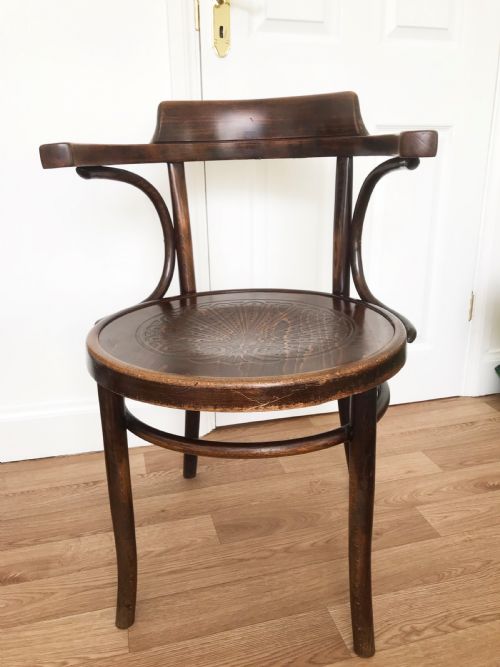
The inventory on this page ranges widely in form and scale, from standard dining chairs and carver armchairs to children's chairs and desk seating. The most frequent discoveries are sets originating around nineteen hundred, alongside later examples from the nineteen-twenties and nineteen-thirties.
What varies in quality
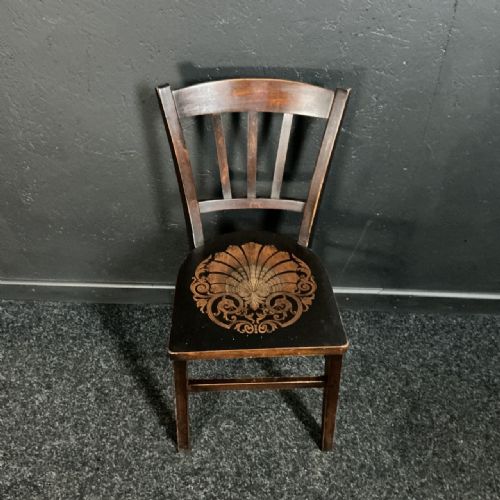
The distinction between standard commercial seating and exceptional examples lies in the crispness of the steam-bent frame and the complexity of the plywood embossing. Earlier nineteenth-century and turn-of-the-century pieces often display superior timber selection and more refined joinery.
The integrity of the original cane work, the depth of the stained wood finish, and the presence of maker markings on the underside elevate certain examples. Matched sets maintaining uniform patination across all pieces hold greater appeal than mismatched assemblies.
Several chairs on this page survived decades of daily service in London's famous Cafe Royal before finding their way into domestic dining rooms.
Thonet·Codina·J & J Kohn·Fischel
The Bentwood Bistro Chairs Glossary
- Bentwood
- Wood that has been heated with steam and physically forced into curved shapes. This method creates strong, graceful frames without traditional heavy joints.
- Hoop back
- A chair back formed from a single continuous piece of curved timber looping around to form the backrest and arm support. It defines the classic silhouette of the cafe chair.
- Embossed plywood
- Plywood pressed with a patterned metal die to leave a decorative design on the seat surface. This technique added ornamentation to functional commercial seating.
- Harlequin set
- A collection of chairs that share a similar style or maker but vary slightly in minor details or age. These groups formed organically in busy hospitality environments over decades.
- Carver
- An armchair featuring integrated armrests, usually positioned at the head of a dining table. In bentwood forms, the arms extend smoothly from the back rail or seat.
Bentwood Bistro Chairs: Frequently Asked Questions
How do I clean cane seats?
Wipe cane seats gently with a damp sponge using mild soap, avoiding excessive water that can weaken the natural fibres. Allow the material to dry completely in a well-ventilated room.
Keep the cane moisturised by occasionally applying a very light coat of boiled linseed oil with a soft brush to prevent brittleness.
Are these chairs suitable for daily dining?
Bentwood chairs were originally built for heavy commercial use in nineteenth-century cafes, making them exceptionally durable for everyday home dining. Their lightweight construction also allows for easy movement around the table.
Ensure joints remain tight and avoid placing them in damp environments to maintain their structural longevity over years of use.
How do I date an antique bentwood chair?
Examine the underside of the seat for paper manufacturer labels, stamped maker marks, or burnt-in brand signatures. The complexity of the plywood embossing and screw types can also indicate the manufacturing decade.
Earlier nineteenth-century examples often feature finer proportions and specific maker stamps associated with turn-of-the-century production methods.
What is a harlequin set?
A harlequin set is a collection of individual chairs that share a matching style, material, or maker but were gathered together over time rather than manufactured as a single batch. These sets reflect the practical reality of furnishing busy historical cafes.
Such collections offer a characterful dining solution with subtle variations in wood tone and grain pattern across the chairs.