

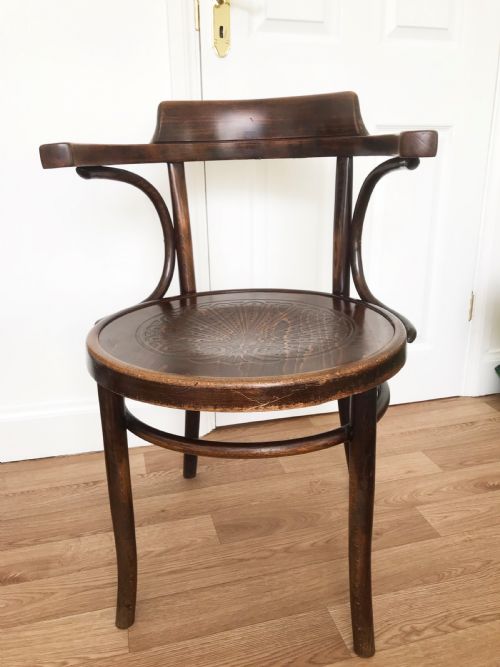


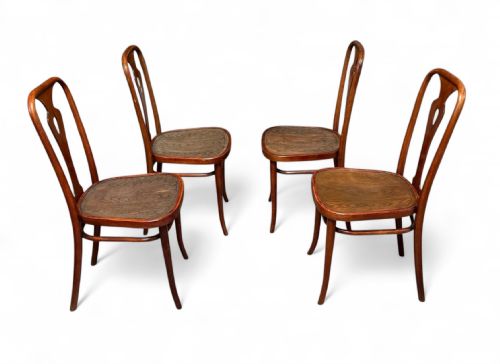

Curved Wood Dining Chairs
Curved wood dining chairs bring warmth and fluid lines to a room, ranging from early nineteenth century mahogany seats to twentieth century bentwood designs.
Curved Wood Dining Chairs
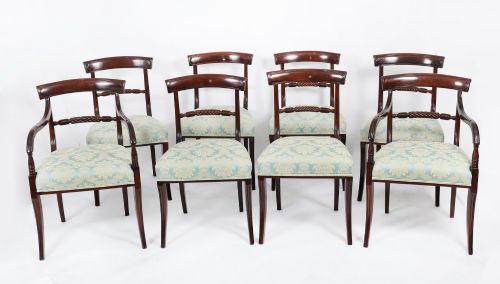
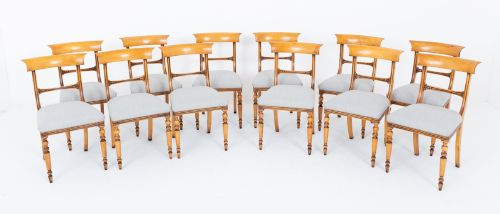
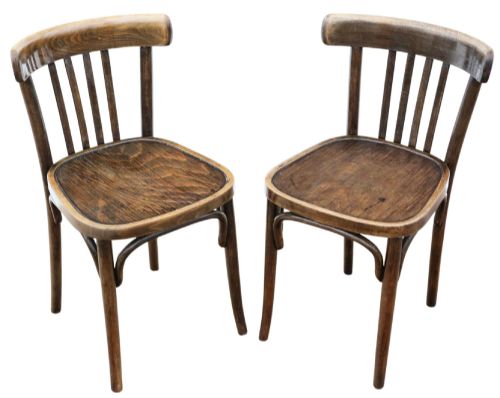
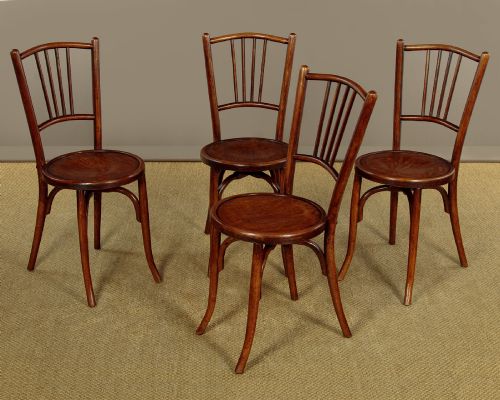
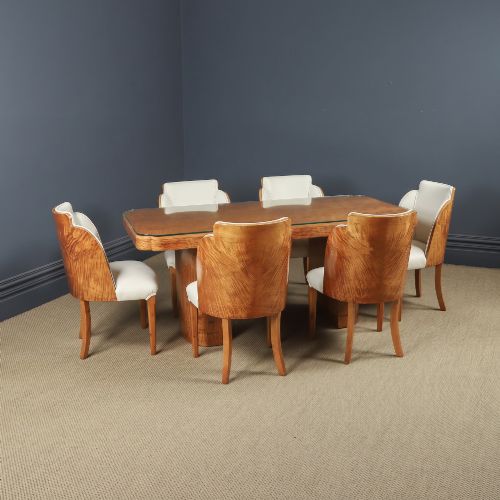
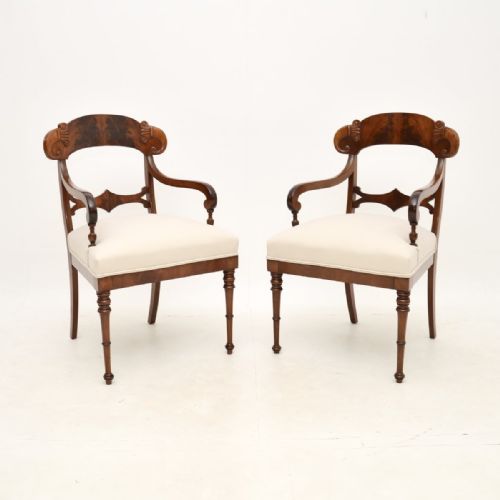
Curved wood dining chairs encompass a broad sweep of seating forms, uniting formal nineteenth century dining suites with lighter bistro chairs. When searching for curved wood dining chairs, buyers encounter everything from Regency period mahogany seats to Art Deco satinwood dining groups and mid-century bentwood examples.
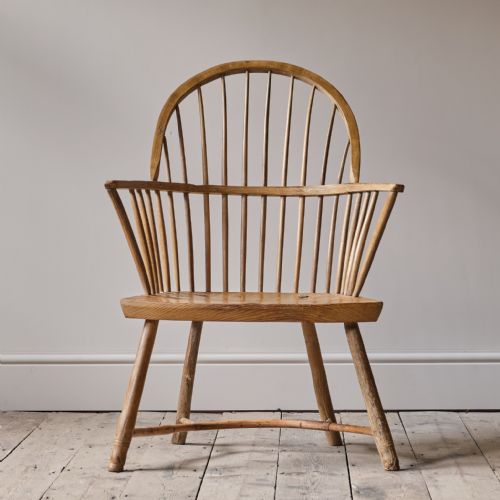
The selection on this page demonstrates remarkable variety across centuries, materials and origins. Alongside British and European country vernacular styles, the inventory includes Chinese elm horseshoe armchairs and classical Regency side chairs.
Dining chairs appear singly, in pairs, and in larger matched sets of up to twelve pieces. Forms range from simple side chairs and elbow chairs to substantial carvers and complete dining room suites.
How they were made
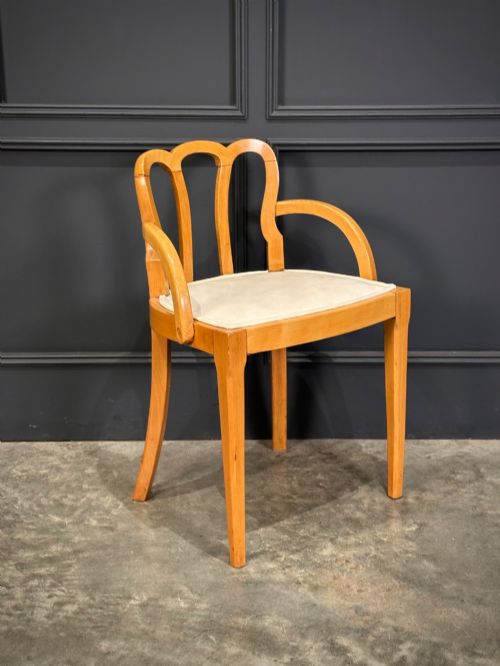
Cabinetmakers and manufacturers utilised traditional solid timbers including mahogany, beech, elm, satinwood, maple and rosewood. Steam bending techniques allowed wood to take graceful, continuous curves without losing structural integrity.
Plywood and specialised bentwood methods emerged more strongly by the twentieth century, enabling efficient production of light, resilient seating. Upholstery materials such as fabric, leather and velvet were integrated into seats and backs for comfort.
The listings span multiple centuries, stretching from early nineteenth century Regency models through to mid-century twentieth century bentwood designs.
What varies in quality
Quality rests on the selection of timber and the precision of the joinery or steam bending. Superior examples display tight, stable joints and wood with rich grain patterns that have matured well over time.
The integrity of the frame construction dictates longevity, particularly where curved elements bear regular weight and pressure. Original surfaces and careful attention to period upholstery methods also elevate a piece.
Thonet·Codina·Benjamin Gilling
The Curved Wood Dining Chairs Glossary
- Bentwood
- Wood shaped by steaming or boiling until pliable, allowing it to be bent into rounded forms. This technique defined the output of makers like Thonet.
- Carver
- An armchair, traditionally placed at the head of a dining table or used as a desk chair. These pieces often feature sweeping armrests integrated into the back rail.
- Windsor
- A traditional wooden chair featuring a solid carved wooden seat into which the legs and back spindles are wedged directly. Common regional variations include hoop backs.
- Regency
- A style period spanning the early nineteenth century, characterised by classical influences and clean architectural lines. Pieces from this era frequently employ mahogany and beech.
- Elm
- A tough, durable timber with a distinctive interlocking grain, widely used in vernacular seating. It resists splitting, making it ideal for solid chair seats.
Curved Wood Dining Chairs: Frequently Asked Questions
How do I care for antique curved wood chairs?
Keep wooden frames away from direct heat sources and sudden temperature shifts to prevent the timber from drying out or splitting. Apply a quality microcrystalline wax occasionally to nourish the surface.
Check joints periodically for movement, especially on bentwood items subjected to daily dining use. Handle upholstery gently according to its specific fabric or leather requirements.
Are these chairs suitable for daily dining?
Many of these pieces were built for rigorous daily use, from nineteenth century kitchen chairs to robust bentwood bistro seating. Solid construction in timbers like beech and elm ensures enduring stability.
Ensure that seat heights and arm clearances align comfortably with your existing dining table dimensions. Lighter side chairs offer practical flexibility around the table.
How do I date a curved wood chair?
Examine the timber species, construction marks and tool signatures visible beneath the seat or along the frame joints. Earlier nineteenth century pieces often show hand-planing and traditional joinery.
Twentieth century bentwood designs frequently rely on steam-pressed laminates and standardised hardware. Comparing stylistic details like turnings and crest rails helps narrow down the period.