
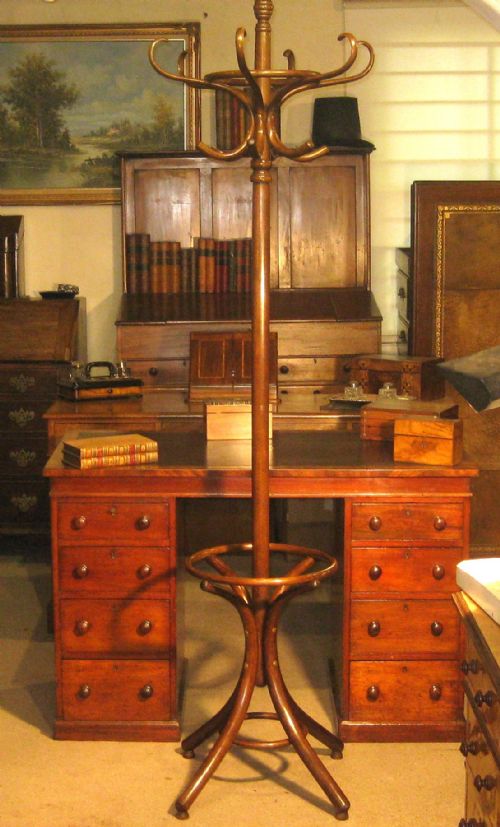


Beech Bentwood Coat Rack
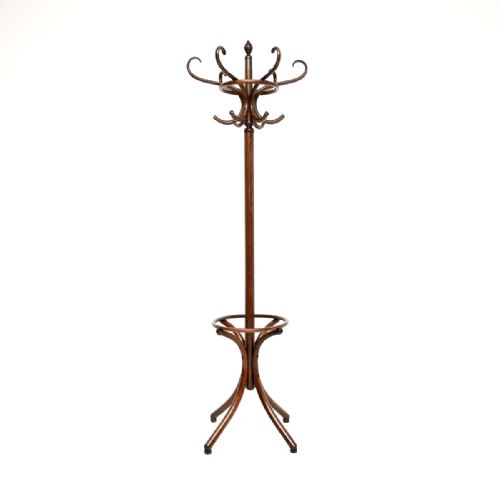
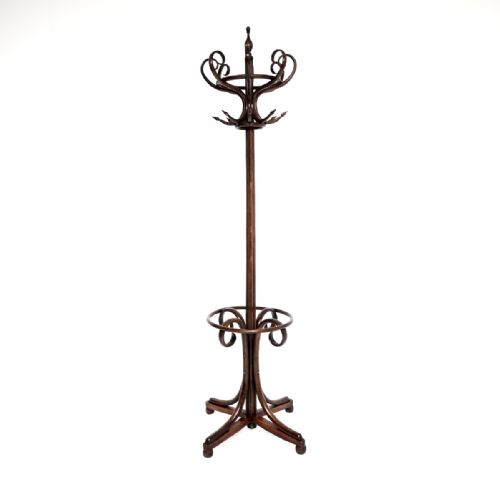
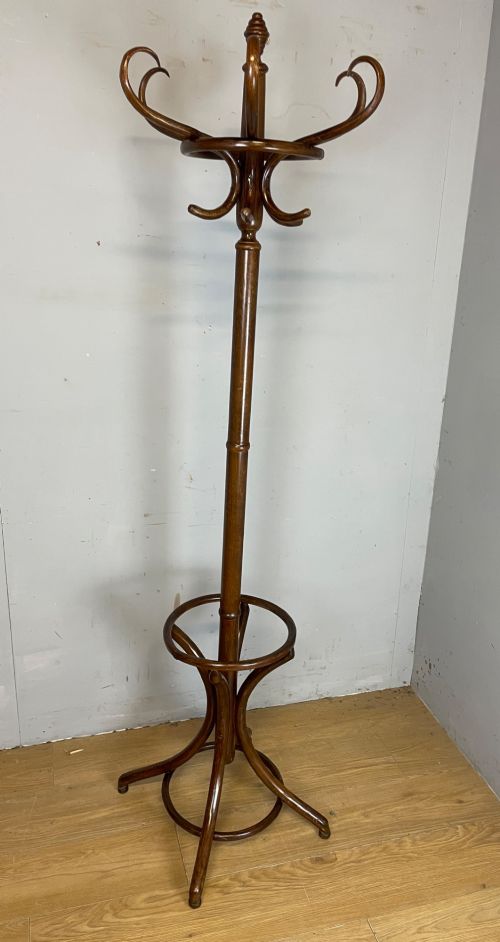
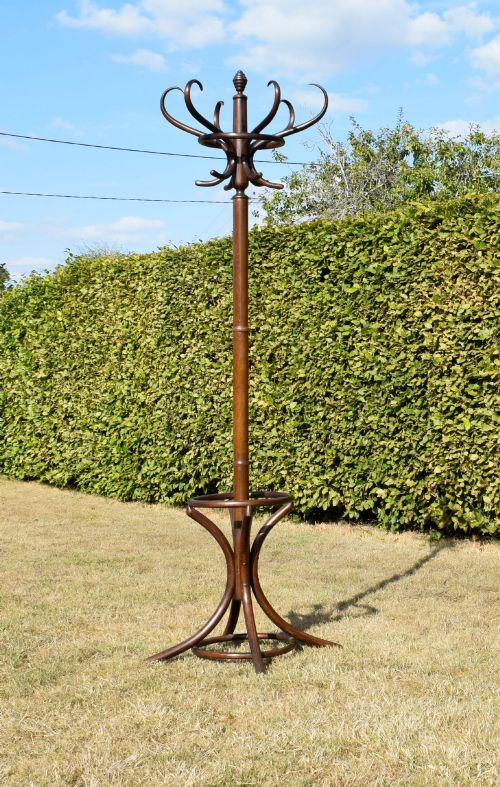
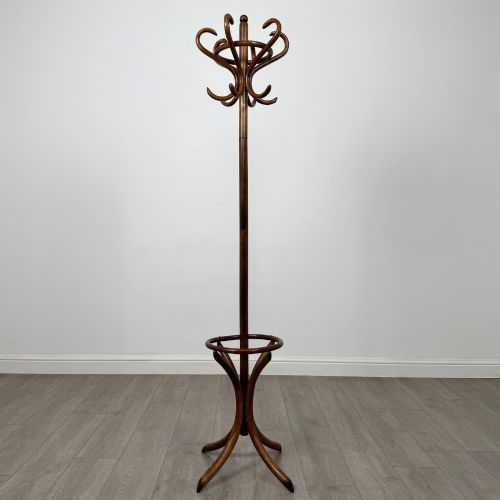
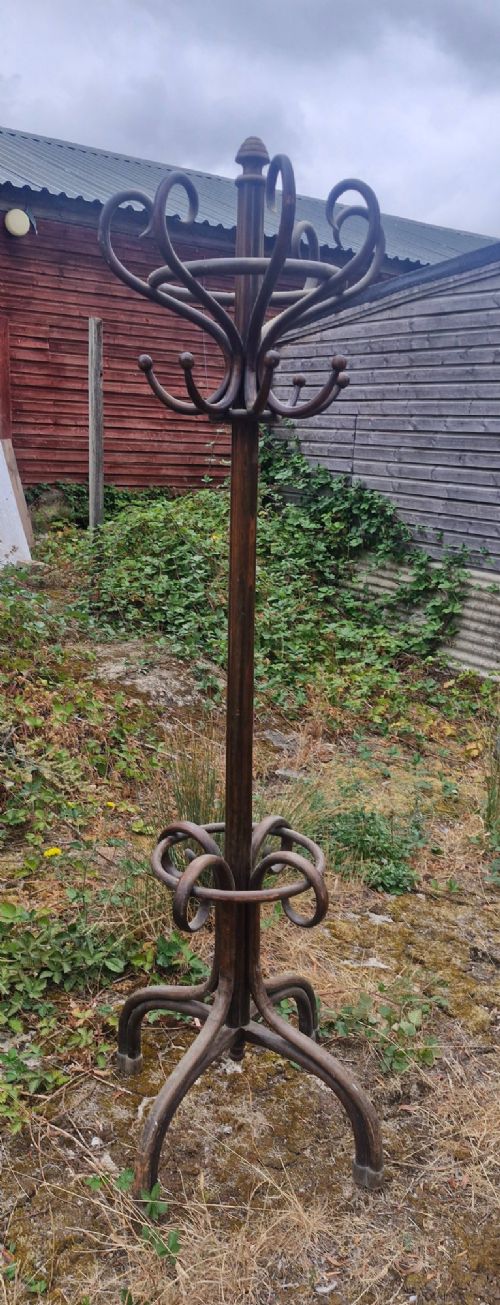
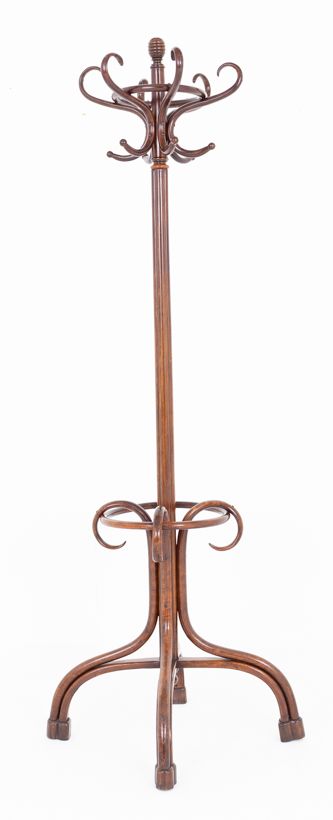
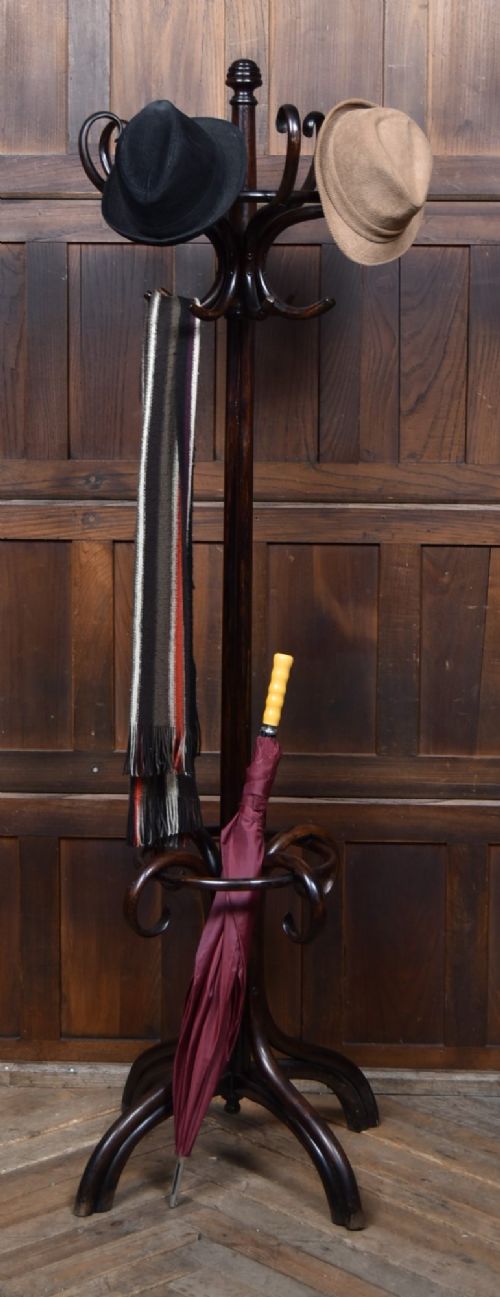
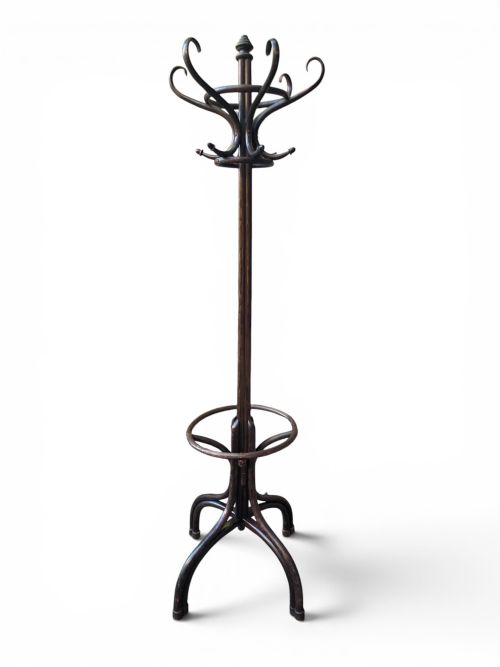
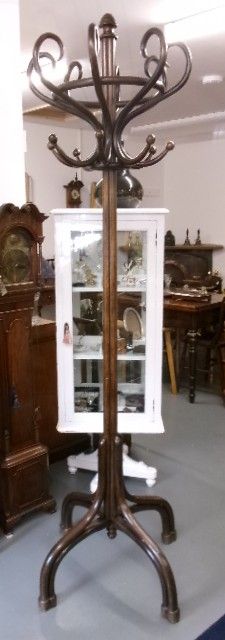
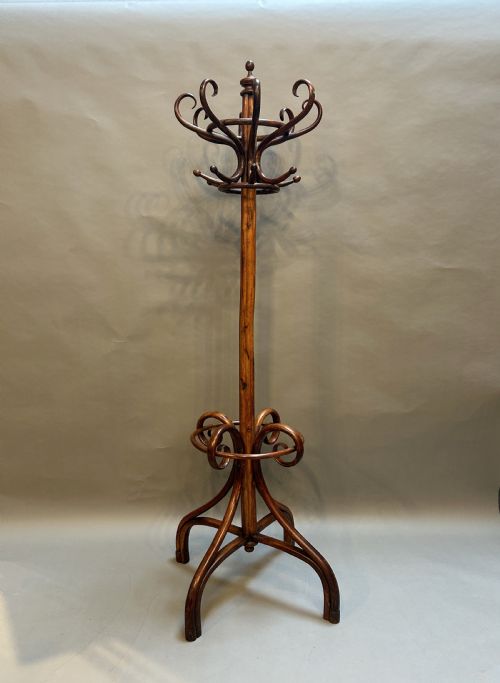
A beech bentwood coat rack brings effortless architectural curves to the hallway, offering a slender vertical frame built to hold heavy garments.
Beech Bentwood Coat Rack
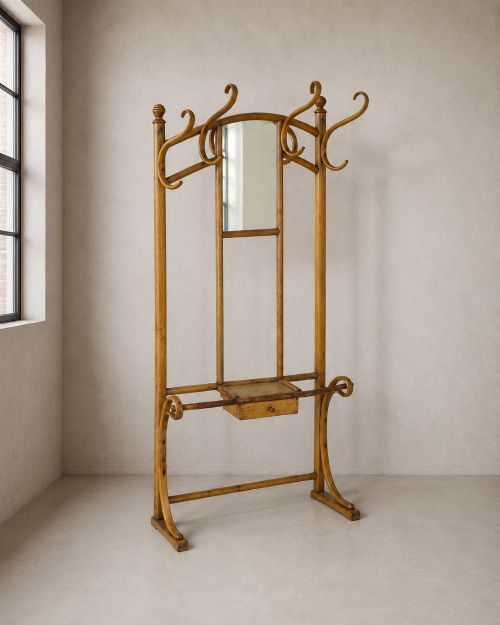
A beech bentwood coat rack serves as a functional hall tree or freestanding stand, designed to organise hats, coats and walking sticks in domestic interiors. These pieces emerge predominantly from the Victorian and Edwardian eras through to the 1930s, capturing a period of industrial ingenuity in furniture design.
Makers such as Thonet defined this form, producing stylised Austrian bentwood examples alongside robust early twentieth-century interpretations. Surviving pieces often integrate specialised attachments or double top rings, fulfilling the original domestic requirement for structured hallway storage.
How they were made
Solid beech and beechwood form the structural core of these items, selected for its dense grain and high tensile strength. Artisans subjected these timber lengths to steam treatment, rendering the wood pliable enough to be coaxed into continuous, sweeping curves without splintering.
Metal components occasionally supplement the wooden joinery to reinforce high-stress joints and hanging points. Applied finishes range from clear honey-toned polishes to stained wood treatments that accentuate the natural grain of the bentwood loops.
Listings span from the late nineteenth century through the Edwardian period and into the 1930s, constructed almost entirely from beech and steam-bent wood.
What varies in quality
The distinction between standard utility items and heavier quality productions lies in the execution of the steam-bent curves and the thickness of the timber gauge. Superior examples exhibit tightly formed, uniform radii that retain their structural integrity under substantial daily loads.
Refinements such as revolving top sections, double top configurations, or integrated umbrella rings separate ambitious workshop designs from simpler single-tier halls stands. The clarity of the original finish and the preservation of maker stamps further distinguish the finer survivals from ordinary production.
Thonet
The Beech Bentwood Coat Rack Glossary
- Bentwood
- Wood shaped by applying moisture and heat through steam, allowing artisans to bend solid timber into smooth, continuous curves. This technique revolutionised seating and coat stand production during the nineteenth century.
- Hall Stand
- A tall piece of hallway furniture designed to hold outdoor garments, hats, and occasionally umbrellas or walking sticks. These vertical structures anchor the entrance space in period homes.
- Thonet
- The pioneering firm associated with mass-produced steam-bent wooden furniture, founded by Michael Thonet. Their distinctive numbered models remain sought after by collectors of domestic design.
- Hat Tree
- An alternative term for a freestanding coat and hat stand featuring multiple branching arms at varying heights. They provide compact vertical storage for outerwear.
Beech Bentwood Coat Rack: Frequently Asked Questions
How do I clean a bentwood coat stand?
Dust the curved wooden frame regularly with a dry cloth to prevent dirt accumulation within the steam-bent joints. Avoid harsh chemical cleaners that might strip the historic honey or stained polish.
Feed the dry beech timber occasionally with a traditional beeswax polish to maintain its lustre and protect the surface from atmospheric moisture.
Can these stands support heavy winter coats?
These robust beech frames are engineered for everyday domestic outerwear, featuring multiple branching hooks to distribute weight evenly across the crown. Heavier quality models handle dense woollen coats and umbrellas with ease.
Distribute garments evenly around the revolving or fixed upper tiers to maintain the vertical balance of the freestanding structure.
Are all bentwood stands made by Thonet?
While Thonet pioneered the steam-bending technique and stamped many of their pieces, numerous contemporary Austrian and European workshops produced similar designs. Edwardian and early twentieth-century makers adopted these methods widely.
Examine the curved joints and look for paper labels, brand stamps, or distinct model numbers to identify the origin of a specific hall stand.
Where should I place a hall stand?
Position the piece in an entryway or hallway where its vertical silhouette can anchor the space without obstructing narrow walkways. Ensure the floor surface is reasonably level so the wall-standing design remains stable.
Keep the stand away from direct heat sources like radiators to prevent the steam-bent beech timber from drying out or warping over time.