
Bedroom Vanity with Mirror
A bedroom vanity with mirror provides a practical surface and reflective glass for daily grooming, bringing period craftsmanship directly into the domestic interior.
Bedroom Vanity with Mirror
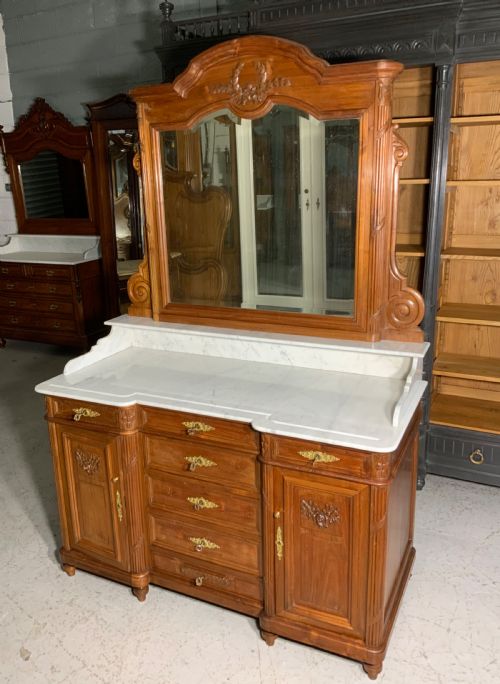
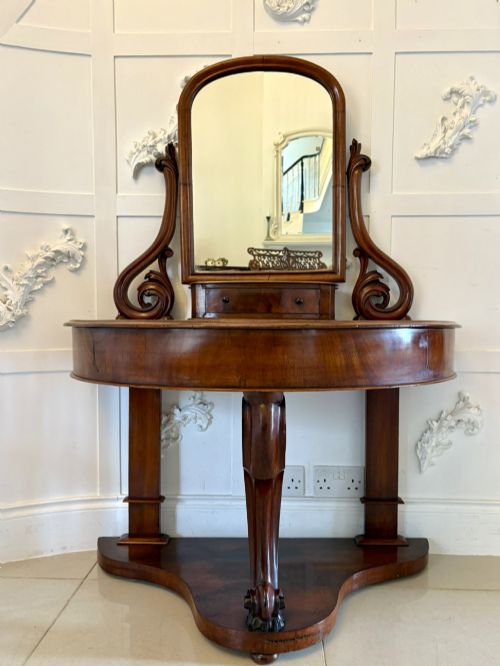
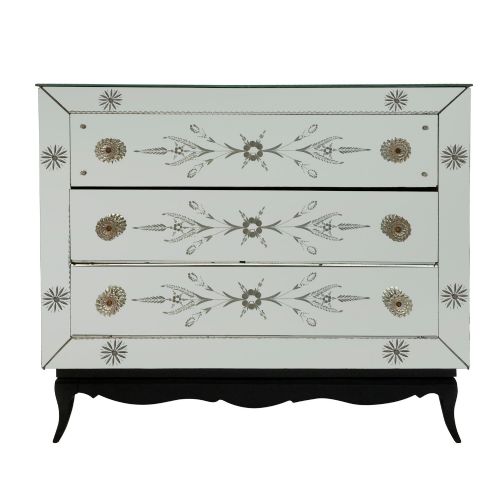
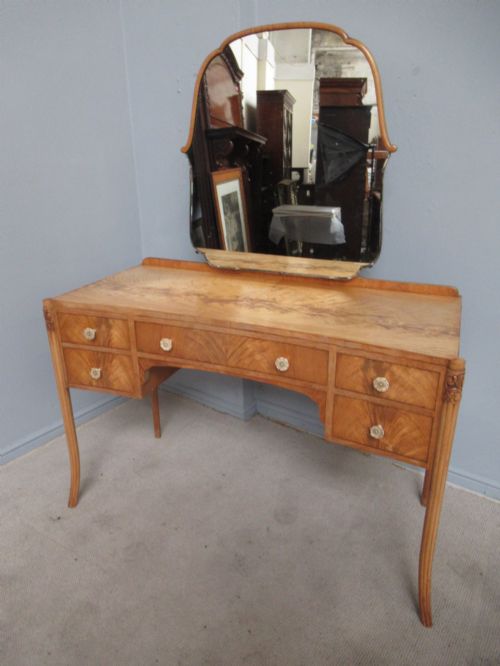
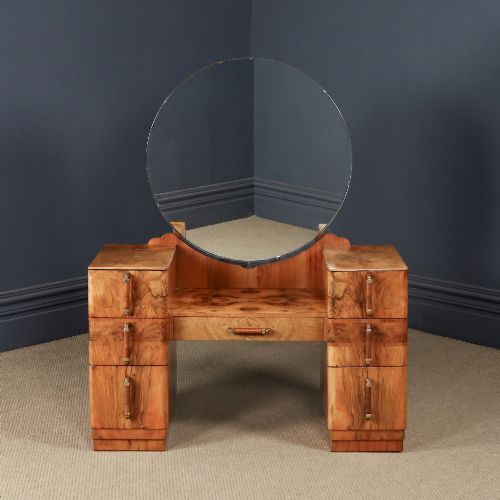
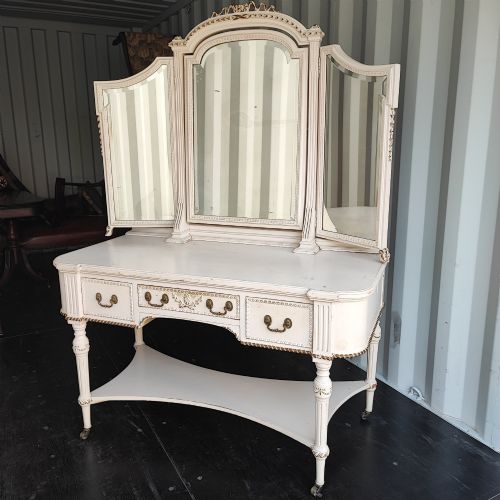
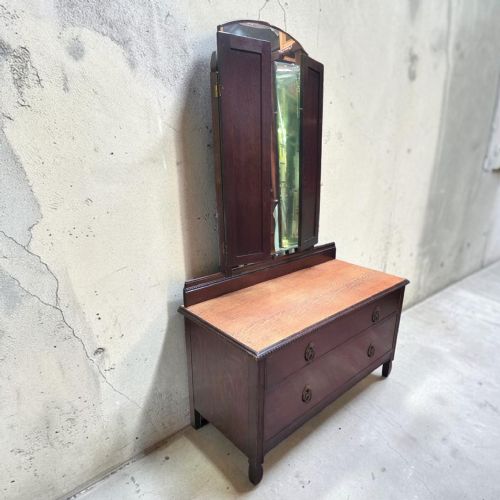
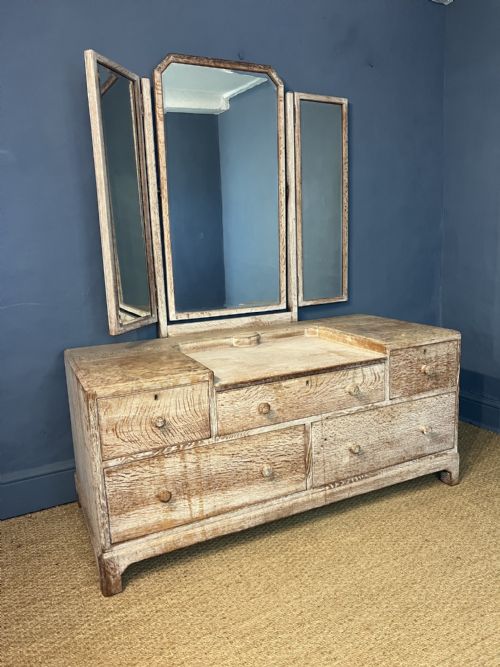
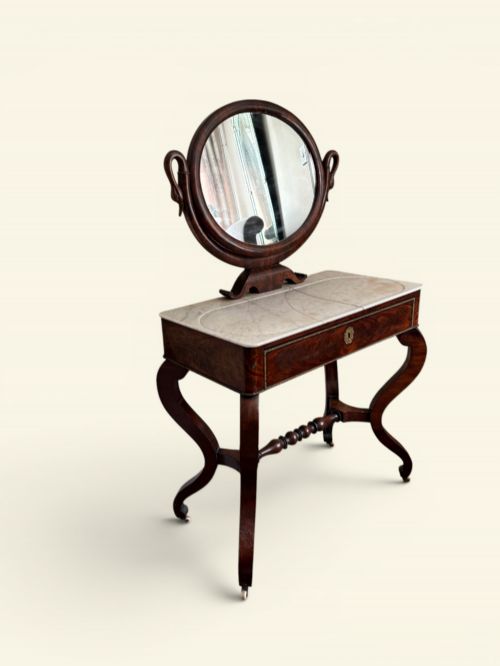
A bedroom vanity with mirror encompasses several related forms, most commonly dressing tables, dressing chests, and freestanding toilet or swing mirrors. These pieces span multiple eras, with Victorian and Edwardian examples appearing frequently alongside 1930s Art Deco designs.
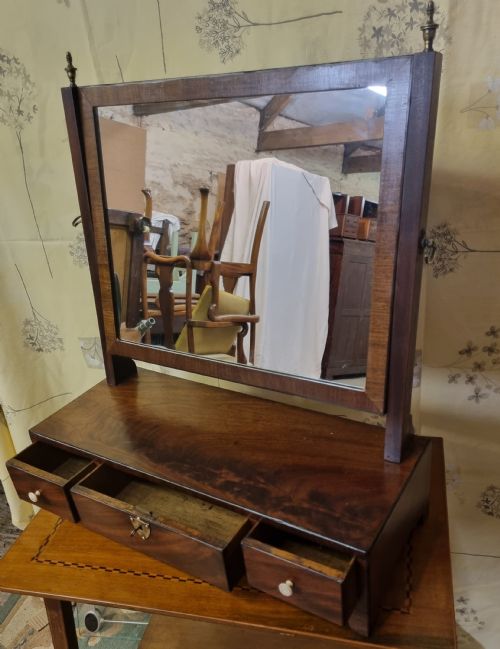
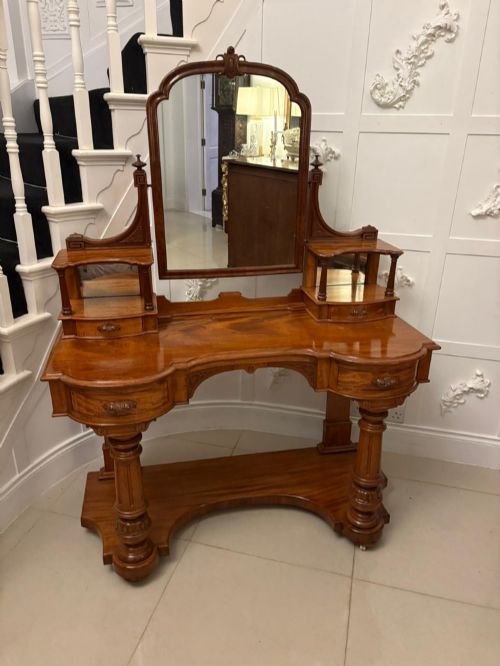
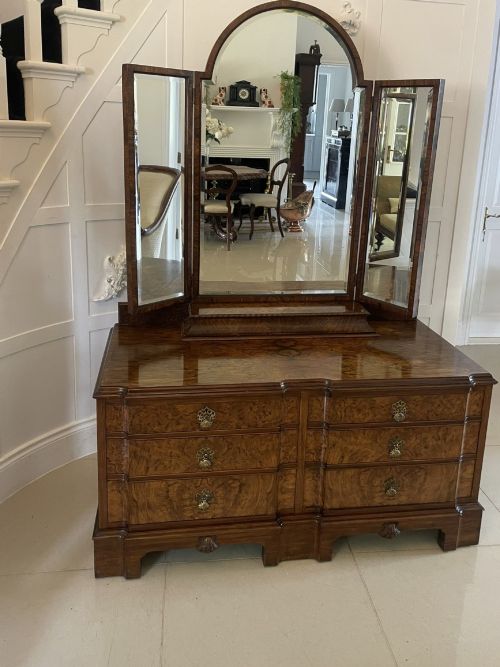
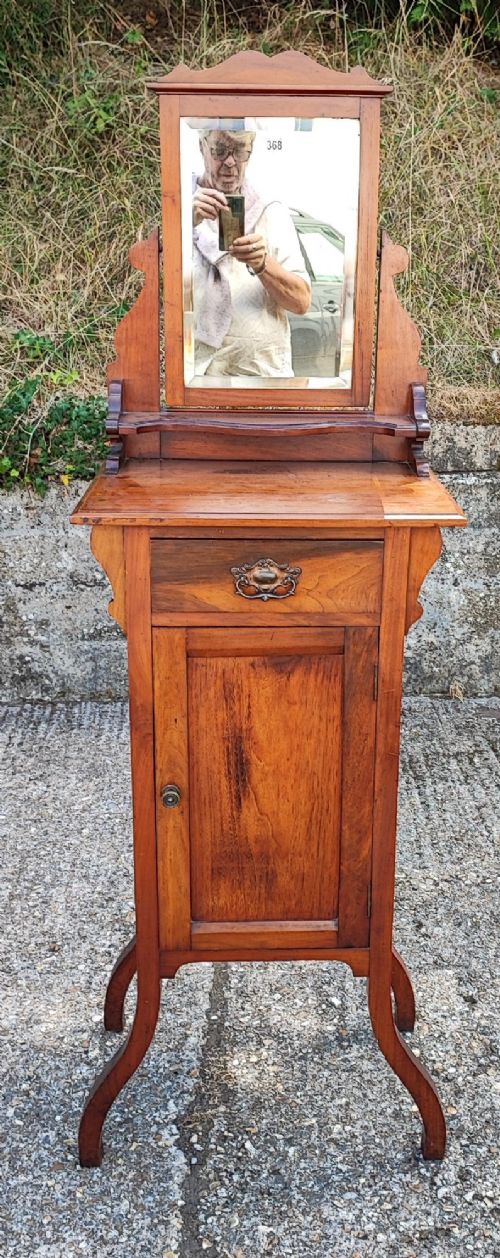
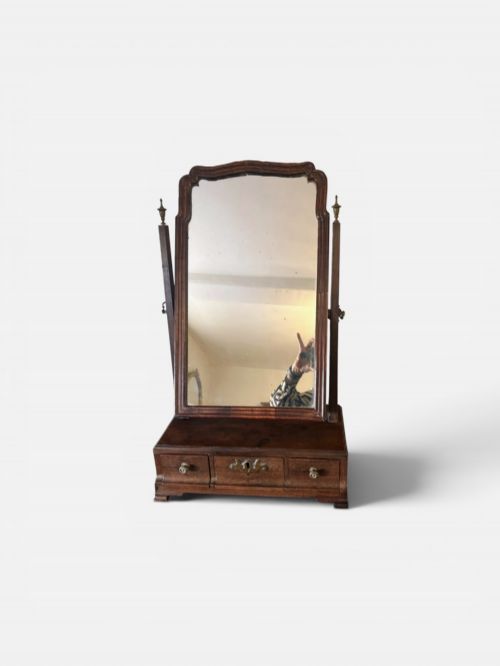
The layout typically combines a fitted surface with drawers for storage and an attached or pivoting glass plate. Simpler tabletop mirrors sit upon chests, while larger duchess tables and pedestal forms integrate the glass directly into the overarching structure.
Materials and Construction
Makers utilised solid timbers such as mahogany, oak, and walnut, frequently selecting burr walnut veneers to create striking surface patterns. Secondary woods provide structural stability inside drawer boxes and carcases.
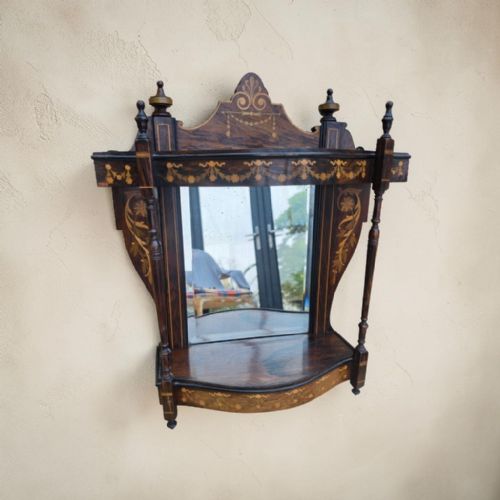
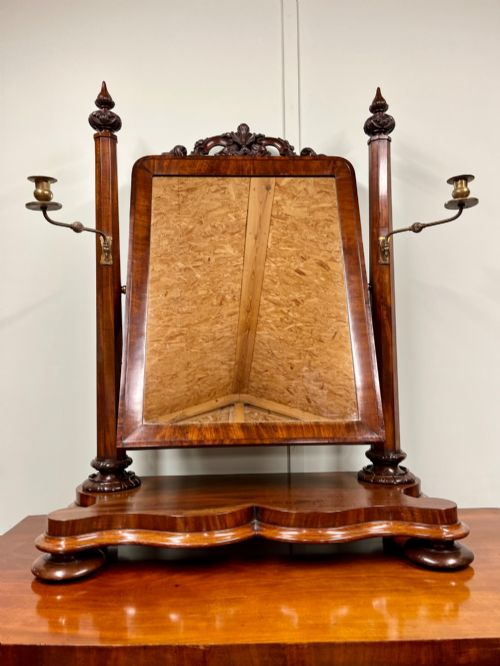
Mirrored glass is held within timber frames, often supported by adjustable brass pivots or mounted to shaped uprights. Inlaid decoration, carved details, and marble tops appear on select regional and high-style pieces.
The furniture spans Georgian, Victorian, Edwardian, Arts & Crafts, and Art Deco styles.
Distinctions in Standard
The calibre of a bedroom vanity with mirror rests upon the selection of timber and the precision of its joinery. Well-chosen grain patterns on drawer fronts and smooth operation in sliding or pivoting components distinguish superior work.
Subtle carver details, intact original mirror glass, and maker labels elevate specific pieces. Mass-produced items contrast with individually designed examples from workshops associated with the Arts & Crafts movement or noted cabinet makers.
Maurice Adams·Heals·Wright & Hunter of Belfast·George Walton
The Bedroom Vanity with Mirror Glossary
- Duchess dressing table
- A large Victorian vanity form featuring a large central mirror, often flanked by smaller trinket drawers or pivoting swing mirrors above a tiered surface.
- Toilet mirror
- A smaller, portable mirror mounted on a frame with small drawers, designed to sit upon a chest of drawers or table.
- Burr walnut
- A highly figured timber veneer prized for its swirling grain patterns, frequently used on high-end Victorian and Art Deco pieces.
- Shield mirror
- A dressing mirror shaped in the outline of a heraldic shield, commonly supported by upright arms on Edwardian tables.
- Swing mirror
- A glass plate hung on horizontal pivots allowing it to tilt forward or backward within its frame.
Bedroom Vanity with Mirror: Frequently Asked Questions
How do I date a bedroom vanity with mirror?
Dating relies on identifying the primary timber, construction methods, and hardware styles associated with specific eras like the Victorian period or the 1930s. Secondary woods inside drawers and the method used to silver mirror glass offer further chronological clues.
Design motifs such as Arts & Crafts inlays or Art Deco geometric veneering also help narrow down the period of manufacture.
What is the difference between a dressing chest and a dressing table?
A dressing chest typically incorporates deeper drawer storage within a taller, more compact carcase beneath the mirror. Dressing tables tend to be lower and wider, sometimes featuring kneehole spaces or pedestal banks of drawers.
Both forms serve the same grooming function but occupy different floor spaces within the bedroom.
Can I replace the mirror glass?
Original mirror glass often shows foxing, silver loss, or dark spots due to age, which many collectors prefer to keep as evidence of authenticity. Replacing the glass is possible if the original has cracked or deteriorated beyond practical use, though care must be taken with antique rebate frames.
Retaining the original plate preserves the historical integrity of the piece whenever feasible.
How should I care for antique wood finishes?
Maintain timber surfaces by dusting with a soft cloth and applying traditional beeswax periodically to nourish the polish. Avoid placing these pieces in direct sunlight or near heat sources, which can dry out veneers and cause splitting.
Gentle handling of brass hardware and pivot screws ensures the mirror frame remains secure without straining the surrounding wood.