


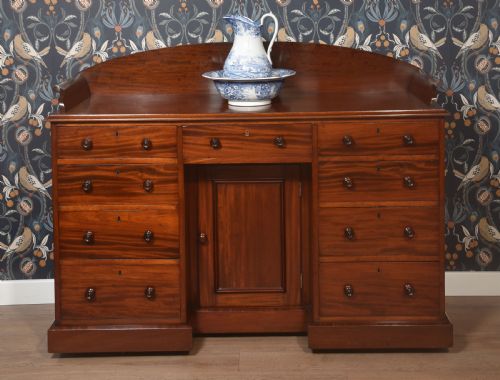
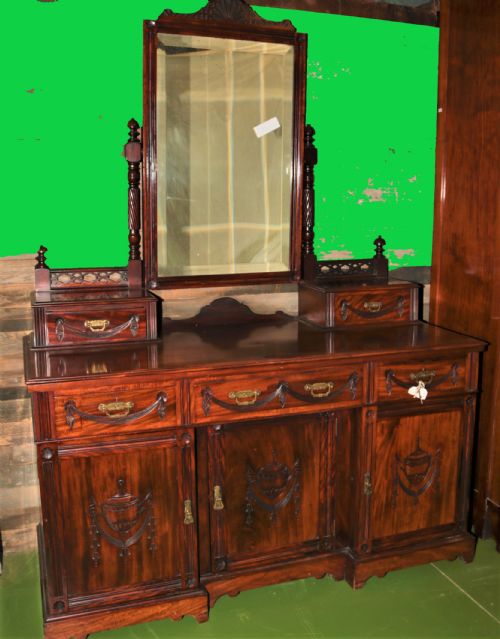


Carved Mahogany Vanity Unit
A carved mahogany vanity unit brings rich timber grain and period utility to a bedroom, combining historic craftsmanship with practical daily surface space.
Carved Mahogany Vanity Unit
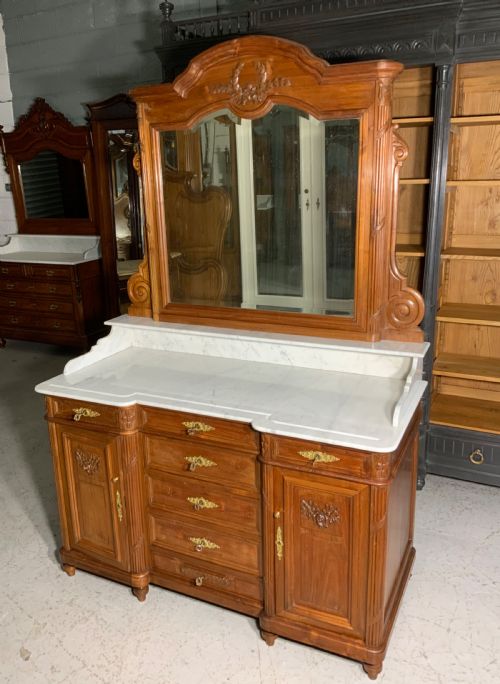
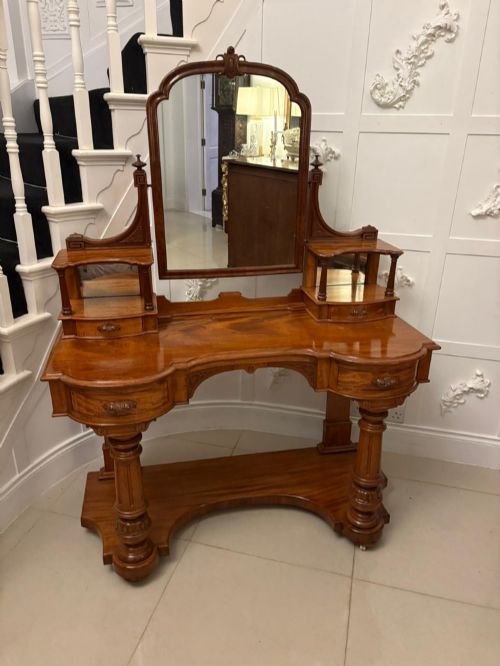
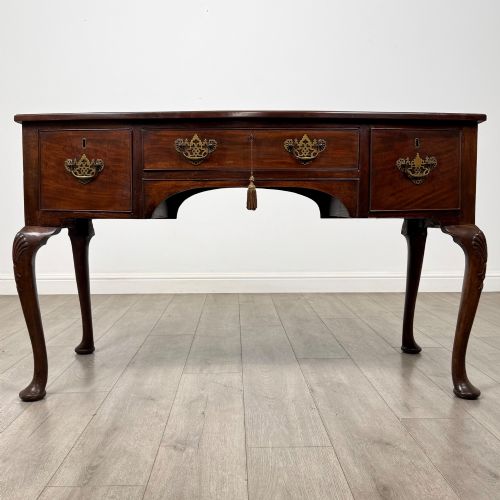
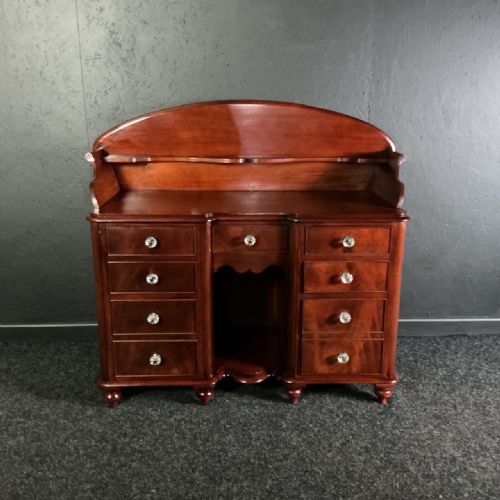
A carved mahogany vanity unit is primarily represented here by Victorian, Edwardian, and early twentieth-century dressing tables, washstands, and writing tables. You will encounter various forms spanning the nineteenth century through to nineteen-ten, including duchess styles and marble-topped washstands.
The selection ranges from robust mid-Victorian pieces to lighter Edwardian examples and revival pieces. Makers drew upon Chippendale, French Rococo, and William IV influences, giving you a diverse range of historic aesthetic treatments.
Most items function as dressing tables, chests with mirrors, or washstands adapted for modern domestic use. Mahogany remains the constant unifying material across these diverse historic forms.
How they were made
The primary material is mahogany, chosen for its durability and rich grain, often paired with functional insets of white marble for washstands and glass for mirrors. Brass hardware appears consistently for handles, drawer pulls, and structural fixings.
Construction techniques rely upon traditional cabinet-making methods, evident in the drawer dovetails and the integration of carved wooden ornamentation. Surfaces receive hand-carved detailing, particularly on mirror frames, drawer fronts, and structural legs.
Listings span the nineteenth and twentieth centuries, featuring Victorian, Edwardian, and William IV periods constructed in mahogany, marble, brass, and glass.
What varies in quality
Quality reveals itself in the depth and crispness of the hand-carving on the mahogany frame rather than mere surface decoration. Superior examples display thoughtful timber selection, ensuring consistent grain patterns across the primary visible surfaces.
The integration of secondary materials such as heavy marble tops and original brass fittings elevates a piece. Better construction is also apparent in the weight and stability of associated cheval mirrors and secondary cabinets.
The Carved Mahogany Vanity Unit Glossary
- Mahogany
- A durable, reddish-brown tropical hardwood prized for its stable working properties and rich grain. It serves as the primary structural material for all pieces listed in this category.
- Washstand
- A traditional bedroom piece designed to hold a basin and jug, frequently topped with marble for water resistance. Many historic washstands are now repurposed as vanity units.
- Duchess dressing table
- A large Victorian dressing table featuring a central mirror flanked by small drawers or trinket boxes. This specific form often includes a lower tier or shelf between the legs.
- Cheval mirror
- A full-length mirror hung in a frame that allows it to tilt. These frequently integrate into the superstructure of nineteenth-century dressing chests.
Carved Mahogany Vanity Unit: Frequently Asked Questions
What is a carved mahogany vanity unit?
A carved mahogany vanity unit refers to historic dressing tables, washstands, and writing desks fashioned from solid mahogany. These pieces date from the nineteenth and early twentieth centuries.
They combine practical storage and mirror arrangements with decorative wood carving reflecting Victorian, Edwardian, and revival styles.
How were marble top washstands used?
Original washstands provided a hygienic surface for morning washing before plumbed bathrooms became standard in every home. The stone top protected the timber from water splashes.
Today, these marble surfaces make these pieces suitable as modern bathroom vanities or hallway furniture.
How do I identify a Victorian dressing table?
Victorian dressing tables typically display rich mahogany timber, substantial turned supports, and hand-carved details. They often incorporate tilting mirrors and multiple small trinket drawers.
Later Victorian and Edwardian examples tend to show lighter proportions and different revival influences such as Chippendale or French Rococo.
Can I use these as modern dressing tables?
These antique pieces adapt readily to contemporary bedrooms, offering generous surface areas and functional drawer storage. Their historic character brings warmth and traditional craftsmanship to modern interiors.
Care should be taken with moisture on unsealed timber surfaces, particularly on pieces that lack original marble tops.