



Bedroom Vanity Stool
A bedroom vanity stool offers a low seat for the dressing table, combining practical seating with period timber and upholstery.
Bedroom Vanity Stool
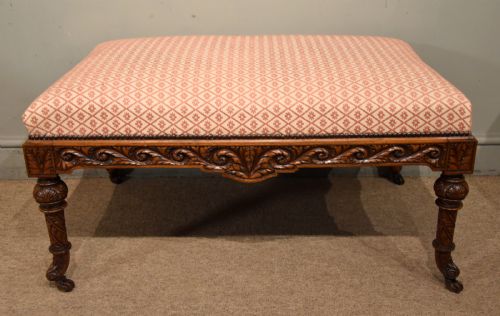
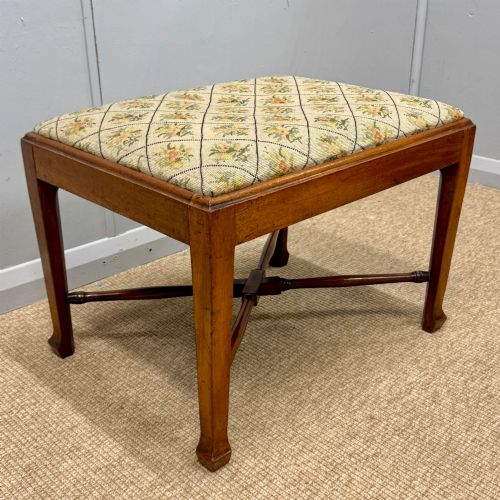
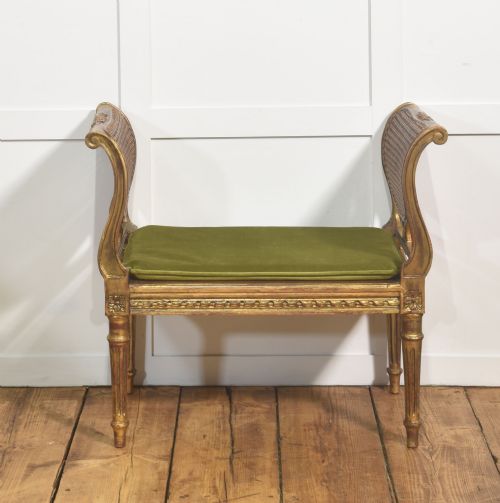
A bedroom vanity stool serves as a functional seat positioned beneath a dressing table or in a dressing room, often appearing under titles such as dressing stool or dressing table stool. These pieces emerge in forms ranging from simple upholstered benches to X-framed stools and drum-shaped storage seats.
The pieces on this page span the Victorian, Edwardian, and Art Deco periods, alongside earlier nineteenth-century examples and Regency pieces. Buyers will frequently encounter mahogany and rosewood frames alongside walnut and oak, paired with varied textile covers.
Materials and construction methods
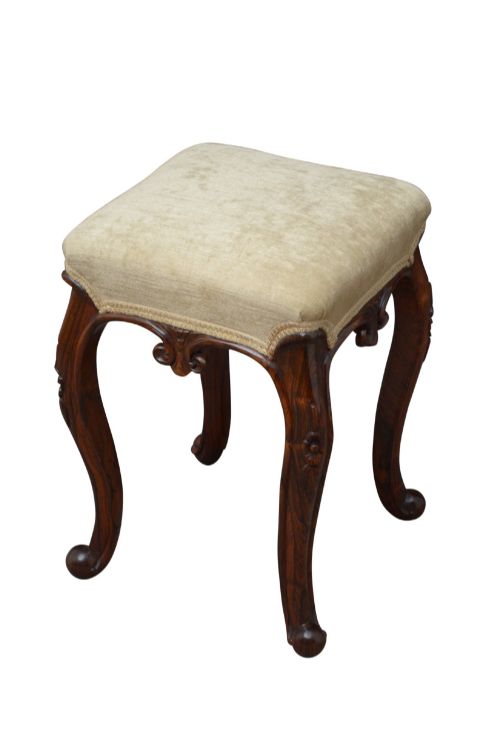
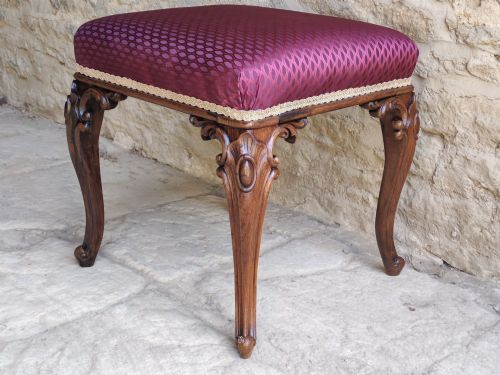
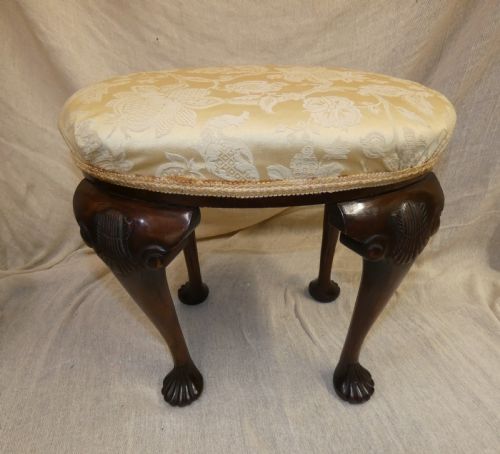
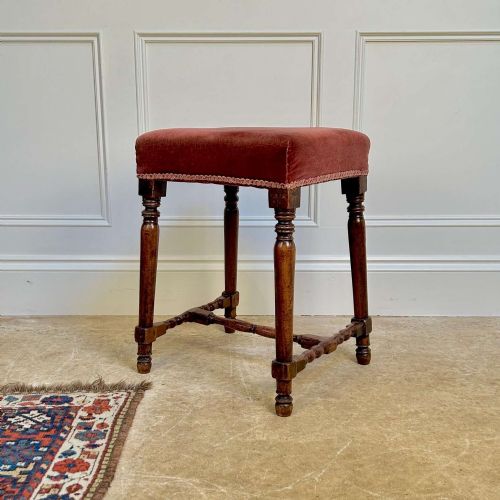
Frames are constructed from solid timbers such as mahogany, walnut, rosewood, and satinwood, frequently shaped with cabriole legs, cross stretchers, or twisted rope supports. Selected pieces utilise giltwood, painted finishes, or exotic woods like goncalo alves and huali.
Upholstery relies on traditional fabrics including velvet, chenille, needlepoint, and newer flowery top covers. Joinery methods incorporate carved wooden frames, cane panels, and sturdy X-frame supports designed to bear weight.
Design eras span from the Regency period through Victorian, Edwardian, and Art Deco styles.
Evaluating craftsmanship and condition
Quality rests in the crispness of the timber carving and the structural integrity of the frame joints, whether cabriole legs or X-frame supports. Superior examples display dense, well-figured grain in woods like rosewood and walnut rather than plain secondary timber.
The execution of upholstery and the retention of original surface patination distinguish finer items. Restored frames or replacement fabric covers affect the balance between historical integrity and usability.
Harry & Lou Epstein
The Bedroom Vanity Stool Glossary
- Cabriole leg
- A furniture leg that curves outward at the knee and tapers inward to an ankle. This decorative shape is common on Victorian and eighteenth-century style seating.
- X-frame
- A furniture base formed by intersecting diagonal timbers creating an X shape. This configuration provides sturdy support for dressing stools and window seats.
- Goncalo Alves
- A dense exotic hardwood with striking contrasting grain patterns. Craftsmen utilised this timber for decorative nineteenth-century furniture frames.
- Chenille
- A fuzzy woven fabric frequently utilised for traditional upholstery. This material provides a soft textured surface for antique stool covers.
- Cross stretcher
- Wooden rails connecting the lower legs of a stool for added stability. They often feature central turnings or carved details.
Bedroom Vanity Stool: Frequently Asked Questions
What is a bedroom vanity stool used for?
A bedroom vanity stool provides a low, movable seat designed specifically for sitting at a dressing table while grooming or applying makeup. They are compact enough to tuck neatly beneath furniture when not in use.
Beyond dressing rooms, these versatile items function well as window seats, hallway footstools, or low occasional benches in sitting areas.
How do I identify a Victorian dressing stool?
Victorian examples typically feature dark timber frames made from mahogany, walnut, or rosewood. Look for characteristic details such as cabriole legs, carved scrollwork, or cross stretchers.
Many period pieces incorporate sturdy X-frame constructions or deep upholstery matching the heavier aesthetic of nineteenth-century interior design.
Are Art Deco vanity stools different?
Art Deco vanity stools shift away from ornate Victorian carving toward clean geometric lines and smooth surfaces. Common materials include sycamore, figured walnut, and oak.
Some Art Deco variants introduce innovative forms, such as drum-shaped bodies with built-in storage compartments, reflecting modern interwar design priorities.