

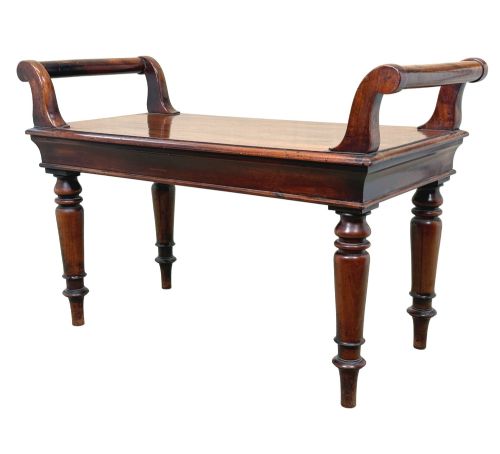


Antique Scroll Arm Stool
These antique scroll arm stool examples are handsome seating pieces designed for windows and halls, offering classic elegance and comfortable support.
Antique Scroll Arm Stool
When you search for an antique scroll arm stool, you are looking at practical and decorative seating typically designed for placement in windows, hallways, or at the foot of a bed. These pieces function as window seats, benches, or dressing stools, providing a sturdy surface that combines low seating with graceful arm architecture.
The versions you are most likely to meet on this page span the nineteenth century into the Edwardian period, drawing on Regency, Victorian, and French Neoclassical styles. They appear in forms ranging from compact duet benches to longer mahogany frames resting on cabriole or turned supports.
Materials and construction
Cabinet makers constructed these frames predominantly using dense hardwoods such as mahogany and walnut, occasionally incorporating oak. These timbers provided the structural rigidity required to support carved scroll arms and decorative cabriole legs.
Upholstery completed the piece, utilising traditional fabrics like damask, velvet, and patterned textiles often secured with brass detailing. The integration of carved woodwork with soft padding defined the standard workshop methods of the era.
Antique Scroll Arm Stool Retail Price Guide 2026
Typical asking prices for scroll arm stool among the pieces listed under this phrase on Sellingantiques today, from the lower quarter to the upper quarter. They describe what is for sale here now, not the wider market.
The listings here span the nineteenth century and the Edwardian era, featuring mahogany, walnut, and oak frames upholstered in damask and velvet.
Distinctions in quality
The distinction between standard examples and the top of the range lies primarily in the crispness of the woodwork carving and the selection of timber grain. Superior pieces display deeply carved scroll arms and refined leg profiles rather than plain, machine-cut mouldings.
Another measure of quality is the integration of the upholstery with the frame, where harmonious fabric choices and careful hand-finishing elevate the visual balance of the window seat or bench.
The Antique Scroll Arm Stool Glossary
- Scroll arm
- A curved wooden arm resembling a rolled scroll, providing both lateral support and decorative flourish to the ends of the seat.
- Window seat
- A long, narrow bench specifically proportioned to sit low beneath a window frame without blocking natural light.
- Cabriole leg
- A furniture leg that curves outward in a convex arc and tapers inward in a concave arc, terminating in a decorative foot.
- Damask
- A reversible figured fabric traditionally woven in silk, wool, or cotton, frequently utilised for period upholstery.
- Duet bench
- An extended seating form designed to accommodate two people comfortably side by side.
Antique Scroll Arm Stool: Frequently Asked Questions
Where should I place a window seat?
These pieces suit long hallways, bedroom ends, or beneath large living room windows where their low profile remains practical.
They offer convenient secondary seating without obstructing views or walking routes.
How do I identify a Regency piece?
Regency items often feature classical Neoclassical restraint, dark mahogany timbers, and clean architectural lines.
Look for refined proportions that reflect early nineteenth-century English design influences.
Are these seats comfortable for daily use?
Most examples provide firm, supportive padding designed for short periods of sitting rather than deep lounging.
Their primary historical function combined decorative elegance with practical utility in transient spaces.
What woods were used for these frames?
Mahogany and walnut dominate the surviving examples, prized for their rich colour and ability to hold fine carved detail.
Oak and other robust timbers appear less frequently, often in specific revival styles.