


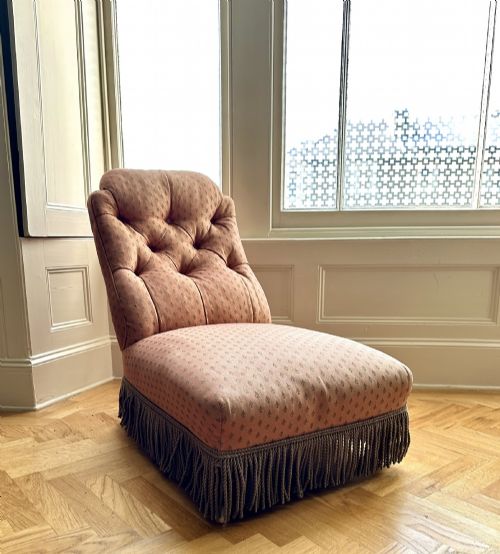


Bedroom Vanity Chair
A bedroom vanity chair brings intimate scale and refined seating to a dressing area, drawing on Victorian and Art Deco forms.
Bedroom Vanity Chair
A bedroom vanity chair serves as low-slung seating designed for dressing tables, boudoirs and bedrooms, appearing across 19th Century, Victorian, Edwardian and Art Deco periods. These pieces encompass slipper chairs, dressing table stools, nursing chairs and occasional chairs.
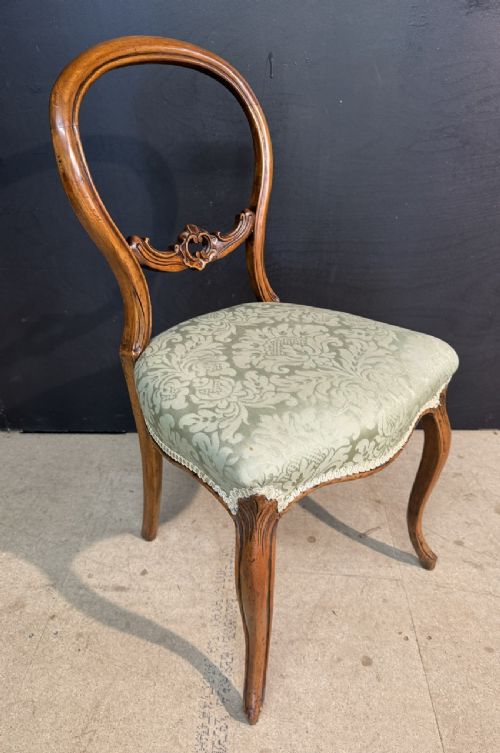
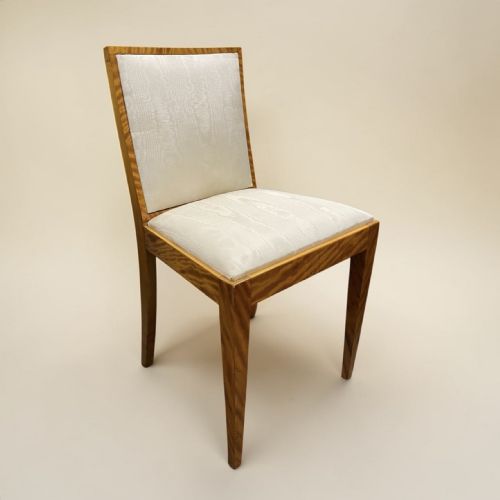
Victorian examples frequently utilise mahogany, walnut or rosewood with carved details and cabriole legs, whereas 1930s pieces lean towards satinwood, sycamore and streamlined Art Deco design.
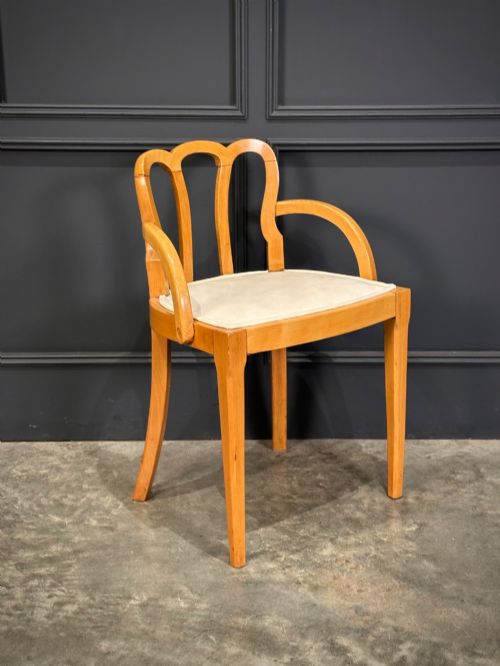
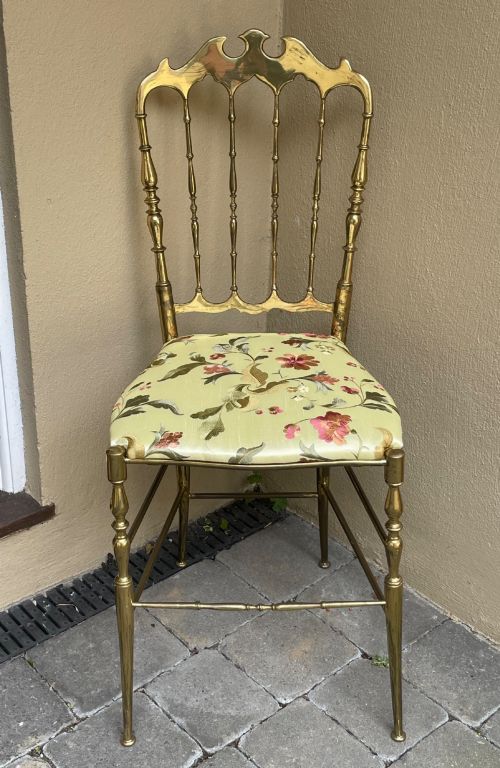
The selection here ranges from low-backed side chairs and footstools to cane-seated occasional chairs and giltwood frames, reflecting domestic seating habits across different decades.
How they were made
Frames rely on solid hardwoods including mahogany, walnut, rosewood, oak and satinwood, frequently shaped with turned, twisted rope or cabriole legs.
Upholstery incorporates textile, fabric, velvet, leather and needlepoint, sometimes finished with fringe or new flowery top covers.
The selection spans the 19th Century, Victorian, Edwardian, Regency and Art Deco periods, encompassing forms from slipper chairs to music stools.
What varies in quality
The refinement of hand-carved woodwork and the integrity of the timber frame set finer examples apart from simpler utility seating.
The choice of covering materials, from original upholstery to quality replacement textiles and traditional padding methods, defines the overall finish.
Bath Cabinet Makers·Heals·Lamb of Manchester
The Bedroom Vanity Chair Glossary
- Cabriole leg
- A furniture leg that curves out and then narrows inward, typically ending in a pad or scroll foot. This shape originates from animal legs and appears frequently on Victorian seating.
- Slipper chair
- A low-seated upholstered chair designed originally for a lady's bedchamber to sit in while putting on shoes or garments. These pieces often lack arms for ease of movement.
- Nursing chair
- A low-backed armchair traditionally used for feeding infants, built with a compact frame that allows comfortable sitting while holding a child.
- Dressing table stool
- A backless seat designed to tuck underneath a vanity or dressing table. Examples often feature needlepoint, fabric or leather tops.
- Giltwood
- Timber coated with a thin layer of gold leaf or metallic paint. This decorative finish appears on ornate salon and boudoir chairs.
Bedroom Vanity Chair: Frequently Asked Questions
What is the difference between a vanity chair and a standard chair?
A vanity chair sits lower to the ground than a standard dining or desk chair to match the lower height of dressing tables and boudoir desks. They are also built with more compact proportions to fit neatly into bedroom spaces.
Many styles also omit armrests entirely to allow bulky garments or skirts to drape freely while sitting.
How do I date a Victorian bedroom chair?
Dating relies on examining the timber species, leg profiles and upholstery construction methods underneath the fabric. Victorian pieces often use solid mahogany or walnut with hand-carved frames and traditional horsehair or coil spring stuffing.
Later Victorian examples from the late 19th century tend to feature lighter wood tones and simpler turned or cabriole supports.
Are these chairs suitable for daily seating?
These chairs function well for everyday bedroom use, provided the frame joints remain solid and the internal webbing is secure. Antique seating intended for dressing areas was built for lighter duties rather than heavy lounge use.
Many surviving pieces have received modern upholstery and webbing while retaining their historic timber frames for modern longevity.
What materials were used for Art Deco vanity chairs?
Art Deco vanity chairs from the 1930s favour exotic or pale timbers such as satinwood and sycamore alongside walnut and polished brass. Upholstery choices shift toward sleek leather, fine textiles and streamlined geometric forms.
Designers of this era prioritized clean lines and smooth polished surfaces over the ornate carvings of earlier Victorian eras.