

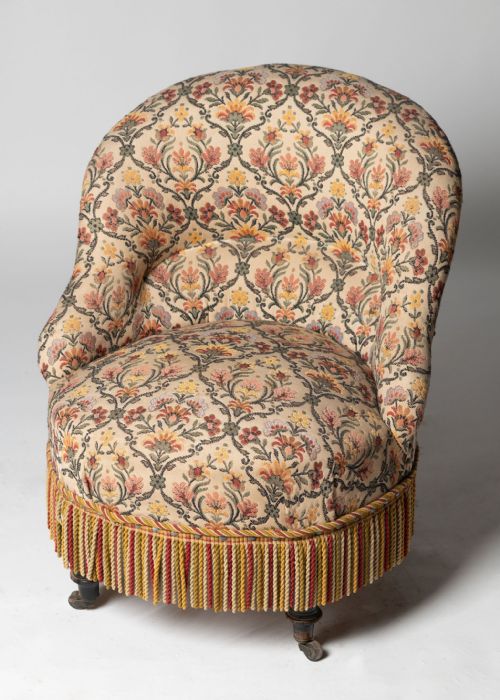


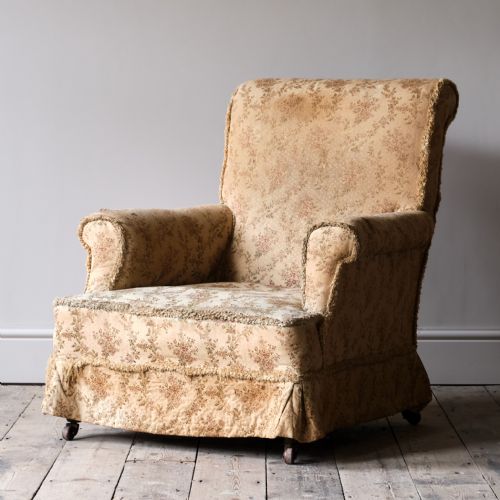
Traditional Fringe Armchair
A traditional fringe armchair offers deep-seated comfort and period character, bringing tactile upholstery and draped trims directly into a room.
Traditional Fringe Armchair
A traditional fringe armchair is a cushioned seating form designed for comfort, frequently upholstered in rich textiles and finished with a decorative lower fringe. Buyers searching for a traditional fringe armchair encounter a variety of period interpretations spanning from the eighteenth century to the early twentieth century.
The selection on this page encompasses diverse historical styles, including Victorian, Gothic Revival, Napoleon III, Georgian Revival, French Empire, and Queen Anne. Form variations range from open armchairs and slipper chairs to winged armchairs and country house models.
How they were made
Construction relies on sturdy timber frameworks, with structural elements fashioned from oak and general wood materials. These robust frames support padded upholstery systems covered in velvet, fabric, or specialised carpets like kilim.
Detailing often incorporates metal components such as brass, alongside the characteristic textile fringe that conceals the lower structure and castors. Makers utilised traditional joinery and upholstery methods appropriate to each respective period style.
Traditional Fringe Armchair Retail Price Guide 2026
Typical asking prices for traditional fringe armchair among the pieces listed under this phrase on Sellingantiques today, from the lower quarter to the upper quarter. They describe what is for sale here now, not the wider market.
Period representations span the 18th century through to 1930, including Victorian and French Empire styles.
What varies in quality
Quality differences stem from the fidelity of the period style and the integrity of the underlying timber frame, such as solid oak construction versus secondary woods. Finer examples display meticulous execution in the upholstery work and the selection of superior textiles like velvet or antique kilim carpets.
The sophistication of the design execution, from proportions in Queen Anne and Georgian Revival pieces to the decorative ambition of French Empire and Napoleon III models, defines the upper tier of the range.
J.Mills
The Traditional Fringe Armchair Glossary
- Armchair
- A comfortable seat with side supports for the arms. These pieces range from open frames to fully upholstered winged variants.
- Slipper chair
- A low-set upholstered chair traditionally used in bedrooms. They offer relaxed seating without high armrests.
- Winged armchair
- A high-backed seat featuring protective side panels designed to shield the sitter from draughts. Georgian Revival and earlier examples often utilise this stately silhouette.
- Fringe
- A decorative border of hanging threads or tassels. It is applied along the base of upholstery to finish the lower edge.
Traditional Fringe Armchair: Frequently Asked Questions
What defines a traditional fringe armchair?
A traditional fringe armchair is characterised by its upholstered body and a decorative textile fringe along the base. These seats span periods from the eighteenth century to the early twentieth century.
They reflect historical design movements such as Victorian, Gothic Revival, and Queen Anne, combining timber frames with soft coverings.
How do I identify the period of a chair?
Period identification relies on stylistic cues, frame silhouettes, and material choices. Pieces from the eighteenth century often show Queen Anne influences, whereas nineteenth-century items may display Victorian or Napoleon III characteristics.
Examining the underlying wood, such as oak, and the specific upholstery fabric helps narrow down the era of manufacture.
Where should I place an antique armchair?
These armchairs suit living rooms, studies, or bedrooms, depending on their specific form. Winged chairs and country house models anchor larger reception spaces effectively.
Slipper chairs and open armchairs work well in more intimate settings or dressing rooms where lower seating heights are practical.
What materials are used in these armchairs?
Construction primarily involves timber frames made from oak and general wood materials. Upholstery consists of fabrics like velvet, standard textiles, and occasionally kilim carpets.
Metal elements such as brass appear in structural or decorative capacities, complemented by the characteristic fabric fringe trim.