

Bedroom Armoire
A bedroom armoire provides substantial hanging space and shelving, bringing architectural presence and period character into a modern interior.
Bedroom Armoire
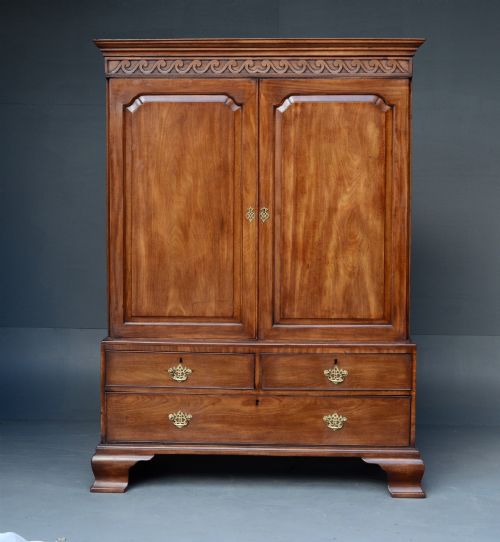
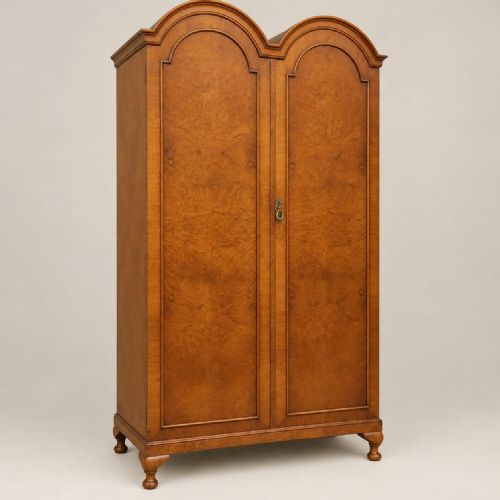
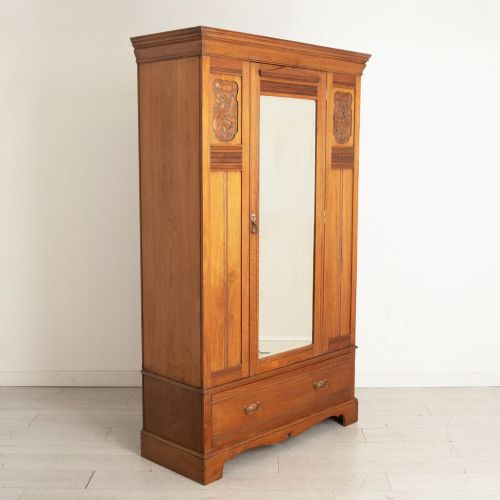
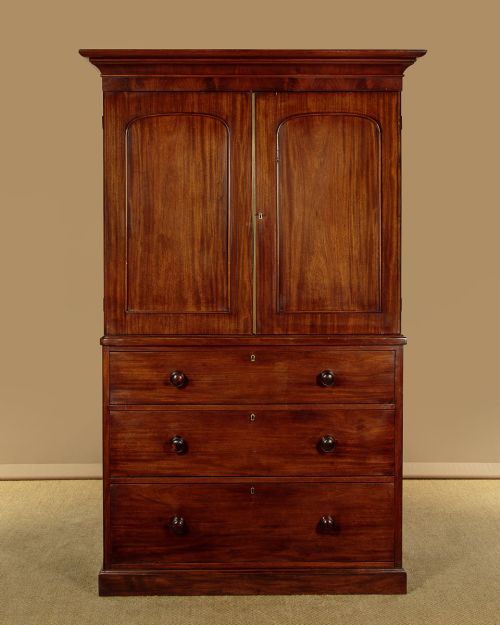
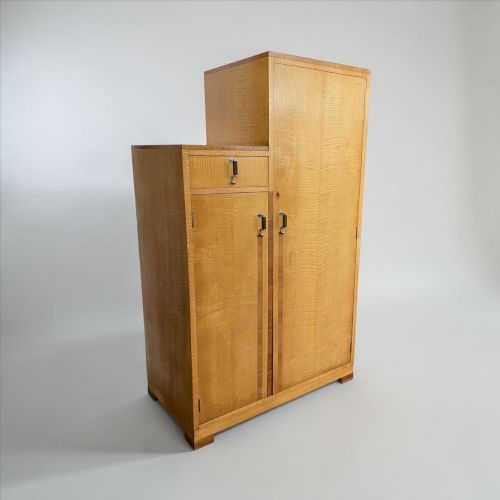
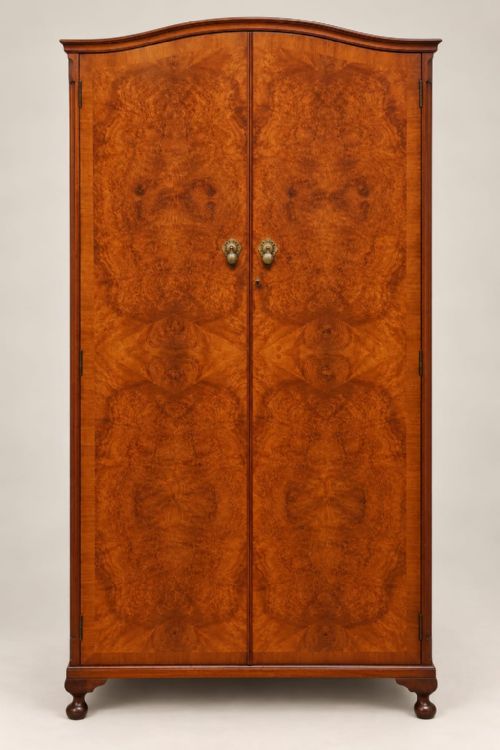
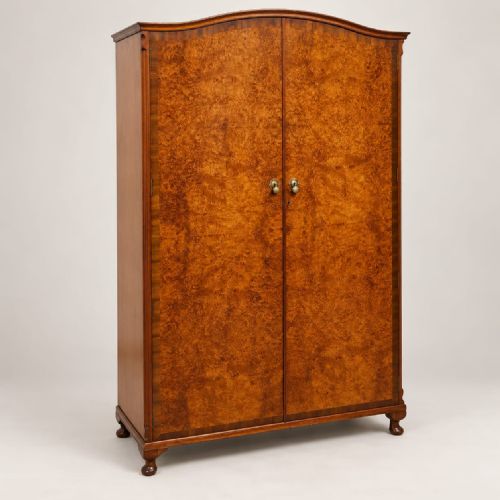
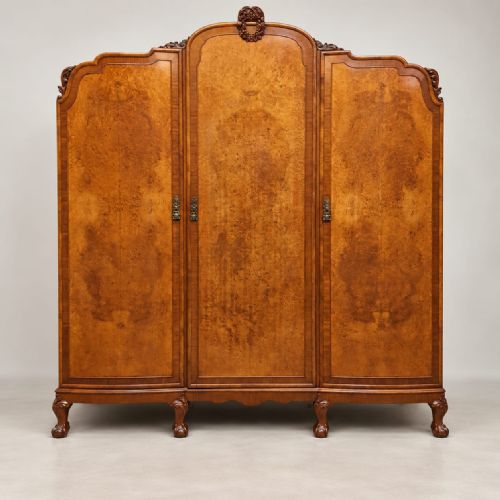
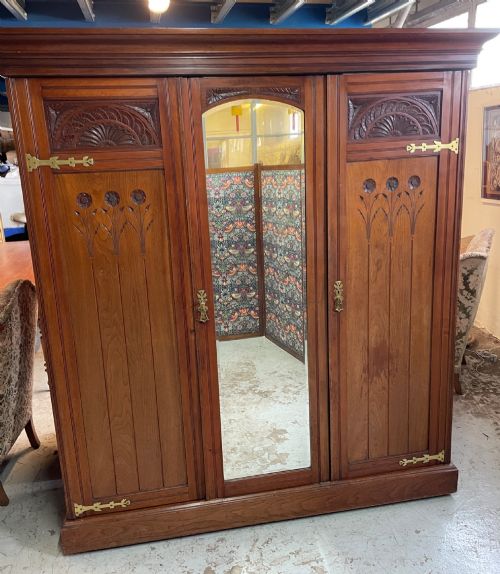
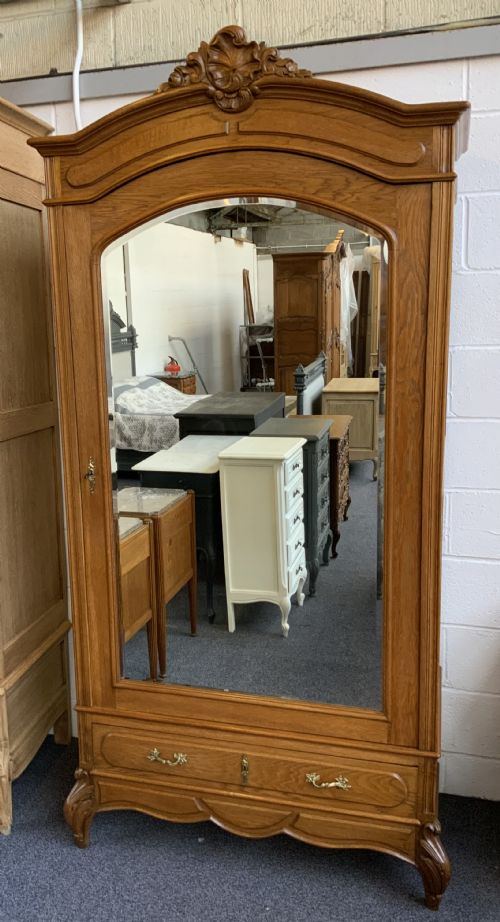
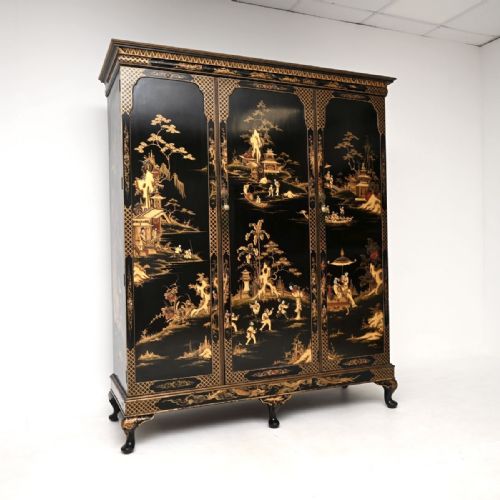
A bedroom armoire encompasses large freestanding storage furniture, appearing primarily as wardrobes, linen presses, and compactums across this selection. Pieces span several distinct eras, notably the Georgian, Victorian, Edwardian, and Art Deco periods, alongside 1920s and 1930s designs.
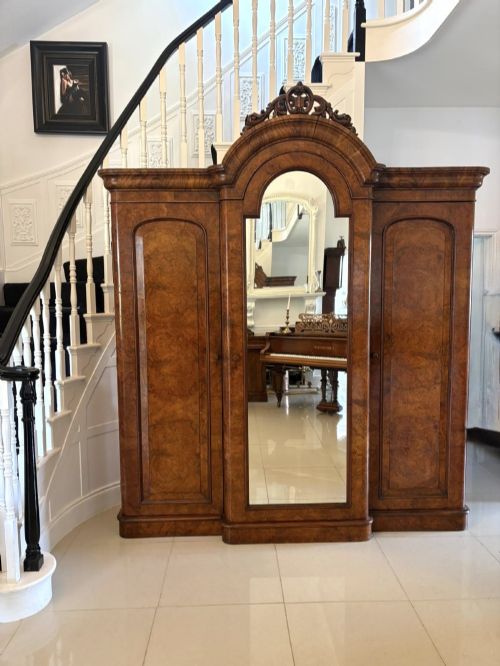
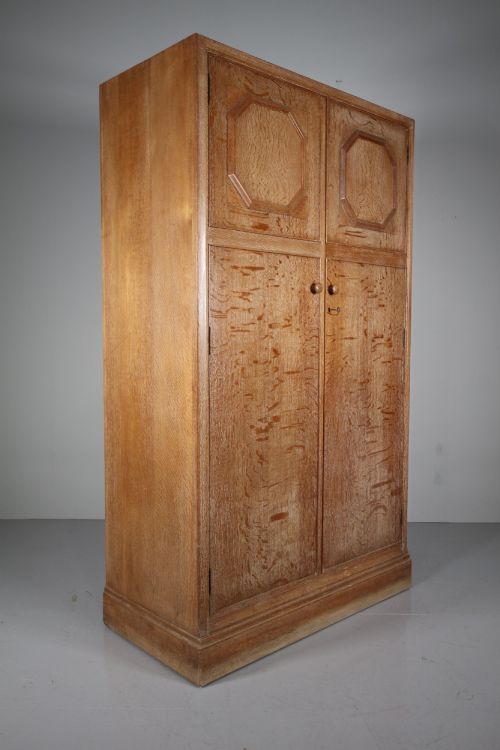
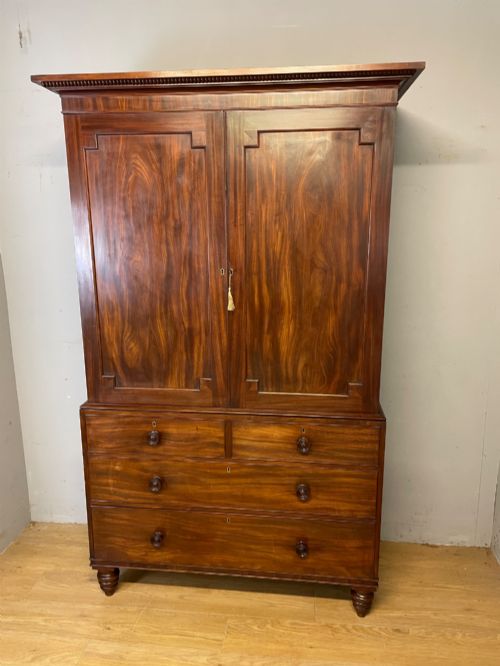
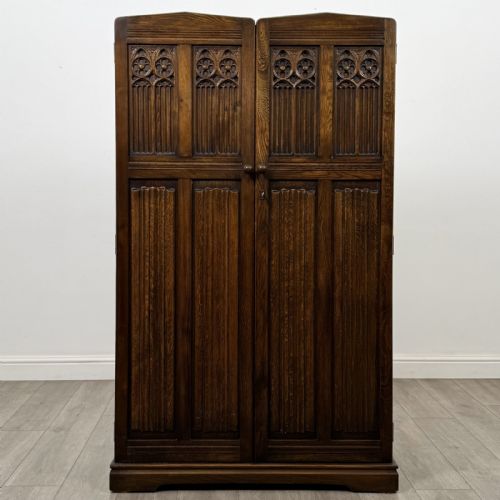
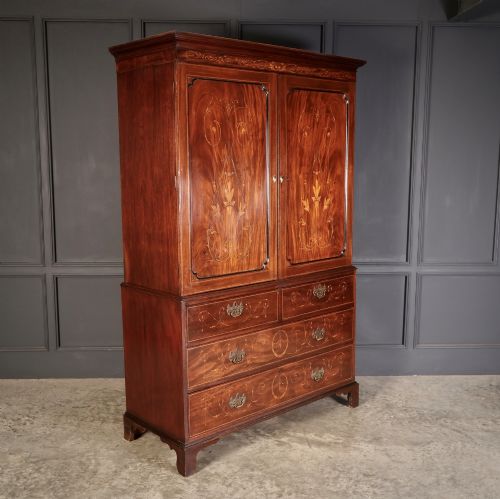
The most frequent encounters on this page are mahogany and burr walnut wardrobes from the Victorian and Edwardian decades, alongside oak examples from the 1920s. Buyers also find Georgian linen presses featuring sliding trays above chest drawers, and French single armoires in carved oak.
Dimensions range from single door configurations to massive triple and four-door architectural wardrobes with fitted interiors. Woods shift from heavy figured mahogany and rich burr walnut to lighter oak, pine, and satinwood depending on the manufacturing period.
Materials and Construction
Cabinet makers utilised dense native and imported timbers, pairing solid foundational woods like oak, pine, and mahogany with decorative veneers including burr walnut, birds-eye maple, and flame mahogany. Brass hardware, mirrored glass panels, and inlaid satinwood stringing frequently complete the primary structures.
Construction techniques relied on traditional joinery, integrating panelled doors, hand-carved ornamentation, and fitted internal drawer banks. Many larger Victorian and Edwardian carcasses were designed with sectional dismantling capabilities to facilitate transport into domestic rooms.
Bedroom Armoire Retail Price Guide 2026
Typical asking prices for bedroom armoire among the pieces listed under this phrase on Sellingantiques today, from the lower quarter to the upper quarter. They describe what is for sale here now, not the wider market.
Several Victorian wardrobes retain their original numbered brass coat hooks, still waiting for stiff high collars and corsets.
Distinctions in Execution
The standard of a bedroom armoire rests on the selection of timber figures and the precision of the cabinet work. Superior pieces display book-matched burr walnut veneers, intricate satinwood inlay, and deeply carved mouldings executed by skilled hands.
Internal configuration and maker attribution further separate examples. Fully fitted cedar or mahogany interiors with original sliding trays, brass fittings, and works associated with recorded makers elevate the standing of a piece.
Heals Of London·Hille for Harrods·Edwards and Roberts·Maple & Co·Crown Furniture
The Bedroom Armoire Glossary
- Linen Press
- A tall storage piece comprising upper cupboard doors enclosing sliding trays, sitting above a chest of base drawers. Originally utilised for flat textiles before modern hanging wardrobes became standard.
- Compactum
- A fitted multi-section wardrobe combining hanging space, linen drawers, and shoe racks within a single unified carcass. These efficiently compartmentalise various types of clothing.
- Burr Walnut
- A highly decorative wood veneer harvested from the irregular growth knots of walnut trees. The resulting timber displays swirling, highly figured grain patterns favoured in high-end cabinet making.
- Linenfold
- A style of carved wooden panelling resembling folded linen cloth. This decorative motif appears frequently on oak panels of the period.
- Inlay
- A technique where contrasting woods or metals are inserted into recessed portions of the primary wood surface to create geometric or floral patterns.
Bedroom Armoire: Frequently Asked Questions
How do I dismantle a large wardrobe?
Many period multi-door wardrobes utilise modular knockdown construction with numbered or slotted wooden pegs and internal bolts. Dismantling requires systematic removal of the cornice, doors, and back panels in reverse order of assembly.
Enlisting professional handlers is advisable for heavy mahogany or burr walnut carcasses to prevent structural stress on historic joints during transit.
Can I adjust the internal hanging space?
Most antique bedroom armoires feature fixed wooden hanging rails or static shelf positions installed during original manufacture. Alterations require careful intervention by a restorer to preserve the internal timber linings.
Buyers often utilise freestanding shelf inserts or tension rods to adapt the storage layout without modifying the historic fabric of the wardrobe.
How do I clean burr walnut veneer?
Burr walnut requires gentle maintenance using a soft, dry cloth to remove dust without abrasive cleaners. Periodic application of microcrystalline wax nourishes the timber and protects the polished surface.
Avoid placing these wardrobes in direct sunlight or near heat sources to prevent the delicate burl veneers from drying and cracking.
What is the difference between an armoire and a wardrobe?
An armoire traditionally refers to a cupboard with doors enclosing shelves or hanging space, often originating from continental European cabinet-making traditions. A wardrobe specifically denotes British furniture engineered expressly for hanging garments.
In modern usage, the terms frequently overlap, though pieces described specifically as armoires often feature deeper French-influenced carvings or single-door proportions.