

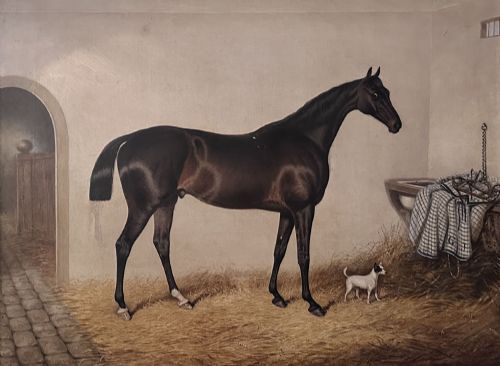
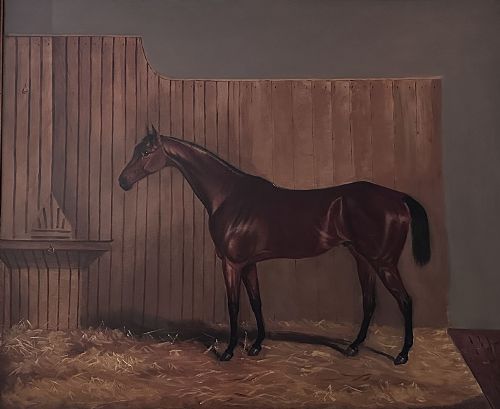
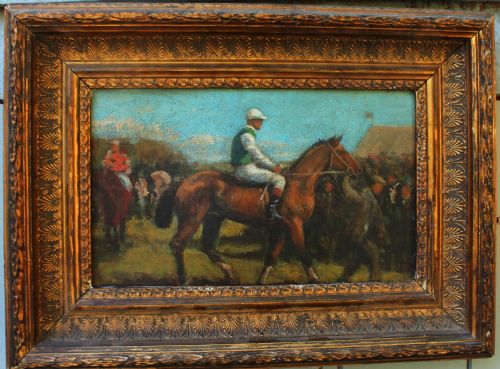


Bay Horse Oil Painting
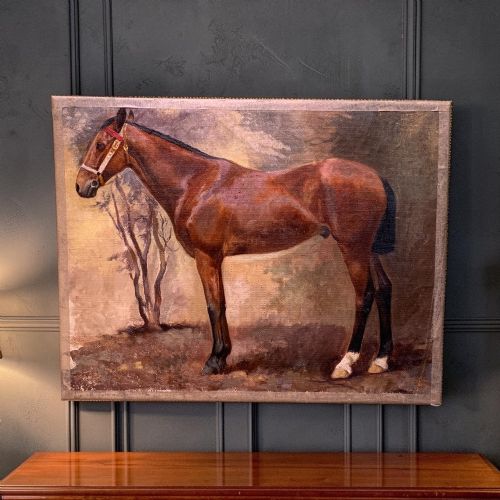
A bay horse oil painting captures the power and character of equine subjects through rich pigment and canvas.
Bay Horse Oil Painting
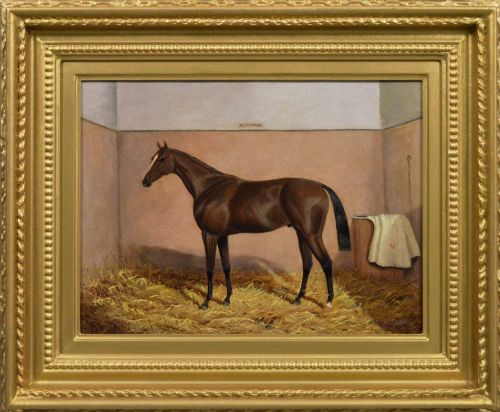
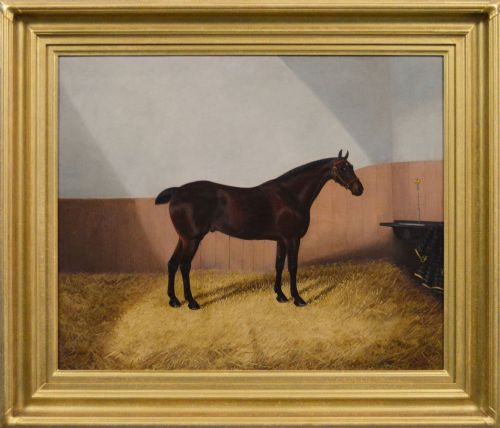
A bay horse oil painting depicts equine subjects in various settings, ranging from stable interiors to open landscapes and race paddocks. These works often focus on specific hunters, racehorses, and prize winners commissioned by proud owners and enthusiasts.
The most common examples encountered on this page stem from the nineteenth century and the early twentieth century, reflecting the strong British tradition of sporting art. Painters documented these animals with careful attention to conformation, coat sheen, and muscular detail.
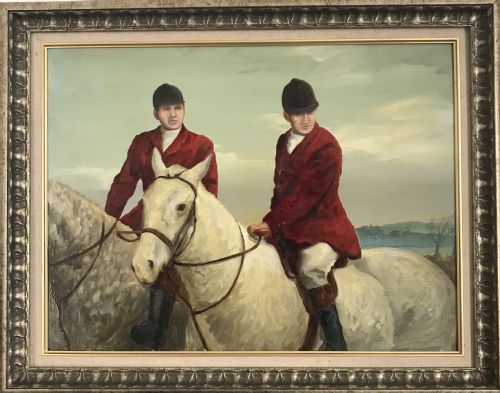
Compositions frequently present the animal alone in a stall or accompanied by grooms, dogs, and army officers. Such pieces serve as historical records of notable equines as well as decorative works for country interiors.
How they were made
Artists built these works using oil paint applied to stretched canvas or wooden panels, allowing for smooth blending and deep tonal gradations. The medium lent itself to capturing the lustrous reddish-brown coat and black points characteristic of the subject.
Canvases and panels frequently found housing within ornate giltwood frames that provided contrast and presence. Guilds and frame makers supplied gilded wood moulding designed to complement the rich palettes of traditional British sporting art.
Bay Horse Oil Painting Retail Price Guide 2026
Typical asking prices for bay horse oil painting among the pieces listed under this phrase on Sellingantiques today, from the lower quarter to the upper quarter. They describe what is for sale here now, not the wider market.
Listings feature works executed in oil on canvas as well as oil painted directly onto solid oak panels.
What varies in quality
Quality in these works rests primarily upon the anatomical accuracy of the animal and the dexterity with which the painter renders light on muscle and coat. Superior hands command a deep understanding of equine anatomy, capturing tension, posture, and expression with conviction.
The handling of the background and setting further distinguishes the upper tier of the range, where stables, landscapes, and human figures receive equal consideration rather than serving as mere backdrops. The integrity of the original canvas and the preservation of the paint surface also govern the standing of an individual piece.
Henry Barraud·Albert Clark·Edward Lloyd of Ellesmere·Benjamin Cam Norton·Alfred Grenfell Haigh·James Barenger·William Edward Millner·Thomas Henry Brentnall·Frances Mabel Hollams·Herbert H St John Jones·Claude Lorraine Ferneley
The Bay Horse Oil Painting Glossary
- Bay
- A coat colour of horses characterised by a reddish-brown body with black manes, tails, and lower legs. This specific coloration forms the central subject of the works gathered here.
- Giltwood
- Wood carved and coated with a thin layer of gold leaf or gold paint. Frames of this material are commonly found enclosing nineteenth-century sporting canvases.
- Sporting art
- A genre of painting dedicated to horses, hounds, shooting, and rural sports. It flourished in Britain during the Victorian and Edwardian eras.
- Oak panel
- A rigid board of oak timber used as a painting support instead of woven fabric. Several early examples on record utilise this durable foundation.
Bay Horse Oil Painting: Frequently Asked Questions
What periods do these paintings date from?
The works represented span the nineteenth century, the Edwardian period, and into the mid-twentieth century.
Victorian and early twentieth-century examples dominate the selection, reflecting the peak of British equestrian portraiture.
How should I hang a framed oil painting?
Secure the piece using appropriate wall fixings that match the weight of the heavy giltwood frames typically associated with these works.
Keep them away from direct sunlight and steady heat sources to protect the canvas and oil pigments over time.
What is the difference between a hunter and a racehorse in art?
Hunters were typically portrayed with sturdier frames suited for field sports, often shown in stable interiors or alongside hounds and riders.
Racehorses were rendered with leaner builds, frequently identified by name alongside their owners, jockeys, or notable race cups.
Are these paintings signed by the artists?
Many works bear the signatures or monograms of established equine painters from the British school.
Others remain unattributed to a specific hand, recorded instead under nineteenth-century or early twentieth-century English school designations.