

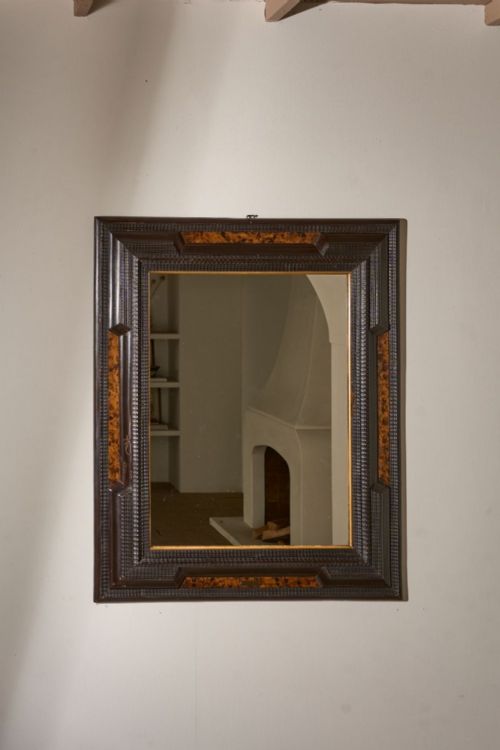


Baroque Wall Mirror
A baroque wall mirror brings monumental presence and reflective depth to a room through dramatic carved detail and gilded surfaces.
What a baroque wall mirror is
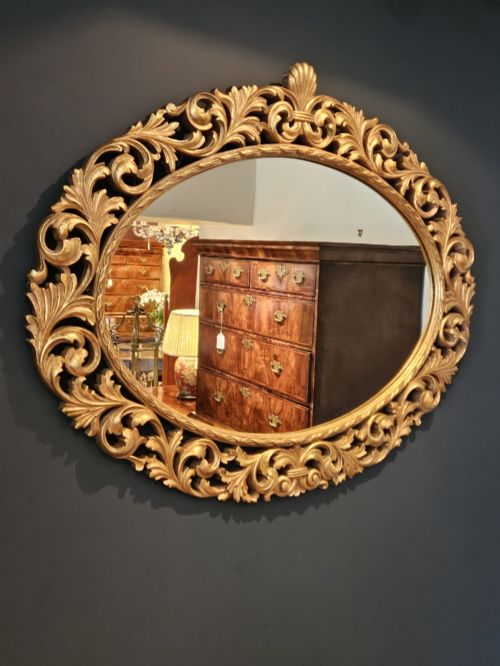
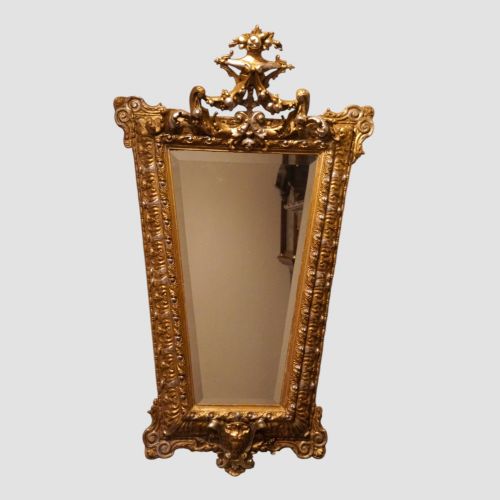
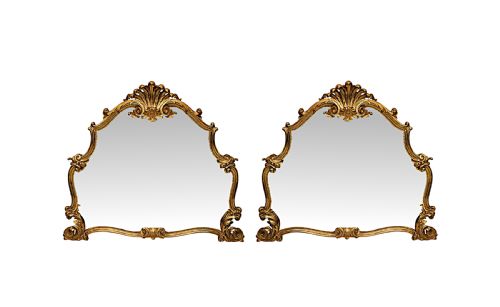
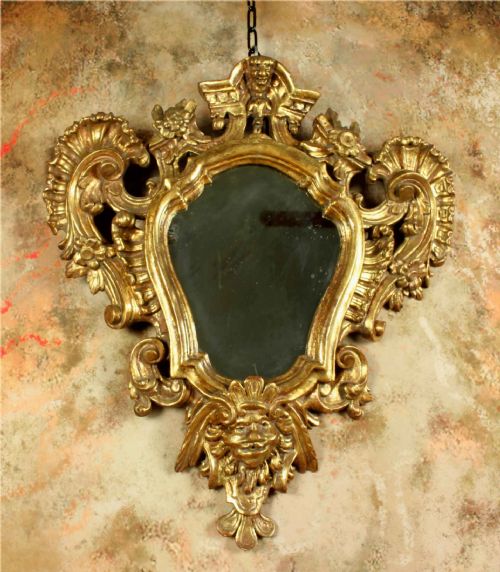
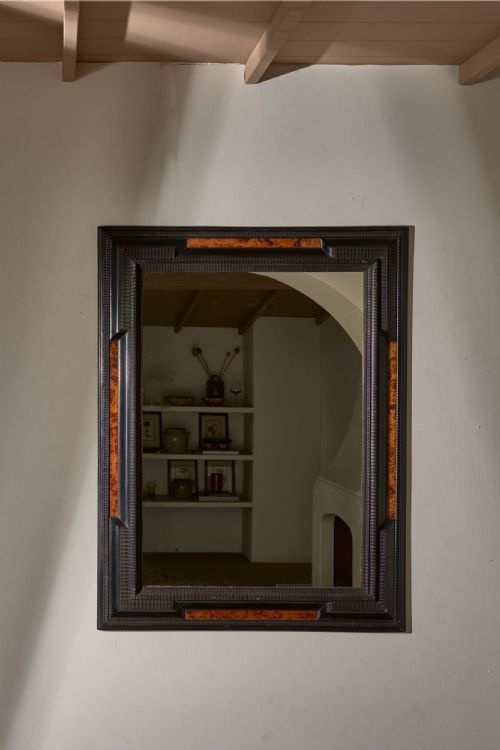
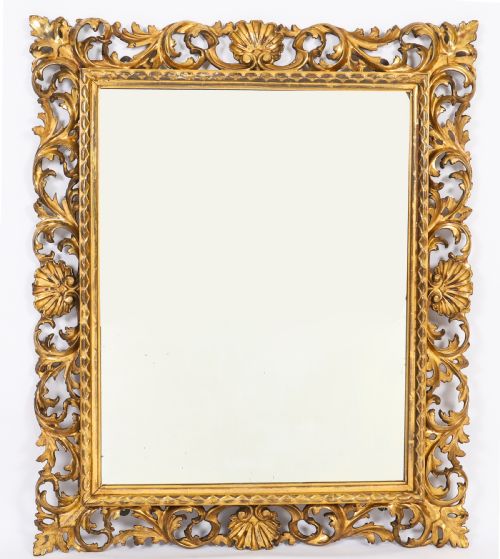
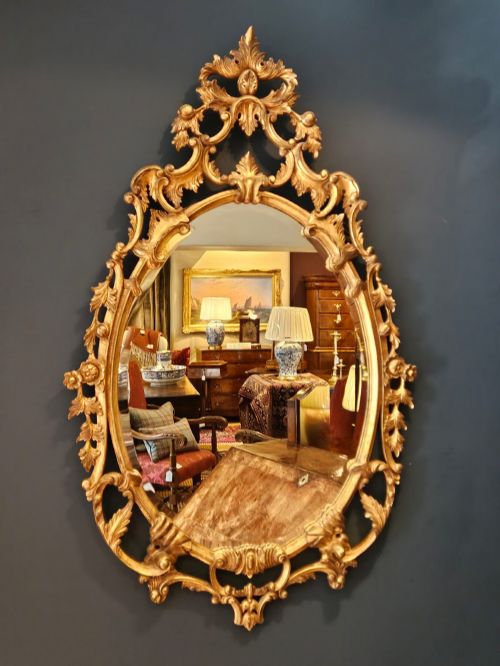
A baroque wall mirror combines opulent carving with reflective glass to create a striking focal point for any interior space. These pieces draw on historical decorative traditions, ranging from grand Italian and French designs to later interpretations.
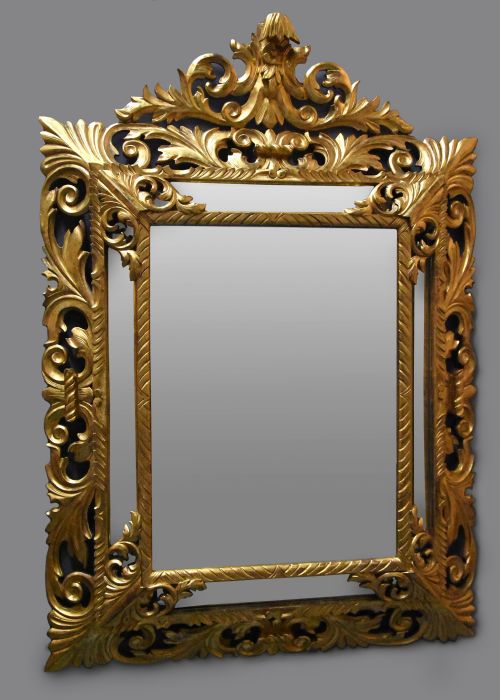
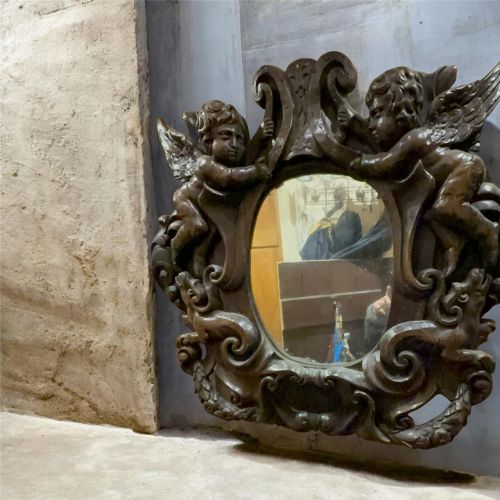
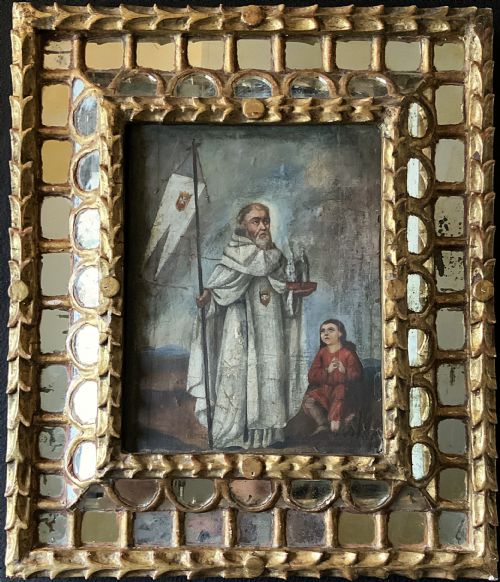
The versions most commonly met on this page span several centuries, featuring pieces from the seventeenth, eighteenth, and nineteenth centuries alongside later revivals. Formats include large rectangular frames, oval portrait formats, and tabletop easel mirrors.
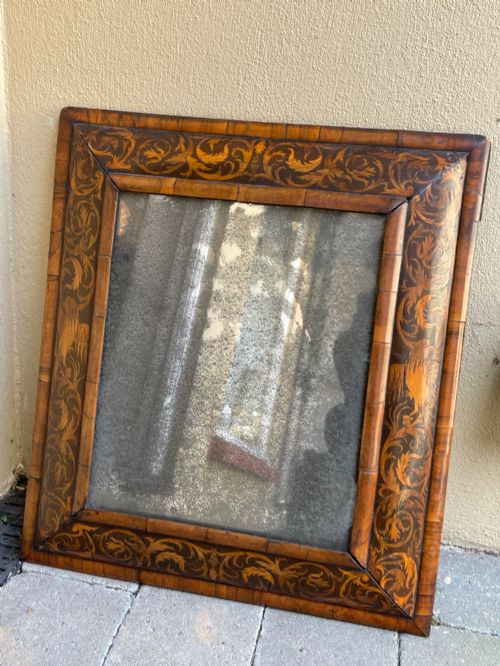
Origin and stylistic influence vary across the selection, encompassing Italian workshops, French chateau aesthetics, and William and Mary marquetry work. Each example demonstrates the enduring appeal of elaborate woodwork and traditional gilding.
How they were made
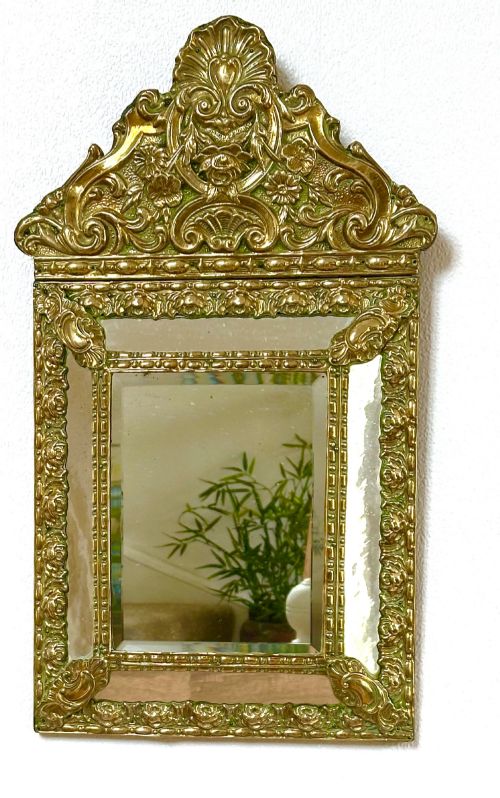
Construction relies heavily on carved wood foundations, utilising materials such as walnut, boxwood, and solid timber frames. Artisans shaped these structures with intricate scrolls, foliage, and architectural motifs characteristic of the period.
Surface decoration frequently involves gesso applied over wood, which is then finished with gold leaf or traditional gilding. Brass and marquetry inlay also appear in specific pieces, adding contrasting textures and tonal depth to the frames.
Retail Price Guide 2026
Typical UK retail prices for baroque wall mirror, calculated from the Sellingantiques database of over a million retail prices indexed since 2003. This retail price guide relies exclusively on Sellingantiques data; no external sources or auction records are used, so the figures do not describe the wider market.
What varies in quality
Quality in these mirrors rests primarily on the depth and crispness of the wood carving, where hand-tooled details outshine simpler moulded decoration. The execution of the gesso and the application of gold leaf determine the richness of the surface light.
The integrity of the structural joinery and the preservation of the original glass plate contribute significantly to a piece's standing. Finer examples retain their original backing and historical patination across both the timber and the gilding.
The Baroque Wall Mirror Glossary
- Giltwood
- Wood that has been coated with a thin layer of gold leaf. This technique provides a luminous finish that catches and reflects ambient light.
- Gesso
- A plaster-like mixture applied to wood frames to create a smooth surface for gilding. It allows for sharp, detailed relief carving.
- Marquetry
- The art of applying pieces of veneer to a structure to form decorative patterns. It often incorporates contrasting timbers like walnut and boxwood.
- Baroque
- An artistic style characterised by exaggerated motion and clear detail. In mirrors, this translates to dramatic scrolls, asymmetry, and grand proportions.
Frequently Asked Questions
Where should I hang a baroque wall mirror?
These mirrors suit prominent locations such as above a fireplace mantelpiece, in a hallway, or as a focal point in a principal reception room. Their reflective qualities help to amplify natural light and enhance the sense of space.
Ensure the supporting wall structure is adequate for the weight of the frame, particularly for larger gilded wood examples. Secure fixings distribute the load safely and keep the piece level.
How do I clean a gilded mirror frame?
Dust the carved wooden and gilded surfaces gently with a soft, dry brush or a feather duster. Avoid using commercial cleaning sprays or damp cloths, as moisture can damage the delicate gesso and gold leaf.
Clean the glass plate using a modest amount of glass cleaner applied to a cloth rather than sprayed directly onto the glass. This prevents liquid from seeping behind the frame and harming the backing.
How do I identify a seventeenth century mirror?
Seventeenth century pieces often feature specific techniques such as intricate marquetry work in walnut and boxwood. The joinery and framing methods reflect the cabinet-making standards of the period.
Examining the reverse of the mirror and the composition of the glass plate helps determine age. Older glass frequently exhibits subtle irregularities and minor distortions native to historical manufacturing methods.
Are all these mirrors Italian?
The selection includes pieces from various European traditions, with significant representation from Italian workshops. French chateau styles and British William and Mary designs also feature across the inventory.
Stylistic cues in the carving and the choice of materials help distinguish between regional origins. Italian pieces often lean towards elaborate rococo and baroque ornamentation.