
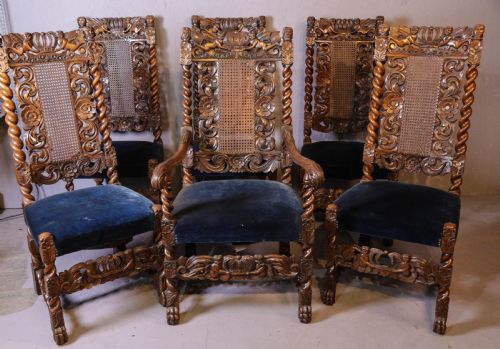


Baroque Style Chairs
Baroque style chairs bring dramatic carved woodwork and grand upholstery into a room, offering both historical presence and sturdy seating.
Baroque Style Chairs
Baroque style chairs encompass heavily carved seating designed to make a dramatic visual impact in a domestic interior. These pieces draw on seventeenth and eighteenth century aesthetics, often recreated during later revival periods.
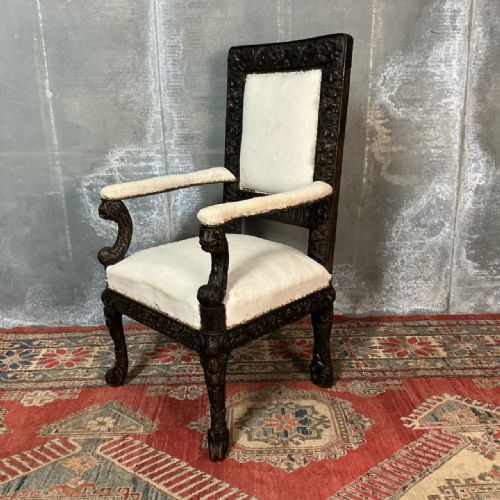
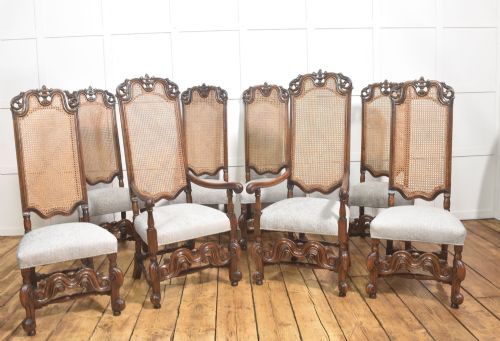
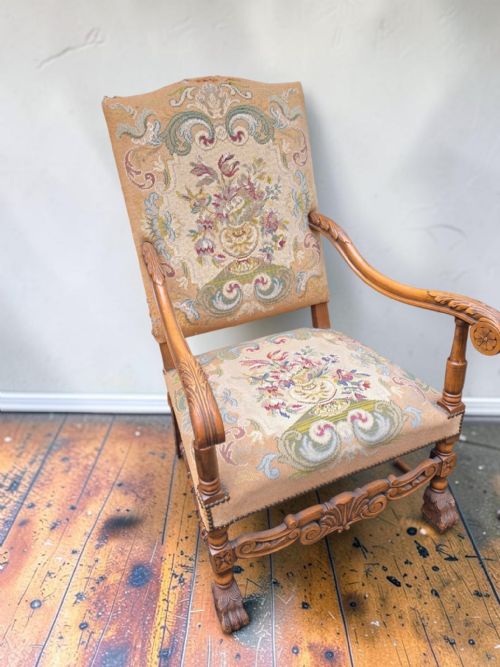
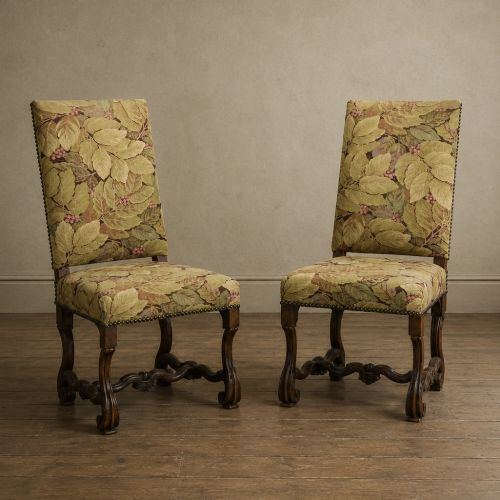
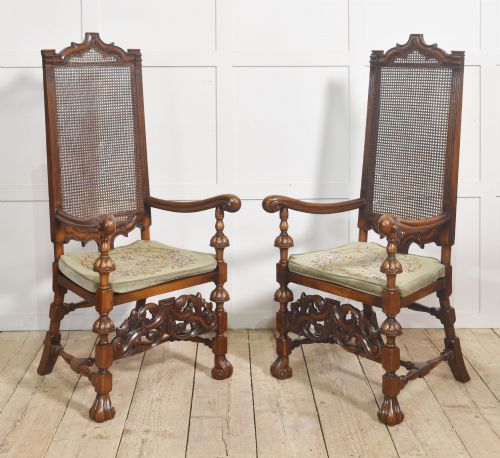
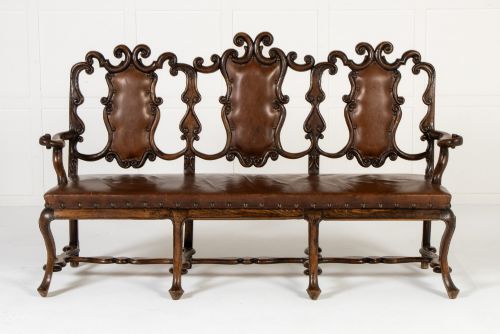
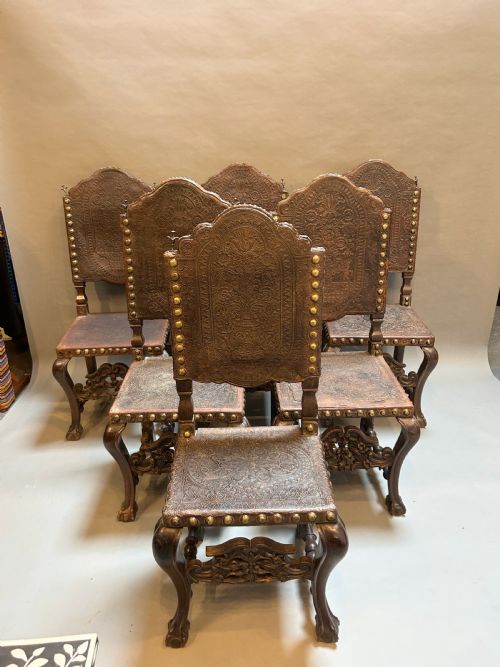
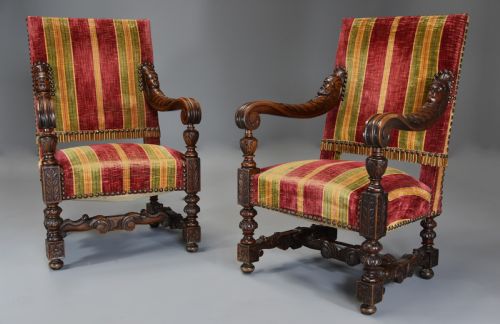
The selections available here rely heavily on walnut and oak frames, paired with upholstery in velvet, leather, and tapestry. Buyers frequently encounter armchairs, high-back dining chairs, and throne chairs originating from the nineteenth century alongside earlier examples.
How they were made
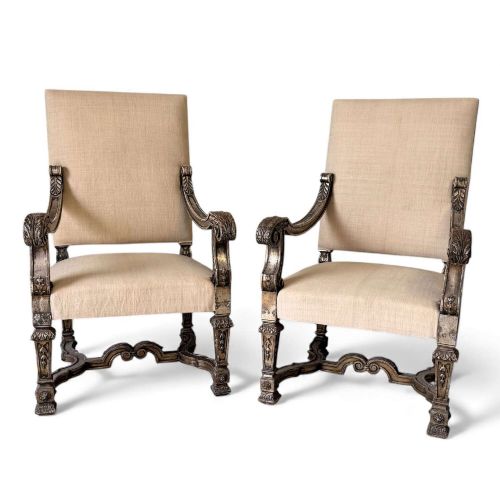
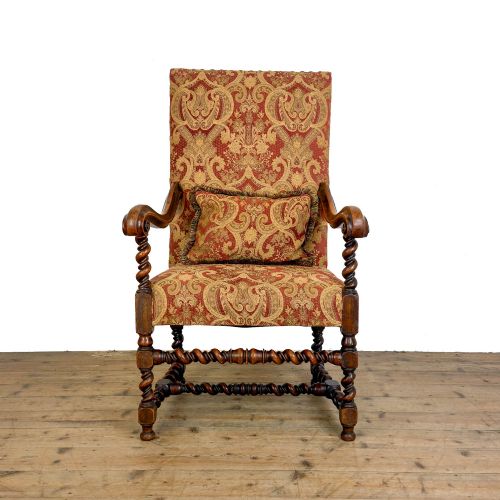
Carpenters and carvers shaped these frames from dense hardwoods like walnut, oak, and occasionally padouk or ebonised timber. Skilled hands executed deep relief carving, often incorporating scrollwork, floral motifs, and turned elements such as bobbin legs.
Upholstery methods involved securing supportive webbing and stuffing before applying outer coverings of silk, velvet, needlework, or embossed leather, secured with decorative brass tacks or applied gilt finish.
Several chairs arrive with high backs built intentionally tall to keep seventeenth-century heads clear of chilly castle draughts.
What varies in quality
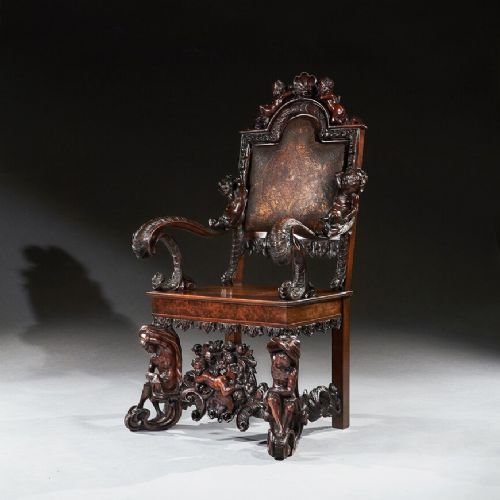
Depth and crispness of the timber carving separate standard production seating from exhibition quality examples. Sharp undercutting in the wood grain reveals the carver's direct control over the walnut or oak.
The choice of primary framing timber and secondary materials dictates structural longevity. Solid walnut frames with intricate joinery hold up better under daily use than simpler constructions relying on surface gilding alone.
Andrea Brustolon
The Baroque Style Chairs Glossary
- Giltwood
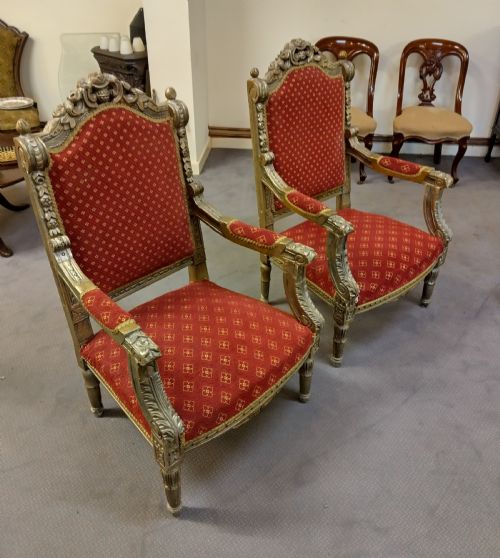
- Timber treated with a thin layer of gold leaf or metallic size. This finish creates a brilliant reflective surface common on grand throne armchairs.
- Cane
- Woven rattan or split plant material used to form resilient panels for chair backs and seats. It provides a lightweight yet durable structural surface.
- Fauteuil
- An open-arm armchair with upholstered back and seat, featuring exposed wooden framing. This French form emphasises elegant arm supports and carved rails.
- Carolean
- A seventeenth-century style associated with the reign of Charles II, characterised by rich walnut frames and elaborate crown and scroll carvings.
- Savonarola
- A folding chair constructed from interlocking curved wooden slats forming an X-shape. Originating in the Renaissance, this form remained popular in later revival furniture.
Baroque Style Chairs: Frequently Asked Questions
How do I identify a true period piece from a revival chair?
Examine the tool marks on the timber and the wear patterns around the feet and armrests. Older framing timber shows distinct hand-tool signatures and timber shrinkage appropriate to centuries of age.
Revival pieces from the nineteenth century often display machine-assisted uniformity in their carving and different joint construction techniques. Comparing the secondary woods inside the frame also clarifies the manufacturing era.
Can I use baroque style chairs for daily dining?
Many high-back dining chairs and side chairs from this category were built for regular use around large tables. Solid walnut and oak frames provide sufficient structural strength for sitting.
Heavily gilt or fragile exhibition pieces require more careful placement to protect delicate surface treatments and historic textiles from excessive friction.
How should I care for velvet and leather upholstery?
Keep upholstered seating away from direct sunlight to prevent the emerald silk, velvet, and leather coverings from fading or drying out. Gentle dusting with a soft brush preserves the nap of textile surfaces.
Leather components benefit from occasional conditioning to maintain suppleness. Professional cleaning is recommended for antique needlework and delicate tapestries.
What distinguishes French baroque from Italian styles?
French baroque furniture tends to focus on balanced proportion, symmetrical scrolling, and refined gilt finishes designed for formal court rooms. The Louis XIV influence highlights ordered majesty.
Italian baroque seating often employs deeply undercut walnut carvings with sculptural figures and dramatic contrasts, reflecting a more theatrical approach to domestic woodwork.